Head of Khujand-based KVN team faces charges of inciting national enmity and false denunciation

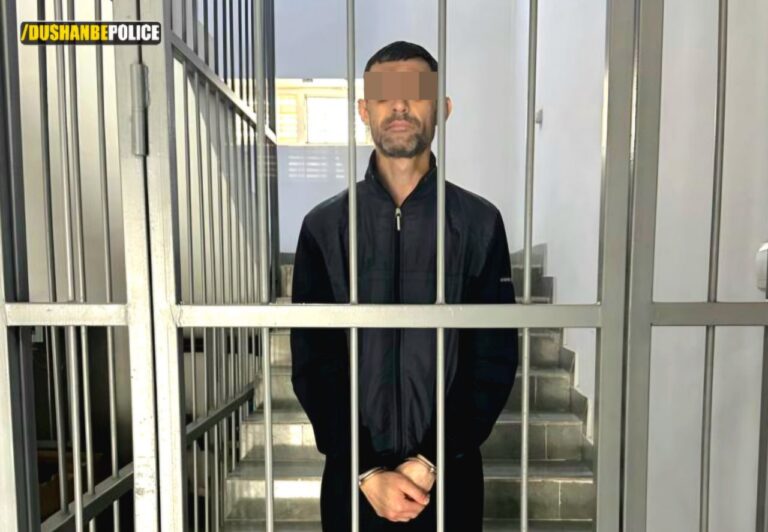
Head of the Khujand-based KVN (Club of the Funny and Inventive People) team, Khairullo Mirsaidov, was put under custody on December 8.  The Sughd prosecutor’s office has instituted criminal proceedings against him under the provisions of four articles of Tajikistan’ Penal Code. According to the press center of the Sughd prosecutor’s office, Mirsaidov face charges […]

Asia-Plus

Head of the Khujand-based KVN (Club of the Funny and Inventive People) team, Khairullo Mirsaidov, was put under custody on December 8.  The Sughd prosecutor’s office has instituted criminal proceedings against him under the provisions of four articles of Tajikistan’ Penal Code.

According to the press center of the Sughd prosecutor’s office, Mirsaidov face charges of embezzlement or misappropriate of state funds (Article 245, Part 4), inciting national racial, regional or religious enmity (Article 189, Part 2), document forgery (Article 340, Part 1) and false denunciation (Article 346, Part 2).

Mirsaidov’s defense lawyer Askar Tursunov is currently in Dushanbe and he will be able to comment the situation only on December 11.   

Recall, Khairullo Mirsaidov last month applied to the President of Tajikistan, Prosecutor-General Yusuf Rahmon and Sughd Governor Abdurahmon Qodiri, asking them to pay attention to problems facing the Khujand-based KVN team because of some corrupt officials in the Sughd province.  

KVN (a Russian abbreviation for the Club of the Funny and Inventive People) is a Russian-speaking humor TV show and competition where teams compete by giving funny answers to questions and showing prepared sketches, that originated in the Soviet Union.  The program was first aired by the First Soviet Channel on November 8, 1961.  Eleven years later, in 1972, when few programs were being broadcast live, Soviet censors found the students' impromptu jokes offensive and anti-Soviet and banned KVN.  The show was revived fourteen years later during the Perestroika era in 1986, with Alexander Maslyakov as its host.  It is one of the longest-running TV programs on Russian Television.  

During the Perestroika era, KVN spread to Russian expatriate communities around the world.  In 1992 the Israel team tested the waters playing against the CIS team.  The game was an unquestionable success and more international games on a highest level followed: the CIS team visited Israel, Germany and USA.  The culmination was in 1994 with the First KVN World Festival in Israel with 4 teams (USA, Israel, CIS and Germany).


Join us on social media!

Article translations:

Related Article

Оби зулол
Оби зулол

Most Read

Recent Articles

The only GPW veteran in Dushanbe allocated more than 80,000 somoni

The mayor's office of Dushanbe allocated him 25,000 somoni.

GITEX AI Kazakhstan 2026: how Almaty became the main AI hub of Central Asia

More than 300 companies and startups, over 200 speakers and 100 investors from 50 countries — the region is entering the global stage.

A trade and economic park to be built at the border junction of Tajikistan, Kyrgyzstan, and Uzbekistan

President of the Kyrgyz Republic Sadyr Japarov familiarized himself with the project.

A project to protect soil from degradation to be developed in Central Asia

The initiative is of great significance for the mountainous countries of the region, including Tajikistan.

Mudslide, death, and destroyed homes: hundreds of families in Tajikistan left homeless

A correspondent from "Asia-Plus" visited Kulob and spoke with the families of those who died and were affected by the disaster.

Spring 2026 bright event: new issue of VIPzone now on sale

This issue is about people and ideas that change everything: from business and investments to fashion, food, and urban environment.

Godfrey Sullivan: “Tajikistan is a promising market for Visa to develop digital payments”

The Vice President of Visa explained why Tajikistan is becoming a promising market for digital payments and how artificial intelligence is influencing the future of finance.

Seven students in Dushanbe were threatened with expulsion for arriving at universities in personal cars

The materials for each case have been sent to the Ministry of Education and Science for appropriate actions.

India’s blockchain push and lessons for the global south

The Indian Government has started pushing aggressively its agenda...

India’s blockchain push and lessons for the global south

The Indian Government has started pushing aggressively its agenda...