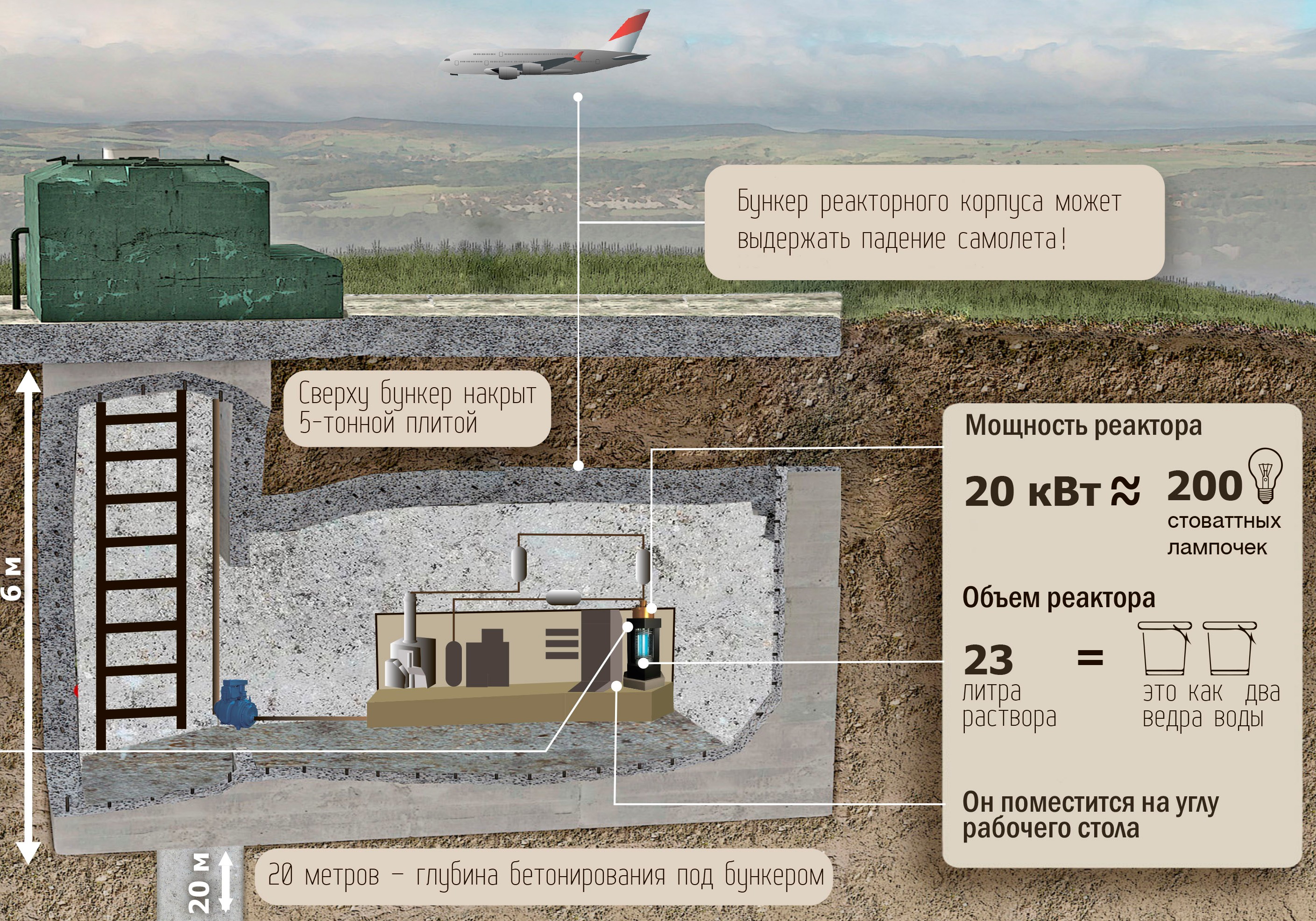
Tajikistan intends to restore the nuclear research reactor, ARGUS-FTI, which was installed at the Umarov Physical and Technical Institute in Dushanbe but has never been operated.
Small spool but precious
The acting Director of the Umarov Physical and Technical Institute, Hikmat Muminov, says that it had been supposed to create a chain of regional labs in the Soviet Union in the 1960s. “However, only two Argus reactors had been built – one at Russia's Kurchatov Institute and another at the Physical and Technical Institute in Dushanbe,” Muminov said.
Unfortunately, the installation of the reactor in Dushanbe was completed at the time of the collapse of the Soviet Union and it has not been introduced into operation, he said.
What for does Tajikistan need nuclear research reactor?
There are several sectors needing that need a neutron activation analysis (NAA). Among them are geology, medicine, agriculture, production of building materials and cable products.
For example, it is important to know the chemical composition of samples of rocks, Muminov noted.
NAA is a nuclear process used for determining the concentrations of elements in a vast amount of materials. NAA allows discrete sampling of elements as it disregards the chemical form of a sample, and focuses solely on its nucleus. The method is based on neutron activation and therefore requires a source of neutrons. The sample is bombarded with neutrons, causing the elements to form radioactive isotopes.
What is significance of Argus reactor for Tajikistan?
“We have closely cooperated with the International Atomic Energy Agency (IAEI) and Russia’s State Atomic Energy Corporation, Rosatom, on the nuclear research rector,” said Muminov.
According to him, four representatives of Rosatom have arrived in Dushanbe to examine the reactor built at the Physical and Technical Institute in Dushanbe. “They examined the building and premises and made a positive conclusion,” Tajik researcher noted.
He further noted that availability of the nuclear research reactor was also of political importance. “Availability of the nuclear research reactor means that the country is technologically developed and can use nuclear power. It is potential for development of nanotechnologies,” Muminov said.
Argus-FTI will be restored with Russian assistance under financial support of China
Recall, Farhod Rahimi, President of the Academy of Sciences of Tajikistan, told reporters in Dushanbe on February 12 that The China National Nuclear Corporation (CNNC) will participate in restoration of Tajikistan’s nuclear research reactor, ARGUS-FTI.
According to him, the Russian State Atomic Energy Corporation (Rosatom) will also participate in restoration of Tajikistan’s nuclear research rector.
Built at the Umarov Physical and Technical Institute in Dushanbe, the ARGUS-FTI research reactor is expected to be reintroduced into operation in 2020.
35 million U.S. dollars are reportedly needed for implementation of the government’s program to refurbish and restart this nuclear research rector. The program is designed for 2016-2020.
A government-to-government agreement between Tajikistan and Russian for cooperation in the peaceful use of nuclear energy was signed here on February 27, 2017 during Russian President Putin’s visit to Tajikistan.
The document, which provides for participation of Russian researchers in refurbishing Tajikistan’s nuclear research reactor in Dushanbe, was inked by Farhod Rahimi, President of Tajikistan’s Academy of Sciences, and Aleksey Likhachev, Director-General of Russia’s Rosatom.
The agreement regulates issues related to conduct by scientists of the two countries of researches in the field of the peaceful use of nuclear energy.
The agreement also provides for training personnel for Tajikistan at Russian universities and nuclear research centers.
Argus is a 20MW homogeneous molten salt reactor which was built at the Umarov Physical and Technical Institute in Dushanbe but was never operated. A similar reactor was built at Russia's Kurchatov Institute.
The work to restore Argus-FTI will be undertaken with Russian assistance. The first stage of the program (2016-2017) provides for training of the staff, design and survey activities, and production of the project documentation. The second stage (2018-2020) will involve the refurbishment of the reactor and construction of facilities to produce radioisotopes and radiopharmaceuticals. The reactor equipment has been "mothballed" but preliminary investigations have shown that two thirds of the equipment is useable. However, complete replacement of the reactor control system is required.