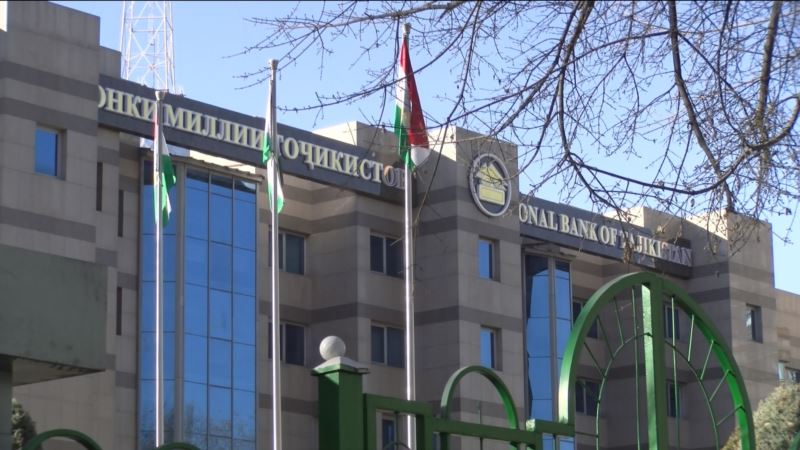
Nepotism and providing large loans to acquaintances are reportedly among the main reasons hampering development of Tajikistan banking system.
Speaking at a consultative seminar in Dushanbe, the deputy head of the National Bank of Tajikistan (NBT), Sirojiddin Ikromi, noted on March 6 that internal shortcomings of lending agencies such as “wrong arrangement of principles of corporate governance, providing large loans to acquaintances, mixing by heads of ending agencies of personal business and banking activity as well as lack of a single standard of evaluation of the pledged property hamper stable activity of the country’s banking system.”
He called on the lending agencies to submit their proposals on how to tackle problems existing in the country’s banking system for consideration to the National Bank.
Recall, in his address to the joint session of both chambers of parliament, President Emomali Rahmon said on December 22 that the current situation in the country’s banking system, improper level of crediting of the national economy and instability require measures.
He ordered to develop an additional plan of actions to improve activities of Tojiksodirotbonk and Agroinvestbonk, because “the previous measures were unsatisfactory.”
The head of state ordered the National Bank of Tajikistan (NBT) to reform the country’s monetary and credit system, using experience of the advanced countries.
Rahmon, in particular, noted that deposits kept in banks have amounted to nearly 9 billion somoni by November 30, 2017, which was 5 percent or 464 million somoni les than in the same period of 2016.
The president noted that total lending decreased by 4 percent last year.
Over the first eleven months of last year, crediting of production entrepreneurship increased by only 4 percent, while crediting of the service sphere over the same period increased by 43 percent, the head of state noted.
“Such a situation has a negative impact on the level of development of the real sector of economy, especially the process of industrialization in the country,” Rahmon said.
A report by the World Bank, Tajikistan: Heightened Vulnerabilities, Despite Sustained Growth, notes that despite a considerable capital injection in 2016—totaling more than 6.1 percent of GDP – Tajikistan’s two main banks remained operationally insolvent and in breach of regulatory prudential norms. Although the system-wide capital adequacy ratio improved from 15.1 percent in December 2016 to 19.4 percent in June 2017, non-performing loans (NPLs) remained at more than 50 percent of total loans on average; this figure was even higher in distressed banks. Other financial soundness indicators (such as liquidity and exposure to foreign exchange risk) reportedly also showed a deteriorating trend. Unresolved banking sector issues have translated into negative spillovers to the economy with total lending contracting by 4 percent year on year in somoni terms (14 percent in U.S. dollar terms) in the first half of 2017.
Similarly, the volume of outstanding deposits fell by 2 percent in somoni terms and 13 percent in U.S. dollar terms, the report said, noting that limits and the inability of banks to meet their operational obligations due to liquidity shortages and continued insolvency constrained deposit withdrawal. While some positive steps were taken to stabilize the financial system, the required comprehensive approach—including the package of legislative amendments and institutional changes for banking resolution—reportedly remains pending.