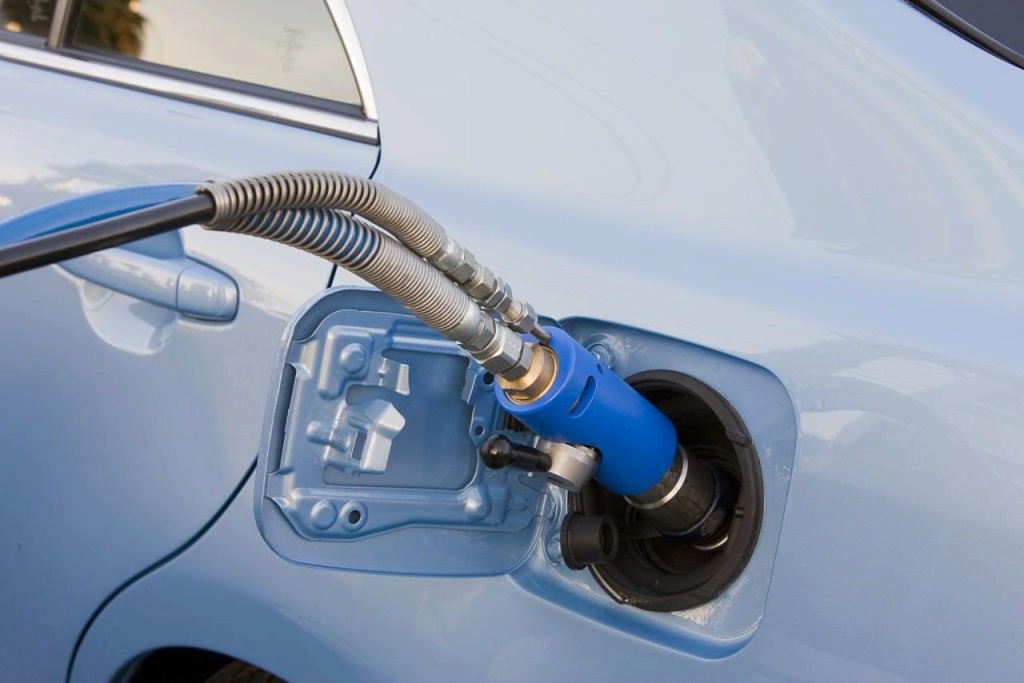
Tajikistan’s legislation does not allow the Antimonopoly Agency to regulate prices for liquefied natural gas (LNG). Meanwhile, experts propose to introduce amendments to the country’s legislation so that government could control prices for LNG as this type of fuel is used by the majority of country’s motor vehicles.
The Antimonopoly Agency reportedly does not have the right to regulate the LNG prices because it does not relate to socially significant goods and services mentioned in the country’s law on trade and socially significant goods and services.
“The law determines a list of the socially significant goods and services and the liquefied natural gas does not relate to them. Therefore, the Antimonopoly Agency does not have the right to regulate its prices,” an official source at the Antimonopoly Agency told Asia-Plus in an interview.
In accordance with the mentioned law, the socially significant include bread and bakery products, rice, flour, salt, sugar, tea, meat, dairy products (milk, yoghurt, curds), animal and vegetable oils, eggs, fishes, potatoes, cabbages, carrots, onions, beets, macaroni products, cereals, as well as non-foodstuffs such as detergents, soaps, tooth pastes, tooth brushes, books, stationeries, sewing needles and threads, hosieries, matches, candles and flashlights.
Based on this list, the Antimonopoly Agency has prepared the list of sixteen socially significant goods, prices for which are liable to the government regulation. This list includes wheat flour (grade 1 and 2); bakery products (from wheat flou3 grade 1 and 2); macaroni products; wheat rice; potatoes; vegetables (carrots, onions, cabbages); sugar and granulated sugar; cooking oils (cotton oil and sunflower-seed oil) and butter; dairy products (milk, yoghurt, curds); lentils, peas, beans, barleys; meat (beef, lamb, poultry); hen’s eggs; salt; tea (black and green); and children’s goods.
Meanwhile, some local experts propose to introduce amendments to the country’s legislation so that government could control prices for LNG as more than 60 percent of the country's motor vehicles use liquefied gas as fuel.
“Over the past month, the price for the liquefied natural gas in Dushanbe has risen nearly 40 percent and this has led to increase in prices of other goods,” a vendor, who runs a shop at one of Dushanbe’s markets, told Asia-Plus in an interview.
The Antimonopoly Agency had previously noted that cannot influence the LNG prices as there are no monopolists in the domestic LNG market.
In accordance with the country’s antimonopoly legislation, companies accounting for 35 percent of market are put on the register of dominating companies. Before introducing new fees, such companies must coordinate them with the Antimonopoly Agency.
According to the Antimonopoly Agency, no one of LNG retailers in Tajikistan accounts for 35 percent of the country’s LNG market.
According to data from the Antimonopoly Agency, Temour Oil LTD now accounts for 16 percent of Tajikistan’s LNG market, Guli Surkh Continent – 14 percent, Octane-Service LTD – 13 percent, Gahirat-82 LTD – 11 percent, Gazpromneft-Tajikistan – 8 percent, Gazoil LTD – 7 percent, Gazneft LTD – 6 percent, and Mabdai Nour LTD – 5 percent.
The Antimonopoly Agency does not provide any information about Faroz Company, which is one of Tajikistan’s largest gas retailers.
In all, thirty-five companies are reportedly engaged in supplying the liquefied natural gas to Tajikistan.
Under this situation, some experts propose to put LNG and other types of fuel on the list of the socially significant goods through introducing amendments to the country’s law on trade and socially significant goods and services.