The spring 2018 edition of the biannual Tajikistan Economic Update by the World Bank (WB), Changing Regional Environment: Critical to Capitalize, outlines the economic situation in Tajikistan, as well as the medium-term development prospects.
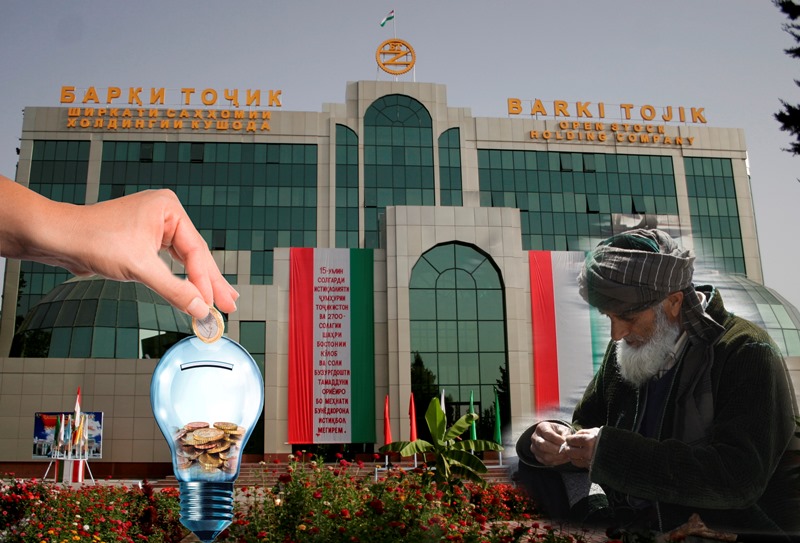
Concerning the country’s energy sector, the report notes that the main service provider in the energy sector covering all functions from generation and transmission to distribution, the vertically-integrated Barqi Tajik, is one of Tajikistan's largest state-owned enterprises. With tariffs below cost-recovery levels, low and variable collection rates for electricity and suboptimal financial management at Barqi Tojik, the energy sector has reportedly been in financial distress for years.
To improve the company’s managerial performance the government has unbundled functions of Barqi Tojik by creating legally separate and independent entities for energy generation, transmission and distribution, according to the report. In addition to structural and institutional changes, the government initiated reforms to improve the sector’s governance and financial viability and sustainability. In line with the Program on Financial Recovery of Barqi Tojik for the period of 2017-22, the Government of Tajikistan has reportedly already implemented a number of important activities, including tariff increases; reduction of payables to Sangtuda-1; improvement of the collection rates for billed electricity; elimination of cross-subsidies among some categories of tariffs for consumers and initial plans to restructure Barqi Tojik’s debt connected with government sub-lending.
All the above are reportedly critical for building solid grounds for attracting additional investments to the sector especially from the private sector.
At the same time, the government will need to develop mechanisms to mitigate the negative impact of electricity tariff increase on the poor and vulnerable parts of population. In addition, a solid set of fiscal rules will need to be established to properly monitor and manage export proceeds to be generated by the sector after Roghun joins the generation stream to ensure commensurate revenues for fiscal needs, the report noted.
According to the report, Tajikistan’s real GDP growth accelerated to 7.1 percent in 2017, and was sustained at 7 percent during the first quarter of 2018. This took place on the back of a robust recovery in remittances, driven by restored growth in Russia and an improved external environment. A boost in the mining sector supported net exports, which contributed substantially to overall GDP growth.
Inflows of FDI reportedly contracted by 14.3 percent year-on-year in 2017, to 2.8 percent of GDP, reflecting continuing challenges in the banking sector and a persistent lack of investor confidence, despite the expansion of government investment incentives. Public investment contributed almost three-quarters of total investment in the Tajik economy.
Several regulatory initiatives by the National Bank of Tajikistan (NTB), coupled with recovering private business activity, helped reduce the level of non-performing loans (NPLs) from 47.6 percent in 2016 to 36.5 percent in 2017. While resolution of two troubled banks awaits a government decision, depositors continue to struggle to withdraw personal savings due to liquidity shortages.
The report says that progress on structural reforms—including the resolution of pending challenges in the financial sector, which inhibit the development of a vibrant private sector—remained weak in 2017. Poverty declined, but with significantly slower rates, falling to an estimated 29.5 percent.