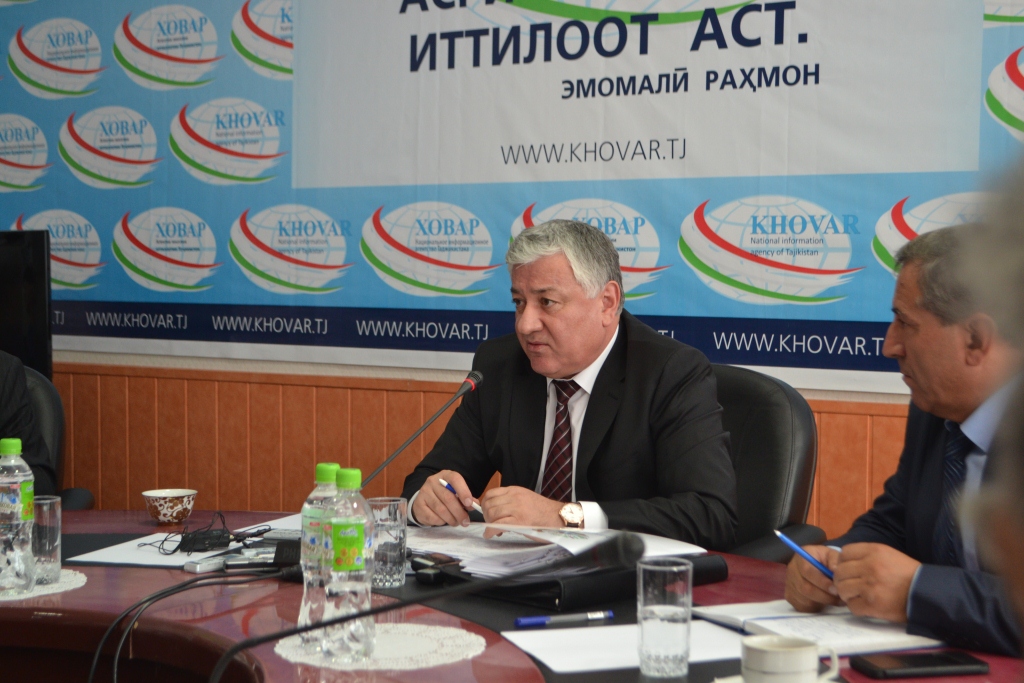
In a report released at a news conference in Dushanbe, Shermuhammad Shohiyon, the head of the Supreme Court of Tajikistan, noted on July 23 that a case of Muhiddin Kabiri, the leader of the banned Islamic Renascence Party of Tajikistan (IRPT), has moved to the Supreme Court and the trial is being held behind closed doors.
Recall, Shohiyon told reporters in Dushanbe on February 1 this year that that the Supreme Court has put IRPT leader Muhiddin Kabiri on trial in absentia. In 2017, Tajikistan amended legislation to let courts try and sentence suspects in absentia.
The case has been classified as “secret.” IRPT leader is accused of involvement in what the government says was an armed attempt to seize power, led by mutinous former Deputy Defense Minister Abduhalim Nazarzoda, in September 2015.
The Supreme Court head told reporters yesterday that criminal proceedings had been instituted against Muhiddin Kabiri under the provisions of 16 articles of Tajikistan’s Penal Code. “Thus, Kabiri is charged with killing in excess of self-defense (Article 107), inciting ethnic racial, regional or religious enmity (Article 189), theft of weapons, ammunition, explosives and explosive devices (Article 199), illegally bearing, possessing, and acquiring weapons (Article 195). Forcible seizure of power or forcible retention of power (Article 306), armed rebellion, public calls for the forcible overthrow of or changes to the constitutional order in Tajikistan (Article 307),” Shohiyon noted.
Party leader Muhiddin Kabiri, who now is in self-imposed exile abroad, denies any wrongdoing or involvement in the violence.
Founded in October 1990, the Islamic Revival Party of Tajikistan was the only Islamic party officially registered in former Soviet Central Asia. The IRPT was registered on December 4, 1991. It was banned by the Supreme Court in June 1993 and legalized in August 1999.
Since 1999, the party had reportedly been the second-largest party in Tajikistan after the ruling People’s Democratic Party of Tajikistan.
In the 2005 and 2010 parliamentary elections, the IRPT won two out of 63 seats in the parliament, but the party suffered a crushing defeat in Tajikistan’s March 2015 vote, failing to clear the 5 percent threshold needed to win parliament seats.
Tajikistan’s Supreme Court banned the Islamic Revival Party as terrorist group on September 29, 2015 on the basis of a suit filed by the Prosecutor-General’s Office. The Supreme Court ruled that the IRPT should be included on a blacklist of extremist and terrorist organizations. The verdict forces the closure of the IRPT’s official newspaper Najot and bans the distribution of any video, audio, or printed materials related to the party’s activities.
The Tajik authorities in late 2015 embarked on a wave of arrests of senior IRPT members.