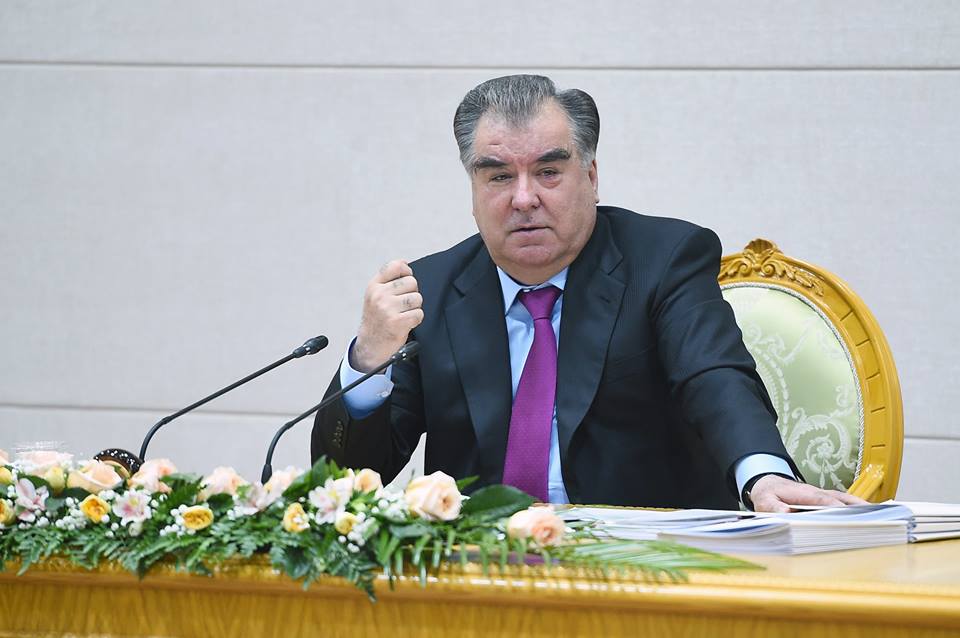
President Emomali Rahmon has suspended the decision of the Communications Service under the Government to set a new SIM card tariff for mobile phone companies operating in Tajikistan until January 1, 2019. He has also ordered Ozoda Rahmon, the chairperson of President’s Executive Office, to study the issues related to the SIM card prices and the number of SIM cards per person.
Speaking at a government session, President Emomali Rahmon yesterday ordered to temporarily reverse he communications service agency’s decision on setting the price for a SIM card at 250.00 somoni, Abdufattoh Sharifzoda, a spokesman for the president, told Asia-Plus in an interview.
“Emomali Rahmon raised the issue of stir that had arisen in recent days around the decision to set a new SIM card tariff and ordered to suspend the decision to set a new SIM card tariff until January 1, 2019,” Sharifzoda said.
Recall, the cost of a new SIM card in Tajikistan was supposed to rise to 250 somoni from September 1, 2018.
The new tariff has been set for four cellular companies active in Tajikistan: Babilon-Mobile; Tcell; TT-Mobile (Megafon-Tajikistan); and Tacom (Beeline TM).
In accordance with the approved tariff, the cost of a SIM card would be 215 somoni and 35 somoni would be put on subscriber’s balance. No payment would be collected if you lost your SIM card or it became disabled.
Currently, Tajik SIM cards for mobile phone cost practically nothing as subscribers acquire them from cellular companies together with package of services.
According to the communications service agency, the interior ministry has proposed to introduce fee for SIM cards for security reasons. The interior ministry has reportedly proposed to introduce fee for SIM cards in order to enhance responsibility of subscribers for possession of mobile phone number.
6.1 million SIM cards were reportedly reregistered in Tajikistan last year. On average, one cellular company sells up to 300,000 SIM cards per year.
Up to 2016 it was estimated that 70% of active SIM cards had been sold in Tajikistan without producing proper identification. Authorities are worried that unregistered SIM cards are making their way into the hands of terrorists. A campaign to confiscate ‘illegally-sold’ SIM cards was conducted in 2016 and the ban of illegally sold SIM cards is now much stricter enforced.
The government started a second registration or re-registration of all SIM cards in 2016. From November SIM card owners must bring their passport or other official ID documentation and their SIM to one of the cellco’s service centers to register their identity in compliance with the order. All new SIM cards are now legally only given out at the provider stores. This applies to visitors and tourists as well.
Control over the internet tightened in 2016 when laws for blocking of internet and telephone services during so-called 'counterterrorism operations' were introduced. Tajikistan adopted a law prohibiting the use of unidentified SIM cards.
Since 2017, Tajikistan citizens are only allowed to buy up to two SIM cards from one operator. Any additional SIMs per person will be blocked. Parents buying SIMs for their children need to present a birth certificate. In summer 2017 around 20% of all SIM cards in Tajikistan were disconnected, after the users failed to register their personal details.