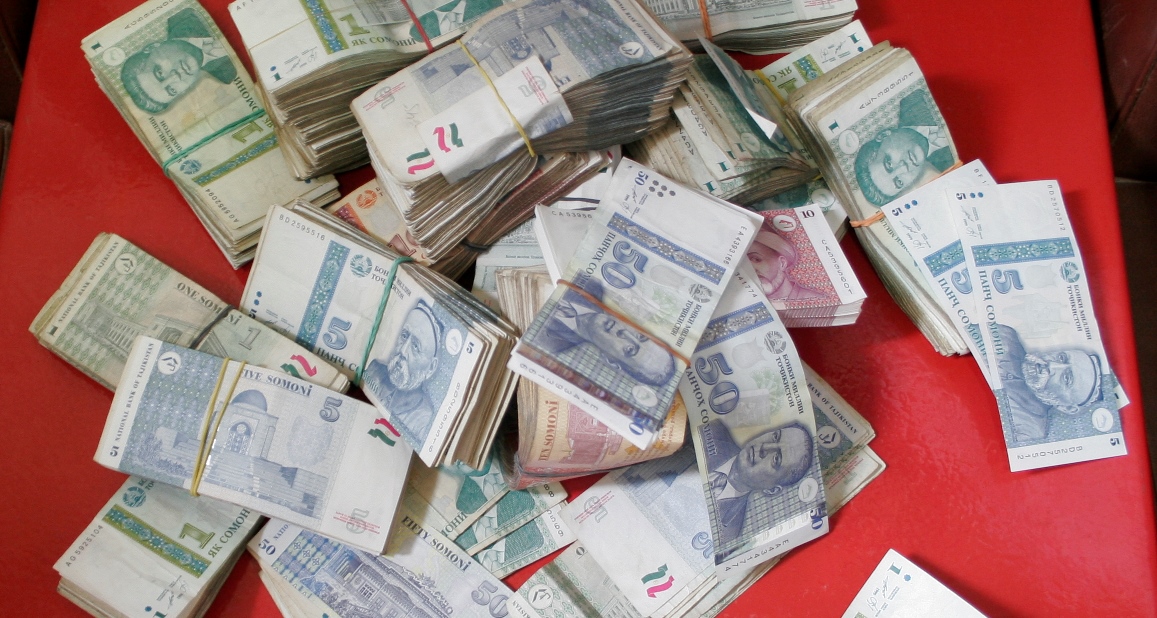
The Tajik national currency, the somoni, turned 18 on October 30, 2018. The currency is named after the father of the Tajik nation, Ismoil Somoni.
Introduced on October 30, 2000, the somoni replaced the Tajikistani ruble, at the rate of 1 somoni = 1000 rubles.
The notes bear the portraits of known Tajik poets, thinkers, public figures and politicians.
Thus, the one-somoni note carries the image of Tajik known poet and public figure Mirzo Tursunzoda; the three-somoni note carries the image of known Tajik statesman, Hero of Tajikistan Shirinsho Shotemour; and the five-somoni note carries the image of known Tajik writer and public figure Sadriddin Ayni.
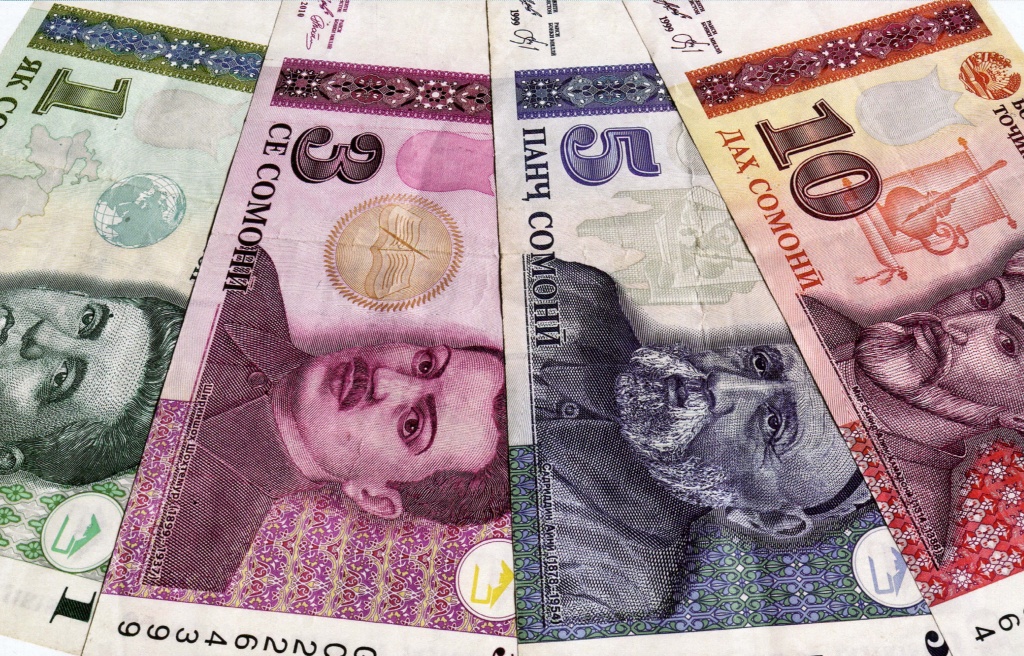
The 10-somoni note bears the image of Abu Ali Sino (Avicenna); the 20-somoni banknote bears the image of known thinker and poet Mir Said Ali Hamadoni; and 50-somoni note bears the image of Tajik know scientist and statesman, Hero of Tajikistan Bobojon Ghafourov.
The 100-somoni note carries the image of the father of the Tajik nation, Ismoil Somoni; the 200-somoni note carries the image of Tajik statesman, Hero of Tajikistan Nousratullo Maqsoum; and the 500-somoni note carries the image of the founder of Tajik classic literature Abu Abdullo Roudaki.
The currency is divided into 100 diram for one somoni. Diram banknotes were first introduced on October 30, 2000 to start the currency off and coins were introduced later in 2001 with the intention of creating a more efficient monetary system and gradually replacing the diram notes. This was also the first time circulating coins were introduced in Tajikistan.
Circulation coins, first issued in 2001 were struck in denominations of 5, 10, 20, 25, 50 diram composed of brass clad steel and 1, 3, and 5 somoni in nickel clad steel. Bimetallic 3 and 5 somoni coins were first released in 2003. The reverse of all somoni coins are changed annually and commemorate various events. A second issue dated 2011 was issued in June 2012, and included 5, 10, 20, 50 dirams and 1 somoni.
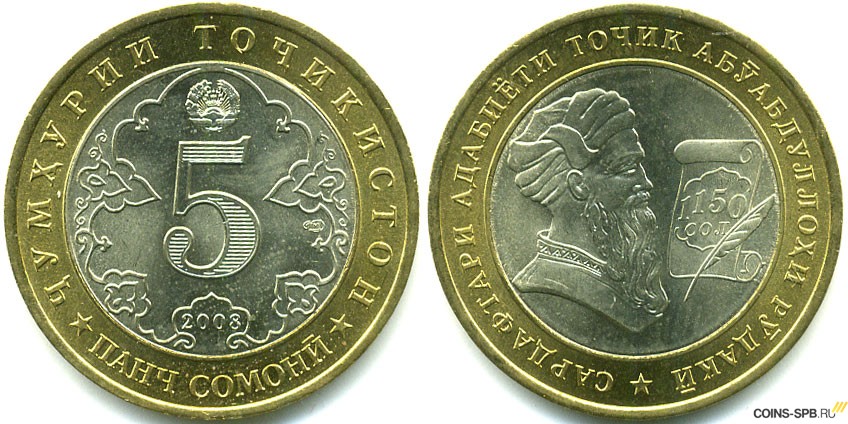
Tajikistan coins are struck by Goznak at the Saint Petersburg Mint in Russia.
On the occasion of the 2700th anniversary of the city of Kulob silver coins of 3 somoni’s denomination have been put into circulation and on the occasion of the Year of Aryan Civilization silver coins and coins produced from cupro-nickel allow of 1 somoni’s denomination have been put into circulation in Tajikistan.
The new 500-somoni pure silver coins were distributed in 2005 on the occasion of the 600th anniversary of Tajik-Persian poet and scholar Abdurrahman Jami, the 700th anniversary of Persian poet and prominent Muslim scholar Mir Syed Ali bin Shahab-ud-Din Hamadani, and the 20th anniversary of Tajikistan’s Constitution. The coins were minted at the Mayer Mint GmbH in Germany
In 2006, the NBT minted golden coins of 50, 10, and 200 somoni’s denomination in St. Petersburg on the occasion of the 15th anniversary of Tajikistan’s Independence. Besides, 3,000 silver coins of 50 somoni’s denomination were issued in 2011 on the occasion of the 20th anniversary of Tajikistan’s Independence. The coins were also minted at the International Coin House in Switzerland.
To-date, 33 kinds of commemorative and jubilee coins have reportedly been issued.
Meanwhile, Director of the branch of the state insurance company, Tojiksughurta, in the Shahrinav district, Sharif Karim, in Sewptemeber 2016 proposed to make President Emomali Rahmon’s image on the 1000-somoni banknote (if that bill existed it will become the highest-denomination banknote in the country).
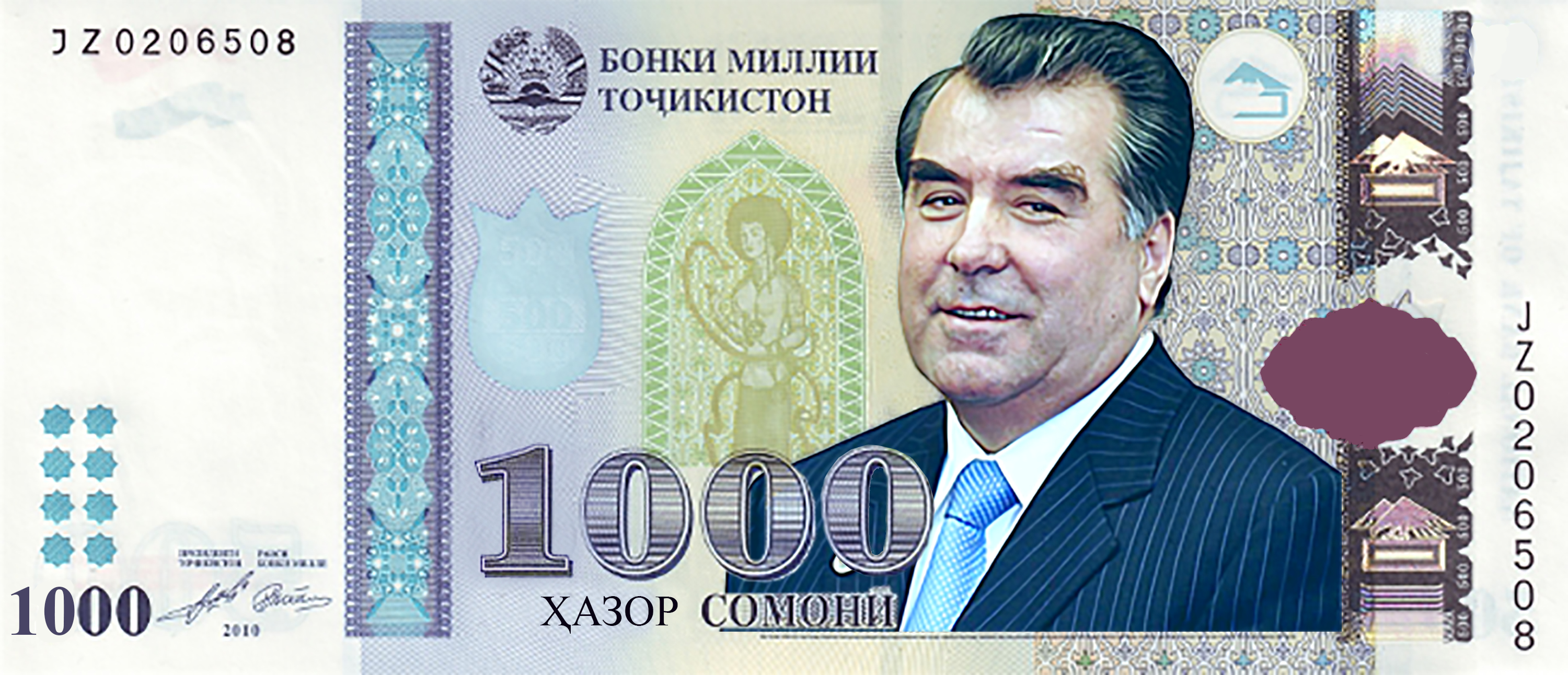
Writing in Tajikistan newspaper, Sharif Karim suggested that Rahmon have his image included on the heretofore inexistent 1,000 somoni note. “On the threshold of Tajikistan’s 25th anniversary of independence it would be a good thing for the country, since a just and wise leader is a gift from God to the nation,” Karim said.