UK ratifies Kremlin-linked oligarch blacklist

The British government has made and approved a blacklist of oligarchs close to the Kremlin whose freedom of movement in the UK and the rest of Europe will be restricted. The list, which was recently signed by British Prime Minister Theresa May, includes Rosneft executive chairman Igor Sechin, Evraz co-owner Roman Abramovich, MegaFon primary shareholder […]

The British government has made and approved a blacklist of oligarchs close to the Kremlin whose freedom of movement in the UK and the rest of Europe will be restricted.

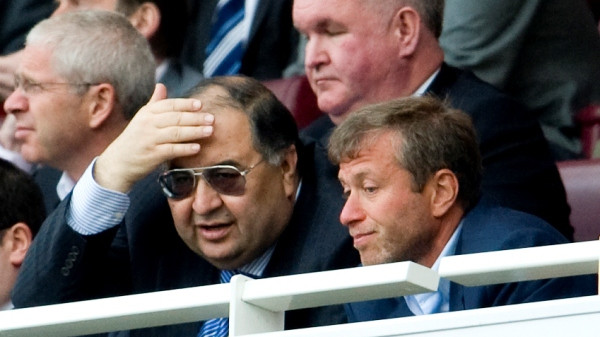
The list, which was recently signed by British Prime Minister Theresa May, includes Rosneft executive chairman Igor Sechin, Evraz co-owner Roman Abramovich, MegaFon primary shareholder Alisher Usmanov, RusAl owner Oleg Deripaska, as well as the brothers Arkady and Boris Rotenberg, who have all amassed wealth from Russian government contracts during Vladimir Putin’s presidency.

Citing high-ranking British officials, The Telegraph says the list of six wealthy high-profile Russians has been drawn up by intelligence agencies and submitted to Theresa May.

The Prime Minister has reportedly approved the list and the names of the oligarchs will be circulated across Whitehall departments and shared with the UK’s allies in Europe and in North America in an attempt to disrupt their ability to travel and to maintain their business empires. 

The freedom of movement of the blacklisted Russians will be restricted in the UK, Europe and “anywhere else.”

Roman Abramovich, the 11th wealthiest person in Russia with an estimated $10.8 billion according to Forbes, was reportedly placed on the list because he “provides Putin with the most significant financial support”. Deripaska (worth $6.8 billion) is also believed to support the Kremlin financially, according to The Telegraph.

In the report, Igor Sechin is named the “energy baron” and “Russia’s most powerful oligarch”.

The list of Kremlin-linked oligarchs was ratified three days after London announced the end of the Tier 1 “golden visa” program. These visas were particularly popular among Russians and Chinese, and were issued for a period of three years and four months, with a possible two year extension, in exchange for investments in the British economy of at least £2 million.

The document signals a ratcheting up of Britain’s new cold war with the Kremlin.
Join us on social media!

Article translations:

Related Article

Tenisi
Оби зулол
Оби зулол

Most Read

Коммерсбонк Точикистон

Recent Articles

RZD announces the restoration of passenger services between Moscow and Dushanbe

Direct rail services between the capitals of Russia and Tajikistan were suspended in March 2020 due to the COVID-19 pandemic.

#AP30/Stories. “Selam! Heller nichek?” How Tatars live today in Sughd province

On the 30th anniversary of "Asia-Plus," we continue to publish reports that remain relevant even after years. This story was told in 2021, and since then, little has changed in the life of the Tatar community in Tajikistan.

15,000 cameras, drones, and robots: how technology monitors pilgrims in Mecca and Medina

During Hajj 2026, Mecca and Medina were under unprecedented digital control.

Another child in Dushanbe removed from family and sent to boarding school

The Ministry of Internal Affairs reports that the parents did not pay adequate attention to the child.

Emomali Rahmon instructs to address issues in seed production following criticism of the industry

Issues have been noted with certification, seed quality, and the material and technical base of the industry.

Water, climate, and a $130 billion deficit: seven key outcomes of the Water Conference in Dushanbe

At the forum, countries and international organizations discussed new mechanisms for cooperation, investments, and technologies that are essential for addressing the global water crisis.

Eskhata Bank introduces a new generation children’s wallet

"Eshkata Bank" has created a full-fledged digital platform that helps children aged 7 to 16 learn how to manage money.