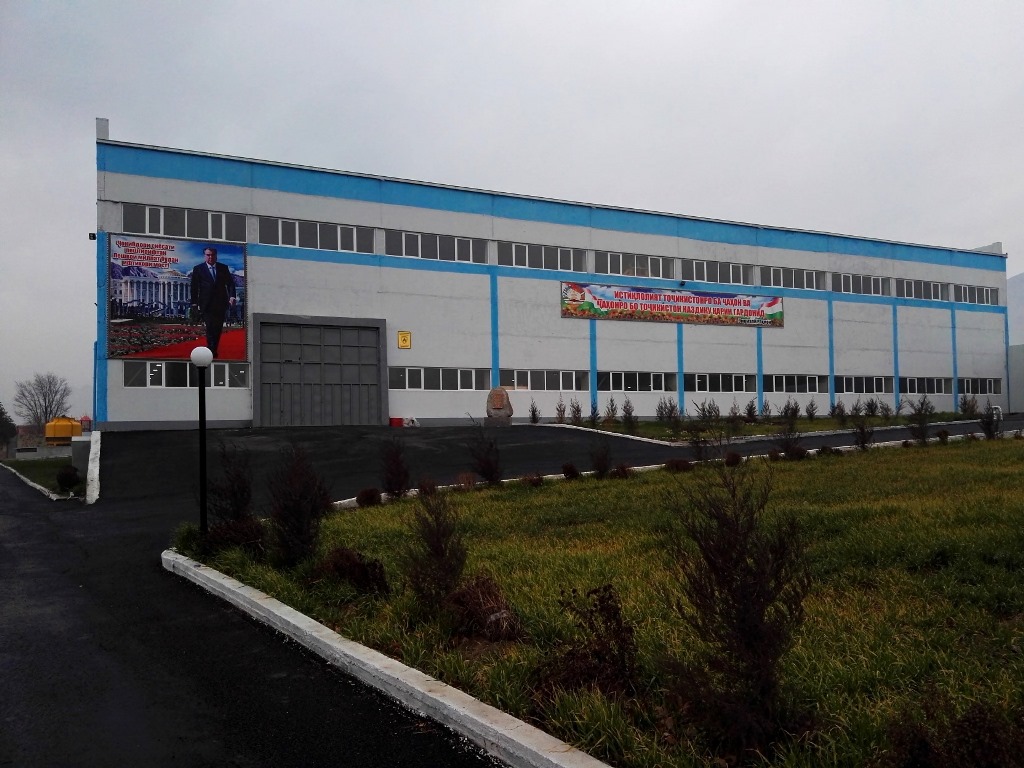
Director-general of the Administration of the Sughd Fee Economic Zone (FEZ Sughd), Firdavs Olimzoda, says most corporate residents of FEZ Sughd produce import substitution goods ranging from plastic tubes to baby carriages.
According to him, only two of twenty-two enterprises functioning in FEZ Sughd are now not in operation. “They probably did not consider into account possible risks while preparing their business-plans. Meanwhile, risks always exist in the entrepreneurial sphere, especially at the time of crisis,” Olimzoda said.
According to data from the Administration of FEZ Sughd, the volume of attracted investments last year amounted to 19.6 million somoni.
In all, 81 million somoni have been invested in FEZ Sughd since it was established in May 2008.
“This year, we expect sharp increase in investment due to several enterprises being constructed within FEZ Sughd,” said Olimzoda.
According to him, an entrepreneur from Samarqand and a Kazakh businessman intend to invest significant funds in FEZ Sughd this year.
Twenty-five corporate residents are reportedly registered with FEZ Sughd and fourteen of them are operating enterprises.
In 2018, corporate residents of FEZ Sughd produced 116 million somoni worth of industrial goods, which is 36 million somoni more than in 2017, Olimzoda said, noting that exports last year amounted to 17.1 million somoni.
Olimzoda has named lack of state financial support as one of factors impeding attraction of large foreign capital. “Only tax incentives are not enough,” he added.
The Sughd Free Economic Zone or FEZ Sughd is a free economic zone located in the northern Sughd province on the territory of the south-west industrial zone of the city of Khujand. FEZ Sughd was created in 2008 by a parliamentary decree on 320 hectares of land for 25 years and began operating in August 2009.
Geological and geodetic surveys were made in this area as well as the design work was carried out. In this part of the city there is a possibility to expand the territory of FEZ Sughd up to 2,000 hectares of land at the expense of free space in the future.
To-date, the Administration of the FEZ Sughd has twenty-five corporate residents of the free economic zone.
Four free economic zones now operate in Tajikistan: FEZ Sughd (Sughd province); FEZ Panj (Khatlon province); FEZ Danghara (Khatlon province) and FEZ Ishkashim (Gorno Badakhshan Autonomous Region – GBAO).
Besides, the Majlisi Namoyandagon (Tajikistan’s lower chamber of parliament) on March 20 this year endorsed the government’s decision to establish the free economic zone (FEZ) on the outskirts of the southern city of Kulob.
The free economic zones provide preferential terms for economic, financial, trade, information, and other activities for investors. The FEZs offer incentives to investors, including preferences on taxation and customs procedures.
In the early 2000s, foreign direct investment has remained low because of political and economic instability, the poor domestic financial system, and Tajikistan’s geographic isolation. To attract foreign investment and technology, Tajikistan has offered to establish free economic zones in which firms receive advantages on taxes, fees, and customs. In 2004, the parliament passed a law on free economic zones. The zones reportedly offer customs and tax incentives to qualified investors that invest at least 500,000 USD and import at least 90% of the technology and equipment.