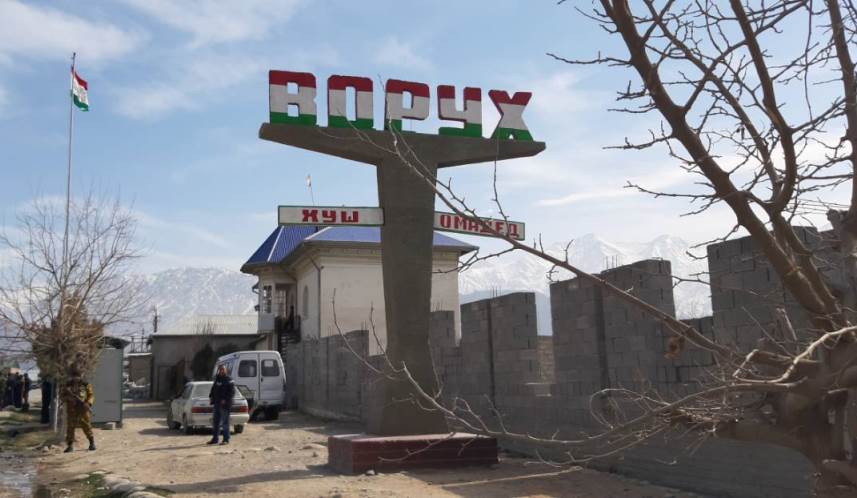
A joint investigative group has been set up to investigate the cause of clashes that sparked between residents of border areas of Tajikistan and Kyrgyzstan last month.
“The joint investigative group members include skilled investigators from Tajikistan and Kyrgyzstan and the chief prosecutors of the two countries will control the process of investigation,” an official source at the Prosecutor-General’s Office of Tajikistan told Asia-Plus in an interview.
According to him, the investigators will report the results of work and conclusions directly to the chief prosecutors of the two countries.
Recall, the latest unrest erupted on March 13 after Kyrgyzstan restarted work on a controversial Aksai-Tamdyk road in the disputed section of the Tajik-Kyrgyz border.
Two Tajik nationals were killed and more than 30 others wounded in two days of clashes. Kyrgyzstan listed three injured on its side.
Tajik border service argues that completion of this road will lead to the stemming of a river and leave Vorukh without irrigation for its valuable apricot and walnut cash crops.
The Tajik-Kyrgyz commission for delimitation and demarcation of the mutual border met in Dushanbe on April 5-6.
Presided over by Tajik Deputy Prime Minister Azim Ibrohim and Kyrgyz Vice-Premier Jenish Razzakov, the session that was held behind closed doors reportedly ended with signing of a protocol, under which the two sides agreed to cooperate on preventing provocations along the disputable stretches of the mutual border.
The total length of Tajikistan’s common border with Kyrgyzstan is 976 kilometers, of which only 504 kilometers been delimited and demarcated so far.
The Tajikistan-Kyrgyzstan border remains one of the last undefined frontiers in the Commonwealth of Independent States (CIS). Despite repeated incidents over the past several years, Tajikistan and Kyrgyzstan remain unable to settle their Fergana valley border.
Tajikistan and Kyrgyzstan have been unable to agree on the location of the border they inherited when the Soviet Union collapsed in 1991. As the population in the dense Ferghana Valley grows, it has become increasingly difficult to demarcate the contested sections, where valuable agricultural land often lies.
The area at the focus of unrest among residents of border areas of the two countries lies on the jagged frontier where the east of Tajikistan’s Sughd province and Kyrgyzstan’s Batken region meet. Skirmishes have sparked between residents of Isfara (Tajikistan) and Batken (Kyrgyzstan) districts along the Kyrgyzstan-Tajikistan border. Trouble periodically sparks around the Tajik exclave of Vorukh.