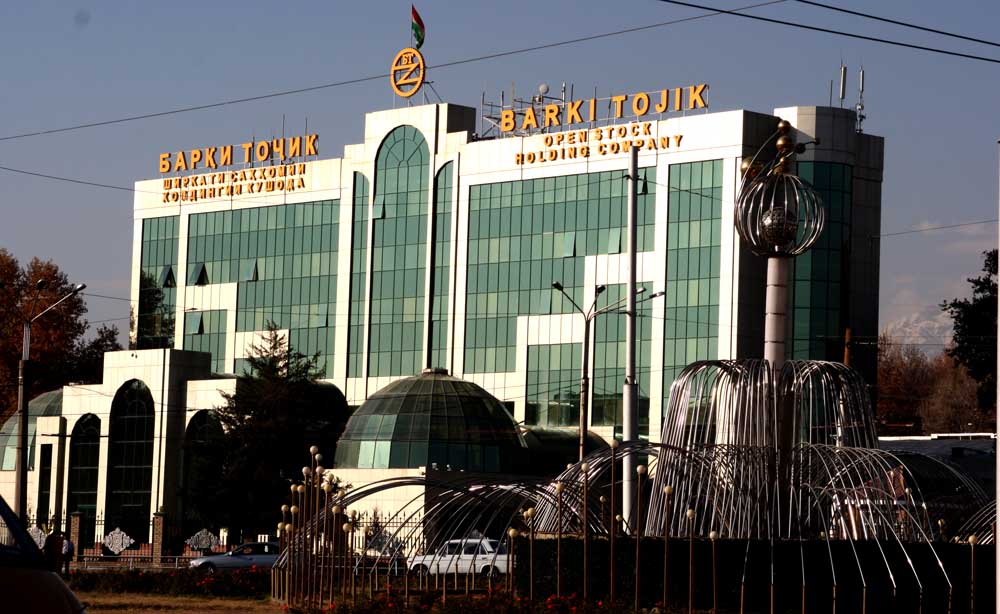
The Government of Tajikistan is seeking financial support from development partners for implementation of a financial recovery program for the Barqi Tojik (Tajikistan’s state-owned power utility company).
To improve the efficiency and financial standing of the country’s power sector, the Tajik authorities have developed a Financial Recovery Program for Barqi Tojik.
According to the World Country Office in Tajikistan, the Government has asked the World Bank and other development partners to finance this Program.
The World Bank will avail of the Program-for-Results (PforR) financing instrument to support the Government of Tajikistan’s Financial Recovery Program for Barqi Tojik. During preparation of the PforR, the Bank is required to complete an assessment of environmental and social systems in Tajikistan which are relevant to the Financial Recovery Program of Barqi Tojik. The draft ESSA outlines the results of this assessment.
The overall objective of the ESSA (Environmental and Social System Assessment) is to minimize any potential risks and promote sustainable development. As such, the Assessment aims to: identify potential environmental and social benefits, risks and impacts; review the policy and legal framework related to management of environmental and social impacts; assess the institutional capacity for environmental and social management systems; assess the performance of the Financial Recovery Program; and identify gaps, if any, in the effective implementation of the PforR, and outline actions and measures to fill those gaps.
It is to be noted that Tajikistan’s power utility company is now in a difficult financial state. As of January 1, 2019, Barqi Tojik’s total debts amounted to 23.1 billion somoni (equivalent to some 2.5 billion U.S. dollars).
The process of restructuring of Barqi Tojik is under way and Barqi Tojik is expected to be divided into three independent companies already this year: (i) generation; (ii) transmission business; and (iii) distribution.
Tajikistan’s power sector is comprised of the vertically integrated energy company, Barqi Tojik, three independent power producers (IPPs), and a concession in Gorno-Badakhshan Autonomous Region (GBAO) combining power generation and distribution.
Barqi Tojik is fully owned by the Government. It owns and operates most of the electricity generating plants and is also responsible for electricity transmission, dispatch, and distribution services to around 8 million people in all regions of the country except for GBAO.
Two of the IPPs – Sangtuda-1 and Sangtuda-2 hydropower plants (HPPs) – were constructed with investments from Russian and Iranian state-owned companies, and supply electricity to Barqi Tojik under 20-year power purchase agreements (PPAs). Third IPP – Roghun HPP – is under construction.
Pamir Energy Company (PEC) generates and supplies electricity to around 200,000 people in GBAO under 25-year concession agreement.