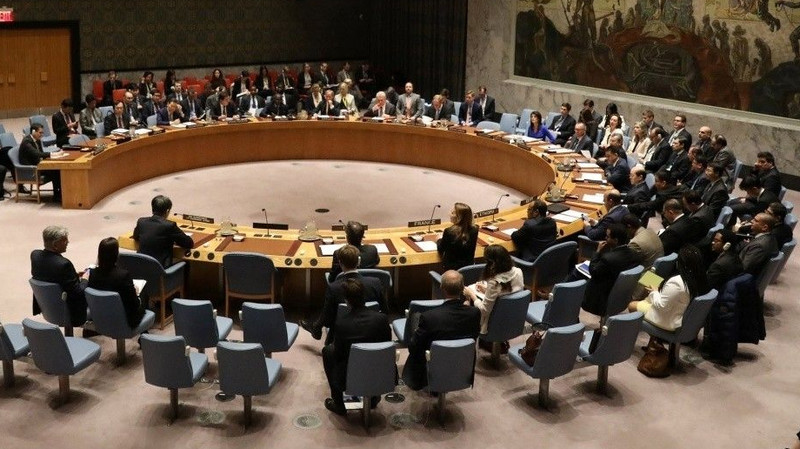
Over the course of the past decade, there has been “a paradigm shift” in understanding the devastating impact of sexual violence in conflict on international peace and security, UN Secretary-General Antonio Guterres told the Security Council during a high-level debate on April 23, according to UN News Center.
At the meeting marking the 10th anniversary of the adoption of resolution 1888, which created the mandate of the Special Representative on Sexual Violence in Conflict, the Council adopted a German-drafted resolution to reduce sexual violence in conflict and end rape as a weapon of war, with 13 in favor, and two countries, Russia and China, abstaining.
Lengthy negotiations reportedly took place over the wording of the final resolution, with some Members arguing against the establishment of a formal new reporting mechanism, and also references to womens' reproductive and sexual health service provisions.
Addressing the overall scourge, Mr. Guterres said that “Local civil society organizations, many of them women’s organizations, are on the frontlines of our efforts to prevent and provide redress for this crime, and they deserve our strong and consistent support."
Sexual violence in war “largely affects women and girls because it is closely linked to broader issues of gender inequality and discrimination”, Mr. Guterres said, adding that “prevention” must be based on “promoting women’s rights and gender equality in all areas, before, during and after conflict”.
“This must include women’s full and effective participation in political, economic and social life and ensuring accessible and responsive justice and security institutions”, he said.
Mr. Guterres also recognized the links between sexual violence in conflict, gender inequality and discrimination, and violent extremism and terrorism.
“I encourage this Council to include the prevention of conflict-related sexual violence in all your country-specific resolutions, and in the mandates of peace operations”, he said.
Mr. Guterres stressed the need to strengthen justice and accountability, saying that despite a handful of high-profile convictions, “there is widespread impunity for sexual violence in conflict” and that most “are never reported, investigated and much less prosecuted”.
He encouraged the Council to continue working together “to reconcile differences”, as the “global “response to these crimes must ensure punishment of the perpetrators and comprehensive support to survivors with full respect for their human rights”.
Although stigma and other social barriers contribute to the chronic underreporting of sexual violence, the UN Special Representative on Sexual Violence in Conflict, Pramila Patten, told the Council that “we now understand much more about its many forms, drivers, and impacts, and about the devastating physical, psychological, and social burdens survivors bear”.
And yet, after a decade of concerted attention and action to deal with this crime, she spelled out: “Wars are still being fought on, and over, the bodies of women and girls”.
“Sexual violence fuels conflict and severely impacts the prospects for lasting peace” Ms. Patten stated, adding that it is used “precisely because it is such an effective means to target individuals and devastate entire communities.”
“We must convert a centuries-old culture of impunity into a culture of accountability,” the Special Representative noted.