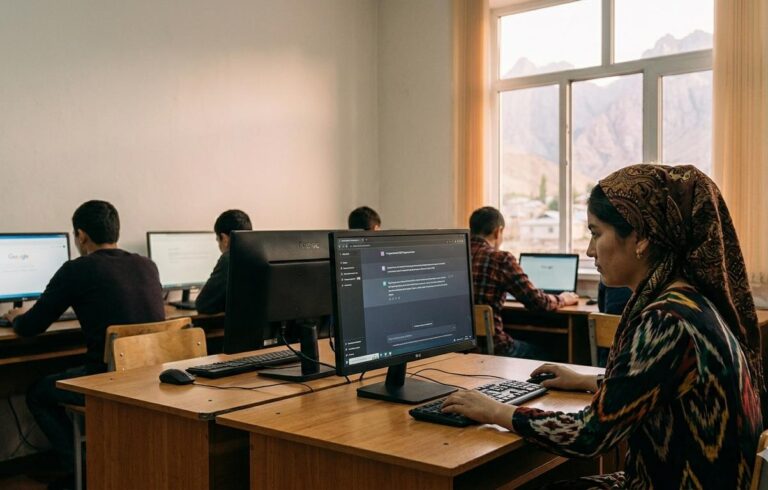
Unofficial leader of Tajikistan’s banned Salafiya movement supports decision to increase Internet rates

Eshoni Sirojiddin Abdurahmonov, the unofficial leader of Tajikistan’s banned Salafiya movement, has supported a government move to increase Internet rates, accusing social media of being the source of “all bad things in Tajikistan.”  According to Radio Liberty’s Tajik Service, locally known as Radio Ozodi, Abdurahmonov made an 18-minute video on April 20 in which he […]

Eshoni Sirojiddin Abdurahmonov, the unofficial leader of Tajikistan’s banned Salafiya movement, has supported a government move to increase Internet rates, accusing social media of being the source of “all bad things in Tajikistan.” 

According to Radio Liberty’s Tajik Service, locally known as Radio Ozodi, Abdurahmonov made an 18-minute video on April 20 in which he described the Internet as “the plague of the century.”

He also warned his fellow Tajiks not to listen to “people who instigate provocations.  Follow the leaders of the country.”

Abdurahmonov's video was posted on a Tajik YouTube channel called Oshiqoni Vatan, or “People Who Love Their Country,” where it was watched by about 3,000 people within three days.

Nearly 100 viewers reportedly “disliked” the Abdurahmonov’s lecture with a thumbs down rating.    About two dozen viewers “liked” the video, which has prompted a lively debate on YouTube, Facebook, and other social media.

“I ask all my beautiful sisters and people in Tajikistan not to waste your time on the Internet,” Abdurahmonov said, blaming it for "creating broken families, leading to lies, and inducing disrespect for parents and society.”

Recall, a court in Dushanbe’s Sino district sentenced seven Salafis to jail terms from 5 to 7 years on January 22, 2010.  Among them were Sirojiddin Abdurahmonov and his son, Kiromiddin Abdurahmonov.  The sentence followed their conviction on the charge of inciting national racial, regional or religious enmity.  Sirojiddin Abdurahmonov was sentenced to seven years in prison and Kiromiddin Abdurahmonov got a jail term of five years.

Then, in 2013, Abdurahmonov was pardoned and released under a general amnesty.

Since his release, Abdurahmonov has appeared to shy away from criticizing Rahmon or other state authorities.  But he has spoken out against the banned Islamic Renaissance Party of Tajikistan (IRPT), which Tajik authorities have labeled a “terrorist” group, calling it a “tool of foreign powers.”

Join us on social media!

Article translations:

Related Article

Оби зулол
Оби зулол
Tenisi

Most Read

Коммерсбонк Точикистон

Recent Articles

RZD announces the restoration of passenger services between Moscow and Dushanbe

Direct rail services between the capitals of Russia and Tajikistan were suspended in March 2020 due to the COVID-19 pandemic.

#AP30/Stories. “Selam! Heller nichek?” How Tatars live today in Sughd province

On the 30th anniversary of "Asia-Plus," we continue to publish reports that remain relevant even after years. This story was told in 2021, and since then, little has changed in the life of the Tatar community in Tajikistan.

15,000 cameras, drones, and robots: how technology monitors pilgrims in Mecca and Medina

During Hajj 2026, Mecca and Medina were under unprecedented digital control.

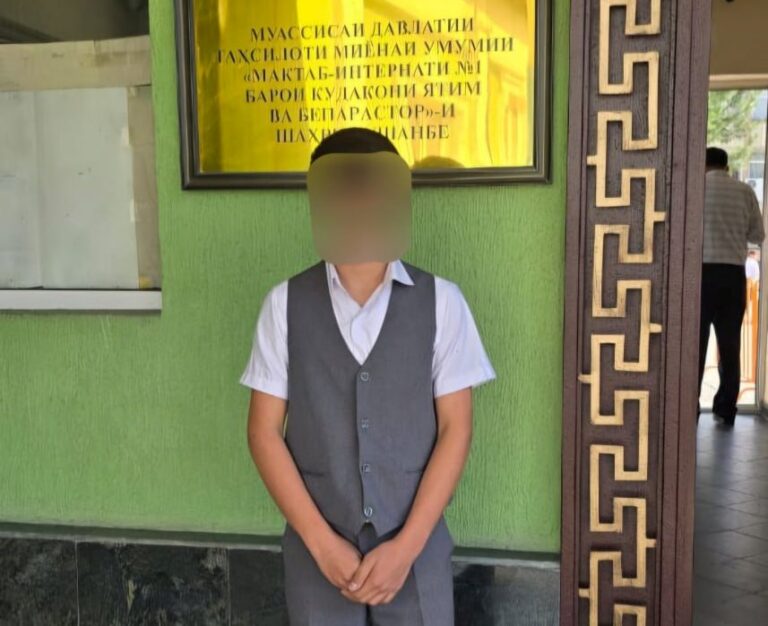
Another child in Dushanbe removed from family and sent to boarding school

The Ministry of Internal Affairs reports that the parents did not pay adequate attention to the child.

Emomali Rahmon instructs to address issues in seed production following criticism of the industry

Issues have been noted with certification, seed quality, and the material and technical base of the industry.

Water, climate, and a $130 billion deficit: seven key outcomes of the Water Conference in Dushanbe

At the forum, countries and international organizations discussed new mechanisms for cooperation, investments, and technologies that are essential for addressing the global water crisis.

Eskhata Bank introduces a new generation children’s wallet

"Eshkata Bank" has created a full-fledged digital platform that helps children aged 7 to 16 learn how to manage money.