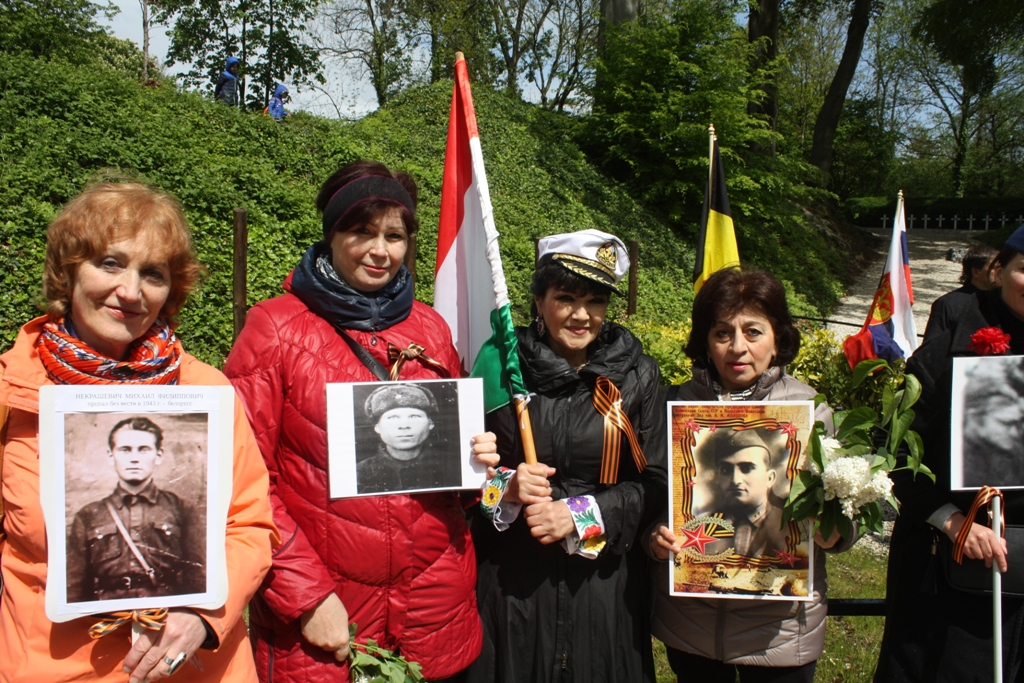
Members of Tajik Diaspora in Belgium joined the Immortal Regiment procession that took place in Liege on May 5.
About 400 people reportedly participated in the event that took place at the Enclos des Fusillés ("enclosure of those shot by firing squad") Memorial, the Citadel of Liege.
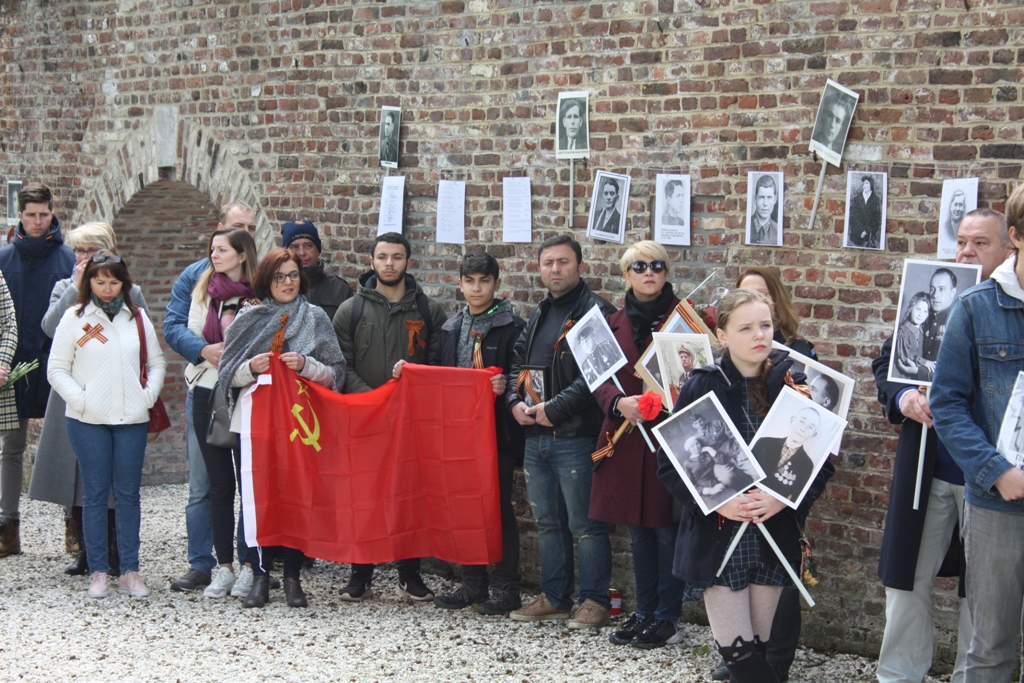
The Memorial was established in 1946 to those who had been executed in the citadel during World Wars I and II. The Enclos des Fusillés was dedicated in 1947, with 197 crosses commemorating the dead.
Despite being neutral at the start of World War II, Belgium and its colonial possessions found themselves at war after the country was invaded by German forces on May 10, 1940. After 18 days of fighting in which Belgian forces were pushed back into a small pocket in the north-east of the country, the Belgian military surrendered to the Germans, beginning an occupation that would endure until 1944. The surrender of May 28 was ordered by King Leopold III without the consultation of his government and sparked a political crisis after the war. Despite the capitulation, many Belgians managed to escape to the United Kingdom where they formed a government and army-in-exile on the Allied side. Many Belgians were involved in both armed and passive resistance to German forces.
Resistance to German occupation came from all levels and regions of Belgium and quarters of the political spectrum. Resistance to the occupiers chiefly came in the form of helping Allied airmen escape, and numerous lines were set up to organize this effort; for instance the Comet line which evacuated an estimated 700 Allied servicemen to Gibraltar. The Comet Line had a series of safe houses throughout Belgium. Allied airmen were given civilian clothes and were frequently moved from house to house, staying with Belgian families who supported the resistance. The resistance would aid the airmen by giving them false papers and guiding them to either neutral or Allied occupied territory.
Most of the country was liberated by the Allies between September and October 1944, though areas to the far east of the country remained occupied until early 1945. In total, approximately 88,000 Belgians died during the conflict.