A council to coordinate issues of fiscal risk management at state-run enterprises has been established in Tajikistan.
The Coordinating Council on Fiscal Risk Management at State-run Enterprises (Council) has been established in the country in accordance with government’s decree released on May 31, 2019.
According to the decree, the Council has been established under the Government of Tajikistan for the purpose of protecting financial and property interests, introducing corporate governance, and improving efficiency of activities of enterprises in which the government share is more than 50 percent.
The Council will meet at least twice a year, and in the case of necessity, the extraordinary meetings will be held.
The Coordinating Council on Fiscal Risk Management at State-run Enterprises will be led by the First Deputy Prime Minister and its members will include heads of relevant ministries and agencies as well as the head of the senior of the finance department of president’s executive office.
Fiscal risks are factors that may cause fiscal outcomes to deviate from expectations or forecasts. Fiscal risks can arise from macroeconomic shocks or the realization of contingent liabilities. These can be either explicit liabilities that are legally grounded (e.g., government loan guarantees) or implicit liabilities, where there is a public expectation of government responsibility not established in law (e.g., to bail out troubled subnational governments).
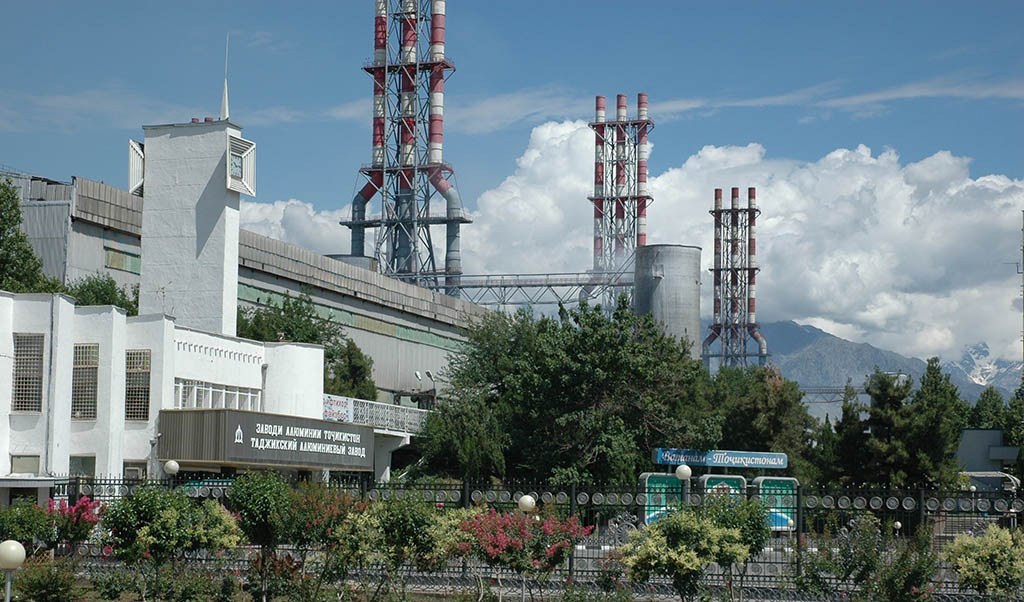
The Tajik Government is taking measures to reduce debts of state-run large enterprises.
According to official statistical data, a total debt of large and medium-sized enterprises rose 28.8 billion somoni (equivalent to more than 3 billion U.S. dollars) in a year to December 31, 2018, reaching more than 73 billion somoni (equivalent to more than 7.7 billion U.S. dollars).
The most incorrigible debtor is reportedly Barqi Tojik (Tajikistan’s national integrated power company). As of January 1, 2019, its debts reportedly amount to 32,1 billion somoni (equivalent to some 2.5 billion U.S. dollars).
According to data from the Ministry of Industry and New Technologies (MoINT), last year there were 127 enterprises, or more than 6.0 percent of the overall number (2,097), that were not in operation.
The government now has shares in 140 companies, including 135 joint-stock companies and four limited liability companies.
The government reportedly owns 100 percent of shares in 118 joint-stock companies and assumes more than 50% ownership interest in other companies.