Natural population growth is expected to begin in the Russian Federation only in 2024.
Natural population decline will continue in Russia at least until 2023, says Russia’s socioeconomic development forecast designed for 2020-2023 that has been submitted for consideration to the State Duma (Russia’s lower chamber of parliament) together with draft federal budget, according to TASS.
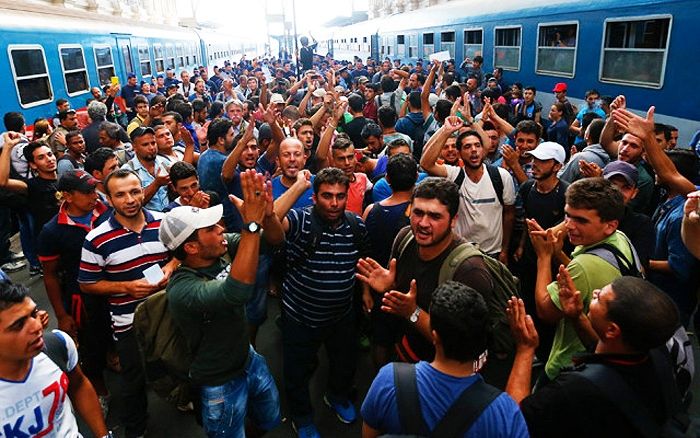
The document, in particular, says that natural population growth is expected to begin in the Russian Federation only in 2024 and migrants are key to population growth in the country.
Rosstat said in late December last year that population has decreased for the first time over the past decade. Migration flow has failed to compensate for the natural decline.
In April this year, Russian Deputy Prime Minister responsible for social and health policy, Tatiana Golikova, noted that every third region in Russia saw a spike in mortality rates in 2018. In a speech before Russia's lawmakers on April 3, Tatiana Golikova urged regional authorities to help counter the trend. According to her, Russia's population fell by 99,700 people last year.
Interfax noted that according to reports prepared for a Federation Council roundtable on social policy that took place in February this year, free Russian men are likely to die earlier than those in prison. Alcohol is seen as the culprit.
The Russian government has placed major emphasis on the demographic issue. From the mid-1960s to the late 1980s, the Russian population rose steadily, but the collapse of the Soviet Union ushered in a population crisis compounded by wage arrears, mass unemployment, and alcohol abuse. .
Since his assumption of power in 2000, President Vladimir Putin has made reversing the trend and stimulating population growth one of his signature policies.
In 2006, Vladimir Putin directed Russia’s parliament to develop a plan to reduce the country's falling birthrate. In a speech to parliament on May 10, 2006, Putin called the problem of Russia's dramatically declining population, “The most acute problem of contemporary Russia.”
Russia's population peaked in the early 1990s (at the time of the end of the Soviet Union) with about 148 million people in the country. Today, Russia's population is approximately 144 million. In 2010, the United States Census Bureau estimated that Russia's population will decline from the 2010 estimate of 143 million to a mere 111 million by 2050, a loss of more than 30 million people and a decrease of more than 20%.
The primary causes of Russia's population decrease and loss of about 700,000 to 800,000 citizens each year are related to a high death rate, low birth rate, high rate of abortions, and a low level of immigration.