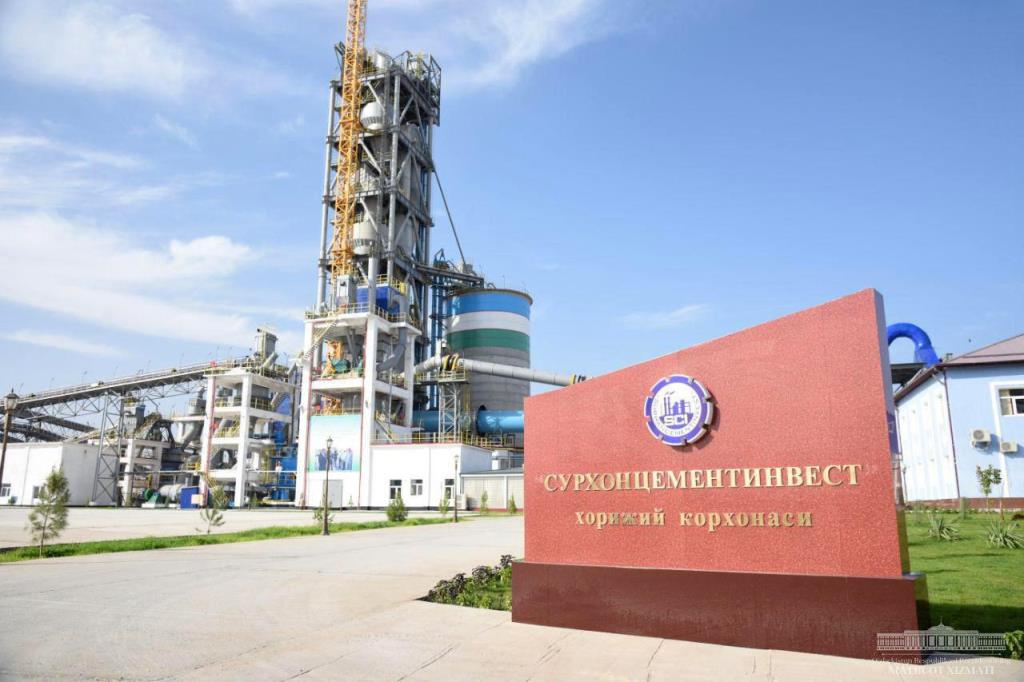
One more cement plant has been introduced into operation in Uzbekistan’s Surkhandarya region, which borders Tajikistan.
The new cement plant with capacity of 1.1 Mt/yr has been built in Jarkurgan district. According to the Uzbek president’s official website, a total cost of project is nearly 144 million U.S. dollars and the plant has created 1,125 new jobs.
The Jarkurgan cement plant is planned to export up to 750,000 tons of cement per year. In the future, the plan will produce dry building mixtures, hydrated lime and reinforced concrete products due to attraction of more than 12 million U.S. dollars in investment.
Recall, the cement plant with capacity of 1.5Mt/yr was introduced in Surkhandarya’s Sherabad district last year. Built in the territory of Vandob village at a cost of 212.8 million U.S. dollars the Sherabad cement plant created over a thousand new jobs. The main portion of the production is directed towards meeting the domestic demand.
Meanwhile, Uzbekistan’s Surkhandarya region still mainly uses cement imported from Tajikistan.
According to data from the Ministry of Industry and New Technologies (MoINT) of Tajikistan, Tajikistan has exported 725,000 tons of cement to Uzbekistan over the first nine months of this year, which was nearly 25 percent of the overall volume of cement produced in Tajikistan over the report period.
In January-September this year, Tajikistan has produced 3.1 million tons of cement of 2019.
Over the past three years, Uzbekistan’s cement exports to Uzbekistan has increased more than 21 times – from 35,000 tons in January-September of 2016 to 750,000 tons in the same period this year.
Surkhandarya region is located in the extreme south-east of Uzbekistan. Established on March 6, 1941, it borders on Qashqadarya region internally, and Turkmenistan, Afghanistan and Tajikistan externally, going anticlockwise from the north. It covers an area of 20,100 km².
The region has a well-developed transport infrastructure, with 300 kilometers of railways and 2,700 kilometers of surfaced roads. Central Asia's only river port is located in the regional capital of Termez on the Amudarya River.