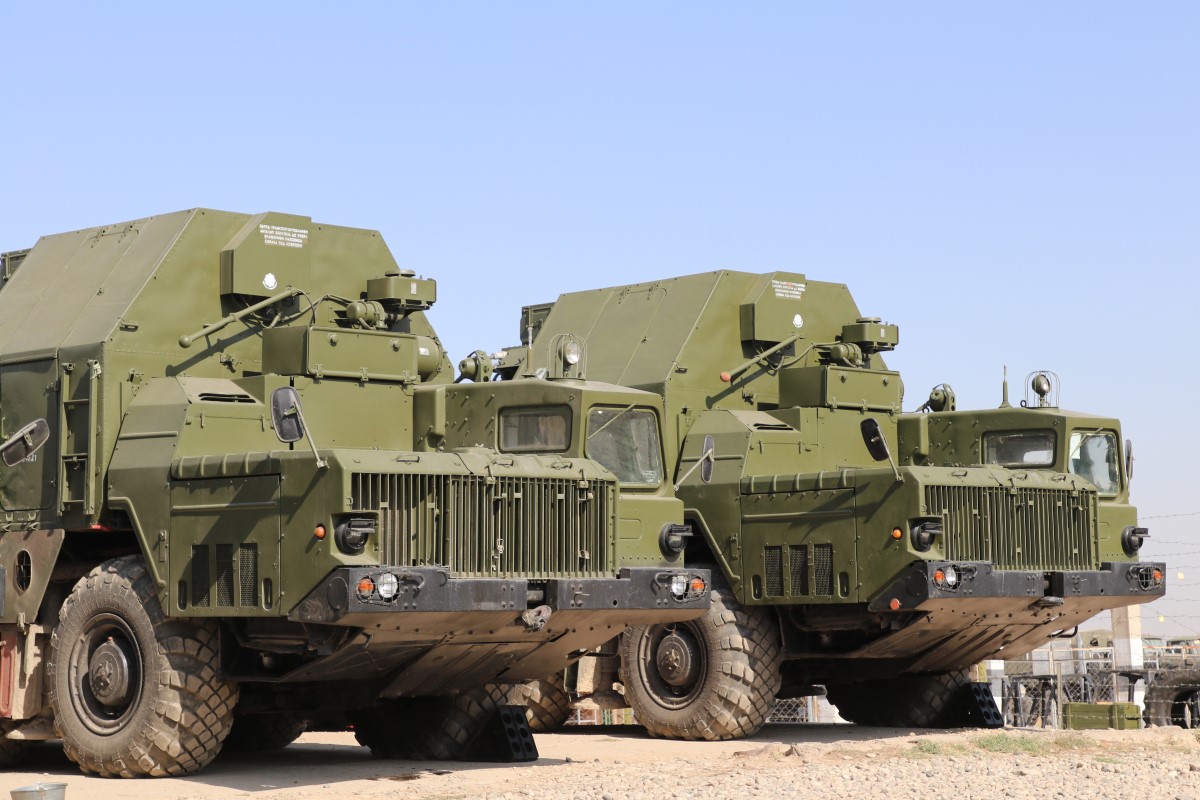
In the Russian military base deployed in Tajikistan, the first ever crews of air defense systems S-300PS are expected to enter combat duty on December 1, 2019.
“Currently, the work on arrangement of position area for the placement of equipment is going on. This work is planned to be completed before the end of November,” Commander of Russia’s Central Military District, Colonel-General Alexander Lapin, was quoted as saying by the Central Military District press center.
The main task of this anti-aircraft missile battalion, which includes 30 units of equipment, command post, launchers, guidance installations, radar and backlight settings, is to protect the Russian base facilities against the aerospace attack equipment and provide air defense of the Central Asian region of the collective security.
https://www.youtube.com/watch?v=PNLcgKBWLMM
The S-300 system has been deployed in Tajikistan for the first time. The systems reportedly arrived in Tajikistan by rail from an arms depot of the Central Military District located in Russia’s Volga region.
The S-300 is a series of initially Soviet and later Russian long range surface-to-air missile systems produced by NPO Almaz, based on the initial S-300P version. The S-300 system was developed to defend against aircraft and cruise missiles for the Soviet Air Defense Forces. Subsequent variations were developed to intercept ballistic missiles. The system is fully automated, though manual observation and operation are also possible. Components may be near the central command post, or as distant as 40 km. Each radar provides target designation for the central command post. The S-300 is regarded as one of the most potent anti-aircraft missile systems currently fielded.
The Russian military base deployed in Tajikistan is Russia's largest non-naval military facility outside the country. It was officially opened in Tajikistan in 2004 under a previous agreement, which was signed in 1993, and hosts Russia’s largest military contingent deployed abroad.
A total of some 7,000 Russian troops are now stationed at two military facilities collectively known as the 201st military base – in Dushanbe and Bokhtar (formerly Qurghon Teppa, some 100 kilometers from Dushanbe.