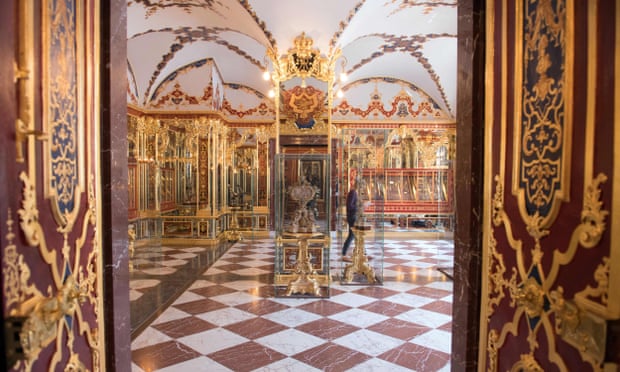
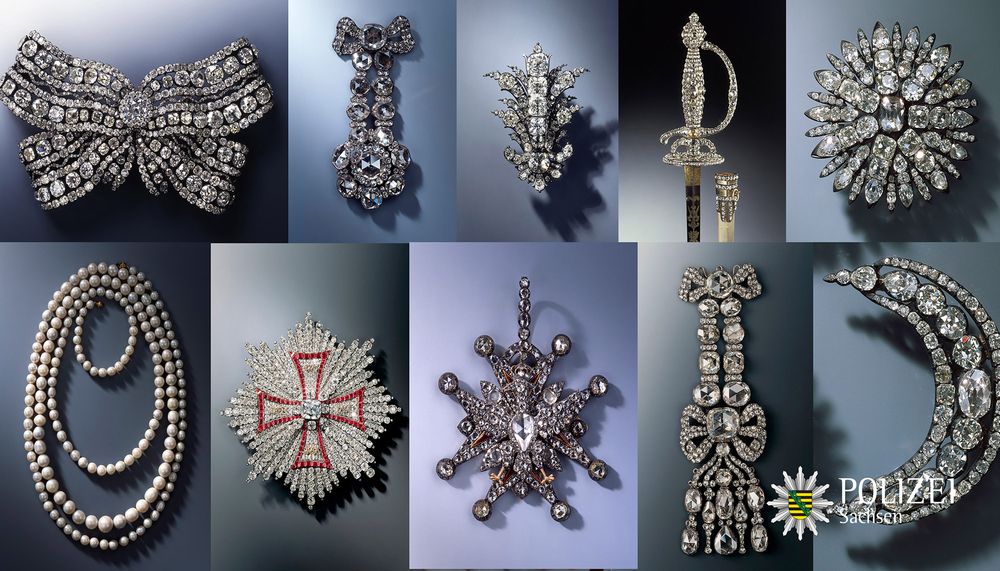
Thieves in the German city of Dresden have broken into one of Europe’s largest collections of art treasures, making off with three sets of 18th-century jewelry of “immeasurable worth” in what German media has described as the biggest such theft since the World War II.
Media reports say the dramatic heist took place at dawn on November 25. Police reportedly believe the burglars set a fire nearby to create a power outage, than broke a window to enter the museum. Though the total number of culprits is unknown, two people quickly smashed a display case, snatched the loot, and fled.
German media reported the losses from the burglary could run into the high hundreds of millions of euros, but the director of Dresden’s state art collections, Marion Ackermann, said it was impossible to estimate the value of the items, according to The Guardian.
The stolen items reportedly included three “priceless” sets of diamonds, including brilliant-cut diamonds which belonged to an 18th-century collection of jewelry assembled by the museum’s founder.
Created by Augustus the Strong, the Elector of Saxony, in 1723, the Grünes Gewölbe (Green Vault) is one of 12 museums which make up the famous Dresden state art collections. It got its name because some rooms were decorated with malachite-green paint.
One of the oldest museums in Europe, the Grünes Gewölbe holds treasures including a 63.8 cm figure of a Moor studded with emeralds and a 547.71-carat sapphire gifted by Tsar Peter I of Russia.
Meanwhile, a day after burglars made off with priceless jewels from a German museum, pressure is growing on police to find the culprits, Bloomberg says. One big reason: The diamond-encrusted dagger, pearl necklace, and dozens of other glittering artifacts—estimated to be worth more than $1 billion by the local press—were uninsured.
The German state of Saxony, the owner of the Green Vault museum in the eastern city of Dresden, carried no insurance on the jewels, standard practice because the premiums typically exceed potential damages in the long-term, the state Finance Ministry said Tuesday.
The insurance shortfall was reportedly revealed as more details of the theft became clear.