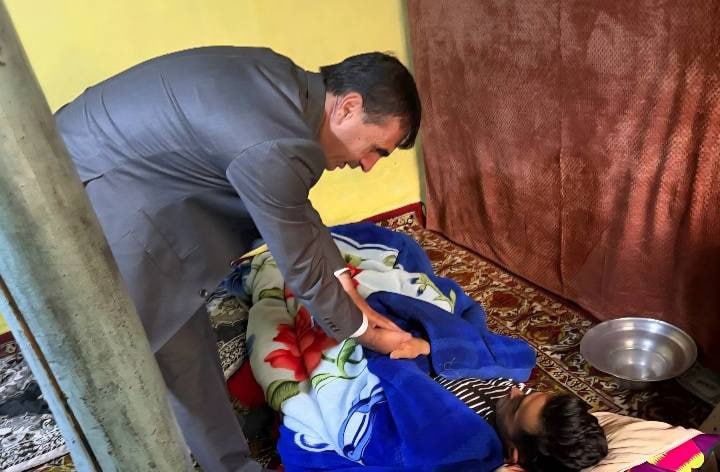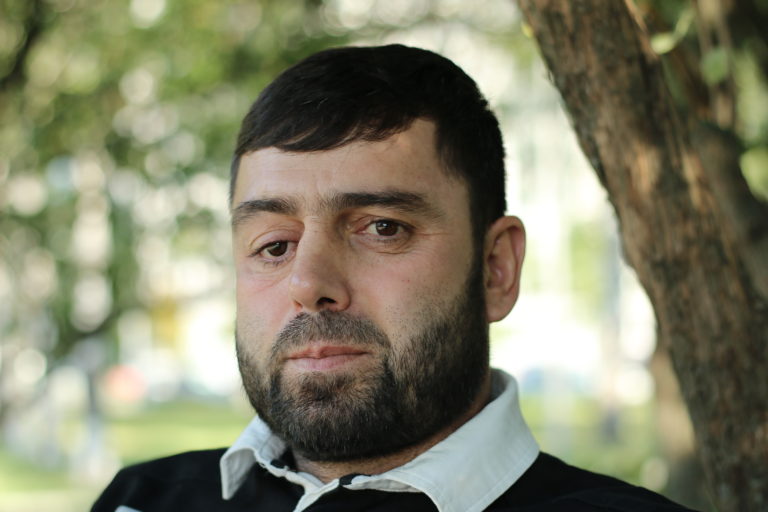
Tajik national Sulaimon Saidov, who became victim of hate crime in Russia, has successfully sued for damages in the Cheryomushinsky court of Moscow.
Under a ruling handed down by the court, 589,377 rubles should be paid to Sulaimon Saidov for damages and 750,000 rubles should be paid to him as compensation for moral damage.
Lawyer from Russian human rights organization “Komitet Grazhdanskoye Sodeistviye” (Civic Assistance Committee), Andrey Sotnikov, represented Saidov in the court.
Recall, The 60-year-old resident of Moscow, Sergey Tsaryov, fired at Saidov from pneumatic gun at the Kaluzhskaya subway station in Moscow on April 8, 2016.
On August 18, 2018, the Cheryomushinsky court of Moscow sentenced Tsaryov to ten years and three months in prison. The sentence followed his conviction on charges of attempted murder.
At the same time, despite witness statements as well as petitions and complaints of the victim, the court ignored the fact that the murderous assault had been motivated by racial and ethnic hatred, the Civic Assistance Committee noted in 2018.
Therefore, Saidov has decided to apply to the European Court of Human Rights. Sulaimon Saidov applied to the European Court of Human Rights last year, noting that the Russian authorities had investigated the case of attempted murder of him ineffectively. According to him, they ignored the fact that the crime had been motivated by racial and ethnic hatred.
It is to be noted, the Tajik Embassy in Moscow was also insisting in April 2016 on instituting criminal proceedings against Tsaryov under the provisions of Article 115 of Russia’s Penal Code — inciting national, racial, religious or ethnic hatred.
Racism in Russia appears mainly in the form of negative attitudes and actions by some Russians towards people who they do not consider ethnically Russian. Traditionally, Russian racism included anti-Semitism, as well as hostility towards various ethnicities of Caucasus and Central Asia.
A monthly review of instances of xenophobia and radical nationalism in Russia for June 2018 released by SOVA Center (Center for information and analysis), in particular, notes that at least seven were injured during acts of xenophobic violence in Moscow and the Novosibirsk and Samara regions in June last year. In total, three were reportedly killed and 12 injured due to xenophobic attacks in Russia in the first six months of 2018. Such incidents were recorded in six Russian regions.