China’s Embassy in Moscow has demanded authorities in Moscow end discriminatory anti-coronavirus measures against Chinese nationals, saying they are damaging relations and alarming Chinese residents of the Russian capital.
The complaint, detailed in an embassy letter to the Moscow authorities and published by Russian newspaper Novaya Gazeta on February 25, deplored what it called “ubiquitous monitoring” of Chinese nationals, including on public transport in Moscow.
Recall, Russia has temporarily barred many categories of Chinese nationals from entering the country.
Authorities in Moscow have also been carrying out raids on potential carriers of the virus – individuals at their homes or hotels – and using facial recognition technology to enforce quarantine measures.
Russian media reports say Mayor Sergei Sobyanin said on February 21 that around 2,500 people arriving in Moscow from China have been ordered to be placed under quarantine for the coronavirus and are being monitored by the Russian capital’s facial-recognition technology,.
All arriving passengers from China are required to undergo a physical examination and coronavirus test at the airport, Sobyanin wrote on his website. They are then given an order to place themselves under two-week quarantine, even if no symptoms are shown.
The Znak.com news website reported on February 19 that Cossacks have begun patrolling a predominantly Chinese neighborhood in Russia’s fourth-largest city of Yekaterinburg in search of signs of the coronavirus.
According to The Moscow Times, the Chinese embassy letter followed local media reports that Mosgortrans, which runs Moscow’s vast bus, trolleybus and tram networks, had told drivers to try to identify Chinese passengers and inform police of their presence.
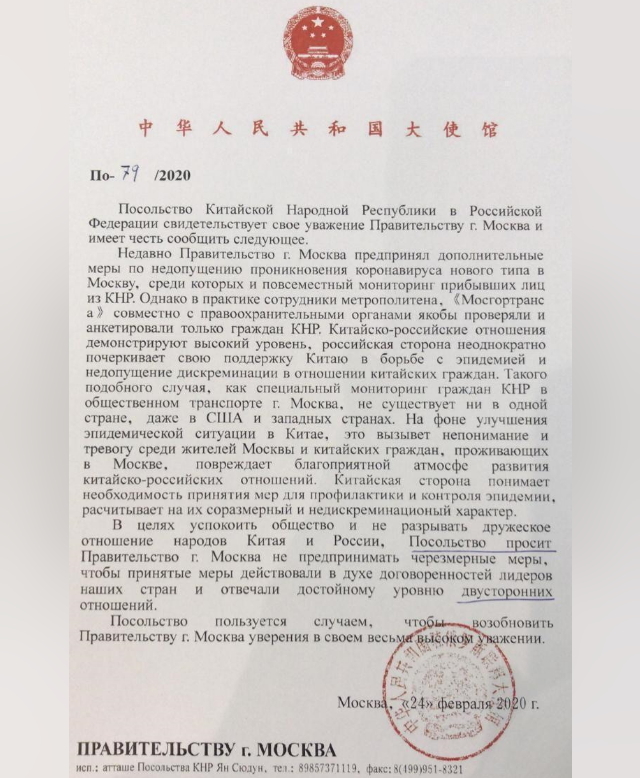
“The special monitoring of Chinese nationals on Moscow’s public transportation does not exist in any country, even in the United States and in Western states,” the Chinese Embassy letter, dated February 24, read.
“Given an improvement in the epidemiological situation in China, Moscow residents and Chinese people living in Moscow will be worried and won’t understand, and it will harm the good atmosphere for developing Chinese-Russian relations.”
The embassy said it was asking Moscow authorities to refrain from taking what it called excessive measures and to embrace “proportionate and non-discriminatory measures” instead.