How the coronavirus outbreak affecting the global economy

According to Al Jazeera, economists estimate 4 million jobs may have been lost last year in China. This year is already being defined by the outbreak of the coronavirus which has killed thousands and has infected thousands more, putting the brakes on China's economy. Economists polled by Reuters expect China's growth rate to slump to […]

Asia-Plus

According to Al Jazeera, economists estimate 4 million jobs may have been lost last year in China.

This year is already being defined by the outbreak of the coronavirus which has killed thousands and has infected thousands more, putting the brakes on China's economy.

Economists polled by Reuters expect China's growth rate to slump to 4.5 percent in the first quarter of this year from 6 percent in the previous quarter.  That would be the slowest pace since the financial crisis.

With much of the country in lockdown, the virus could affect up to 42 percent of China's economy, according to Standard Chartered, Al Jazeera says.

Companies may struggle to make payments on loans leading to a rise in what is called non-performing loans of $1.1 trillion, according to Standard and Poor's.

Chinese airlines have been forced to ground planes and are expected to lose $12.8bn in revenue.

Globally, the airline industry is set to lose $29bn, according to the International Air Transportation Association (IATA).  And the effect of COVID-19 is being felt regionally.

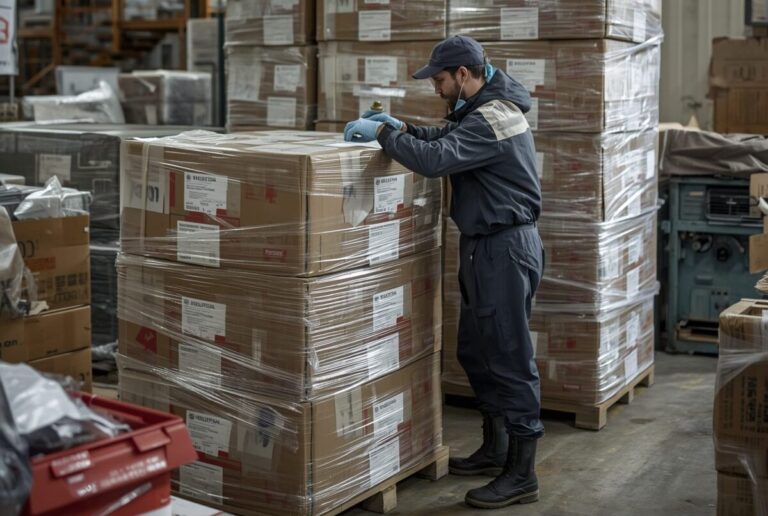
"Well, as you know, from 15 to 20 years ago China was already dubbed as 'the factory of the world' so then what we have seen now is that the supply chain sourcing has been interrupted," Reuben Mondejar, professor for Asian Initiatives at the IESE Business School, University of Navarra, told Al Jazeera.

Harvard Business Review (HBR) noted yesterday that having largely ignored Covid-19 as it spread across China, global financial markets reacted strongly last week when the virus spread to Europe and the Middle East, stoking fears of a global pandemic.  Since then, Covid-19 risks have been priced so aggressively across various asset classes that some fear a recession in the global economy may be a foregone conclusion.
Article translations:

Related Articles

Оби зулол

Most Read

Join us on social media!

Recent Articles

Hajj 2026: New Rules and Restrictions Introduced in Saudi Arabia

Entry to Mecca is now only possible with a special permit.

Emomali Rahmon flies to Astana for the Regional Ecological Summit

President of Tajikistan Emomali Rahmon departed today for a...

Nexign and TelecomDaily: the telecommunications market in Tajikistan grew by 13.7% in 2025

A study showed that the country's communications market has grown to 4.9 billion somoni, and the dynamics are influenced by an increase in the subscriber base, growth in internet traffic, and expansion of mobile and fixed network coverage.

Tajikistan’s Parliament approves organized recruitment of migrants to Russia

The paperwork will be transferred to the home country, and employers will select employees in advance.

Creativity as an asset: why marketing in Central Asia is reaching a new level

Business expert in international projects for the support and development of media companies, Svetlana Lebedeva, on marketing and the media market.

European Immunization Week starts in Tajikistan

Information and awareness-raising activities are being conducted across the country to increase trust in vaccination and combat misinformation.

The plan to launch the CASA-1000 project in 2027 discussed in Dushanbe

The Ministry of Energy of Tajikistan, Afghan DABS, and other project participants held a series of meetings.