Tajik authorities decide to write off part of Tajik Air’s debts through tax concessions to its creditors

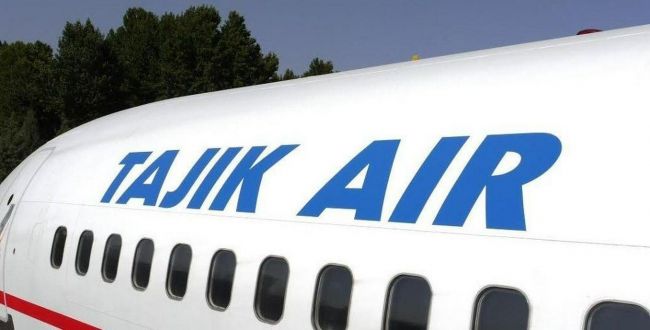
The Tajik authorities have decided to provide financial support to the national air carrier Tajik Air by mutual settlement with its creditors. Government’s decree issued on June 25, in particular, notes that some 19 million somoni (equivalent to 1.8 million U.S. dollars) of Tajik Air’s debts will be written off through tax concessions to its […]

The Tajik authorities have decided to provide financial support to the national air carrier Tajik Air by mutual settlement with its creditors.

Government’s decree issued on June 25, in particular, notes that some 19 million somoni (equivalent to 1.8 million U.S. dollars) of Tajik Air’s debts will be written off through tax concessions to its creditors.

It means that creditors will write off part of Tajik Air’s debt, and in return, they will be exempted from paying taxes for comparable amounts.       

Thus, a 13.3 million somoni debt of Tajik Air to the Standart-Ijora microleasing organization and a more than 5.6 million debt of Tajik Air to Sughurtai Asri 21 (insurance company) will be written off.  

Recall, Tajik Air suspended it operations early last year, stopping flights practically on all air routes.  

Tajik Air has been experiencing various problems for a long time but they showed up more sharply ahead of the New Year holidays, when the airlines began postponing flights for several days.  On January 1, 2019, the carrier announced it was cancelling flights on its Dushanbe-Moscow route until the end of January. Since then, the scale of Tajik Air’s troubles has only deepened, and the airline was forced to make changes to its flight schedule.  Tajik Air then sent its staff members on leave without pay.

A state commission was set up to investigate the current condition of the airline. The commission is presided over by Prime Minister Rasoul Qohirzoda.

The national airline has experienced great financial difficulties since the end of the zero years.  Specialists of the airline say that in such conditions the carrier turned out to be due to high prices for jet fuel and the unstable economic situation. 

Tajik Air resumed flights after half a year idle in July last year.  On July 26, 2019, Tajik Air’s Boeing 767 carried a group of Tajik Hajj pilgrims from Khujand, the capital of Sughd province, to Jeddah, Saudi Arabia.  In August, the national air carrier resumed its scheduled flights to Moscow.

      

Join us on social media!

Article translations:

Related Article

Оби зулол
Оби зулол
Tenisi

Most Read

Коммерсбонк Точикистон

Recent Articles

RZD announces the restoration of passenger services between Moscow and Dushanbe

Direct rail services between the capitals of Russia and Tajikistan were suspended in March 2020 due to the COVID-19 pandemic.

#AP30/Stories. “Selam! Heller nichek?” How Tatars live today in Sughd province

On the 30th anniversary of "Asia-Plus," we continue to publish reports that remain relevant even after years. This story was told in 2021, and since then, little has changed in the life of the Tatar community in Tajikistan.

15,000 cameras, drones, and robots: how technology monitors pilgrims in Mecca and Medina

During Hajj 2026, Mecca and Medina were under unprecedented digital control.

Another child in Dushanbe removed from family and sent to boarding school

The Ministry of Internal Affairs reports that the parents did not pay adequate attention to the child.

Emomali Rahmon instructs to address issues in seed production following criticism of the industry

Issues have been noted with certification, seed quality, and the material and technical base of the industry.

Water, climate, and a $130 billion deficit: seven key outcomes of the Water Conference in Dushanbe

At the forum, countries and international organizations discussed new mechanisms for cooperation, investments, and technologies that are essential for addressing the global water crisis.

Eskhata Bank introduces a new generation children’s wallet

"Eshkata Bank" has created a full-fledged digital platform that helps children aged 7 to 16 learn how to manage money.