A statement released by IFRC on July 14 says more than 34,000 people have been infected by COVID-19 in Afghanistan and nearly 1,000 people have died, with hospitals and health clinics pushed to the limit.
The real toll of the pandemic on the Afghan population is expected to be much higher and remains under-reported due to limited testing and weak health systems, according to the statement. The country has one doctor for every 3,500 people, less than a fifth of the global average according to the World Health Organization (WHO).
War-torn Afghanistan is considered one of the poorest countries in the Asia Pacific and the region’s most disaster-prone country with at least 3.5 million people displaced by armed conflict and disasters since 2012.
Dr. Nilab Mobarez, Secretary-General of the Afghan Red Crescent Society (ARCS), said a "major shortage" of personal protective equipment and difficulties in accessing remote regions were hampering the organization’s coronavirus response.
But he said the Red Crescent Society was expanding mobile health teams and adding thousands of community volunteers to try detecting and preventing the disease, which it said it expected to spread over the coming weeks.
"Afghanistan has been reaching a peak of infections and we fear this will continue over coming weeks. We are urgently scaling up our response with 39 mobile health teams, 31 immunization teams, 46 health clinics and more than 4,000 trained community volunteers to intensify case detection," Mobarez said.
In addition to the COVID-19 health crisis faced in Afghanistan, the socio-economic impact of the virus could become catastrophic with 12.4 million people – one third of the country’s population – already considered to be living at “emergency” levels of food shortages.
Pierre Kremer, Head of the International Federation of Red Cross and Red Crescent Societies (IFRC) office in Afghanistan, said: “Millions of people who depend on a daily wage have lost their jobs and COVID-19 is compounding this struggle to survive. The people of Afghanistan face a double catastrophe of the COVID-19 health crisis and mass socio-economic deterioration. We have a duty to step up to prevent this from happening.”
“We are intensifying support to people’s livelihoods on a large scale to help people strengthen their resilience to these compounding crises,” Mr. Kremer said.
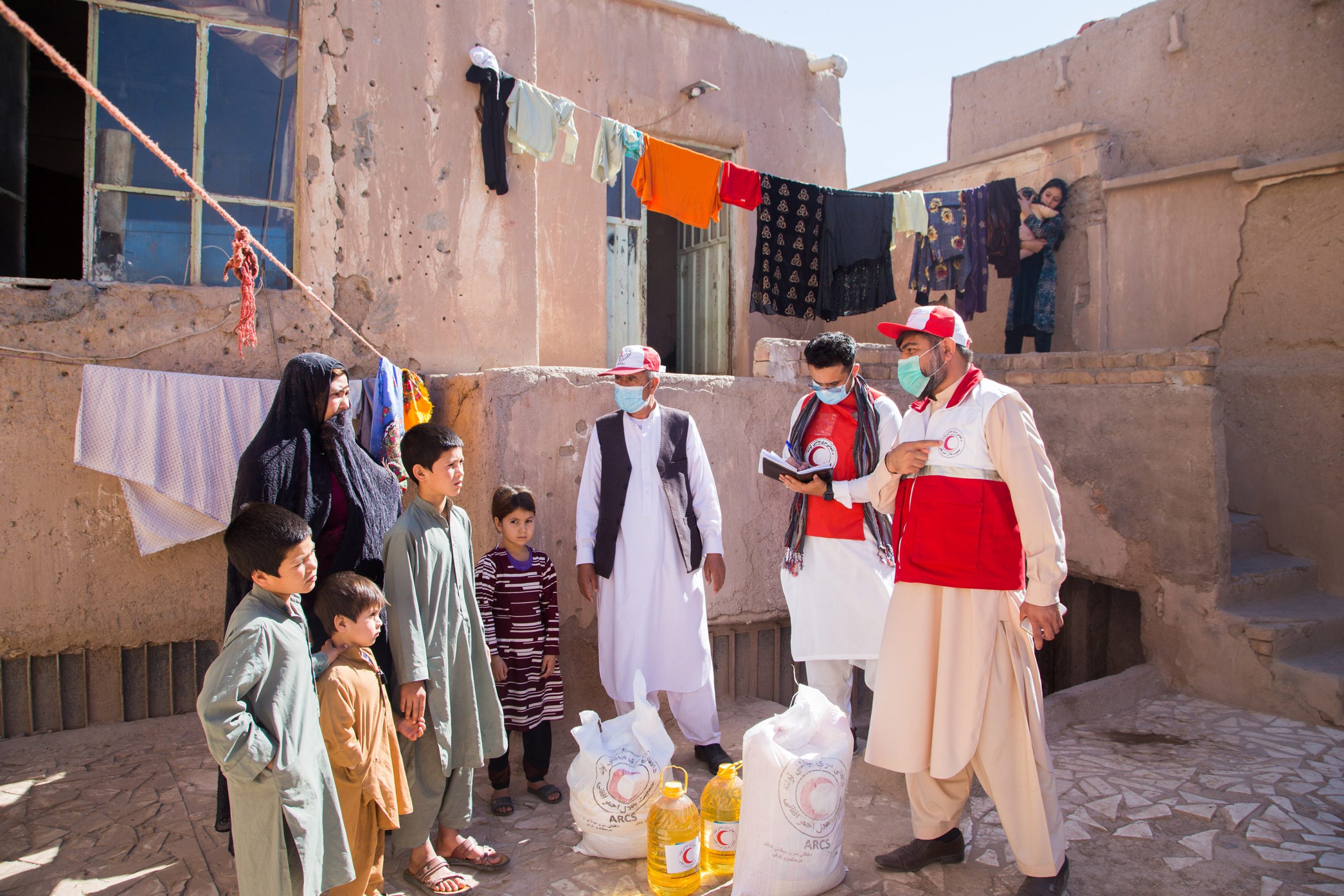
ARCS has reportedly assisted more than 90,000 people with food and other relief packages and is committed to reach at least 450,000 people with food or cash support.