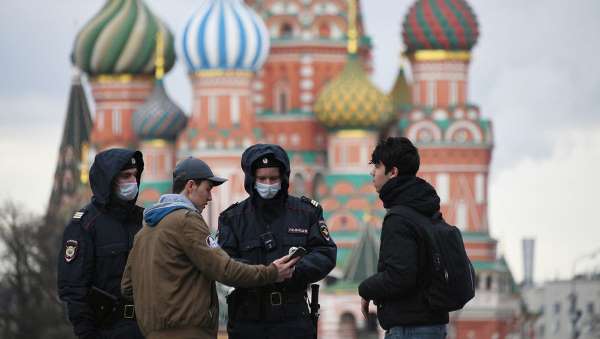
Russian interior ministry to create biometric database of Russian nationals and foreigners

Russian media reports say Russia plans to create a national biometric database to identify both citizens and foreign nationals via face recognition and fingerprints. Citing Russia's Interior Ministry, the state-run TASS news agency reported on November 22 that the Interior Ministry plans to develop the centralized biometric database in 2021-23. The database will allow the […]

Asia-Plus

Russian media reports say Russia plans to create a national biometric database to identify both citizens and foreign nationals via face recognition and fingerprints.

Citing Russia's Interior Ministry, the state-run TASS news agency reported on November 22 that the Interior Ministry plans to develop the centralized biometric database in 2021-23.

The database will allow the authorities to identify individuals or bodies through Russia’s federal genetic identification search system.

The database will include the biometric data of Russian citizens and foreigners as well as stateless people.

The announcement comes after the RBC news website reported last week that the Interior Ministry plans to develop artificial intelligence to find serial criminals via DNA-based facial composites created by a neural network.

Russian Interior Minister Vladimir Kolokoltsev reportedly first announced plans to create a biometric database in 2014. The system is expected to integrate biometric identification with traffic surveillance and wanted lists.

In 2017, Russia passed a law allowing the Interior Ministry and Federal Security Service (FSB) to gain access to bank customers’ biometric data, including facial images and voice recordings, without their consent.  The remote bank account verification operator has said it could expand the data to iris recognition, as well as palm and fingerprint scanning.

 

Join us on social media!

Article translations:

Related Article

Оби зулол
Оби зулол

Most Read

Акика Алиф

Recent Articles

In Tajikistan, the workforce has increased, but not everyone is employed

Statistics show a significant gap between men and women in the labor market.

Amin Qobilov and Marvori Nasriddinzoda become chess champions of Tajikistan

The national chess tournament, which brought together the strongest players, has concluded in Dushanbe.

How to tame snow avalanches: how many houses and roads in Tajikistan are at risk?

Large avalanches can occur on average once every 40 years, causing residents to eventually consider dangerous areas safe and build houses on them.

Emomali Nourali and Muhiddin Asadulloyev became No. 1: Tajik judokas in the world ranking

After the "Grand Slam" in Dushanbe, the IJF ranking was updated, recording a historic result.

Media: the US struck Iranian ports but denies resuming war

Iran's military opened fire on forces that attempted to attack a pier on Qeshm Island.

Uzbekistan implements digital residency registration system

It will be possible to process it online through Face-ID.