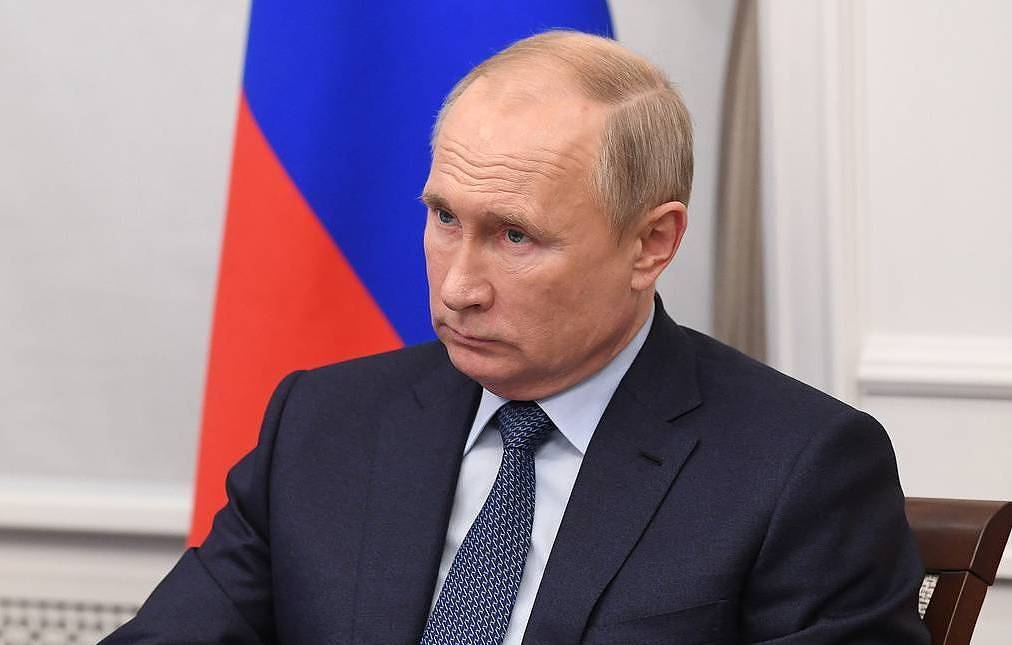
Putin submits bill to the State Duma on banning foreign citizenship for military, state officials

Russian media reports say President Vladimir Putin yesterday submitted a draft law to Russia’s lower house (State Duma) of parliament on banning foreign citizenship for any government officials and military personnel who have access to state secrets. The bill that was published in the State Duma online database would also ban Russian citizens who are […]

Russian media reports say President Vladimir Putin yesterday submitted a draft law to Russia’s lower house (State Duma) of parliament on banning foreign citizenship for any government officials and military personnel who have access to state secrets.

The bill that was published in the State Duma online database would also ban Russian citizens who are considered permanent residents of another country from holding official positions that allow them access to state secrets.

Government officials who are in possession of foreign passports or residency permits at the time the law comes into force will have six months to renounce their foreign ties and provide documents confirming they are no longer citizens or residents of another country. In this case, they will be allowed to retain their official positions.

"The draft federal law aims to update clauses of individual laws of the Russian Federation, which outline a ban to hold state and municipal offices over a citizenship or a residence permit or other document, which allows permanent residence of a Russian citizen in a foreign state," the memo reads, according to TASS.  

Recall, State Duma Speaker Vyacheslav Volodin on July 30 asked the assembly's security committee to check if lawmakers have a dual citizenship or residence permit in foreign countries.  He noted that according to the new reading of the Russian Constitution, a Russian national having a foreign citizenship or residence permit cannot hold official posts, including a membership in parliament.

According to some sources, dozens of Russia's top officials, including employees of presidential administration, government members, senators, deputies and governors allegedly have at least one of the two privileges.

Volodin called the allegations "very serious," saying appropriate measures must be taken against those who violate the law.

On July 1, Russians voted for constitutional amendments putting, among other things, a ban on top state officials from having second citizenship.

Join us on social media!

Article translations:

Related Article

Tenisi
Оби зулол
Оби зулол

Most Read

Коммерсбонк Точикистон

Recent Articles

RZD announces the restoration of passenger services between Moscow and Dushanbe

Direct rail services between the capitals of Russia and Tajikistan were suspended in March 2020 due to the COVID-19 pandemic.

#AP30/Stories. “Selam! Heller nichek?” How Tatars live today in Sughd province

On the 30th anniversary of "Asia-Plus," we continue to publish reports that remain relevant even after years. This story was told in 2021, and since then, little has changed in the life of the Tatar community in Tajikistan.

15,000 cameras, drones, and robots: how technology monitors pilgrims in Mecca and Medina

During Hajj 2026, Mecca and Medina were under unprecedented digital control.

Another child in Dushanbe removed from family and sent to boarding school

The Ministry of Internal Affairs reports that the parents did not pay adequate attention to the child.

Emomali Rahmon instructs to address issues in seed production following criticism of the industry

Issues have been noted with certification, seed quality, and the material and technical base of the industry.

Water, climate, and a $130 billion deficit: seven key outcomes of the Water Conference in Dushanbe

At the forum, countries and international organizations discussed new mechanisms for cooperation, investments, and technologies that are essential for addressing the global water crisis.

Eskhata Bank introduces a new generation children’s wallet

"Eshkata Bank" has created a full-fledged digital platform that helps children aged 7 to 16 learn how to manage money.