Authorities refrain to make public information about how long the prison sentence for IRPT leader is

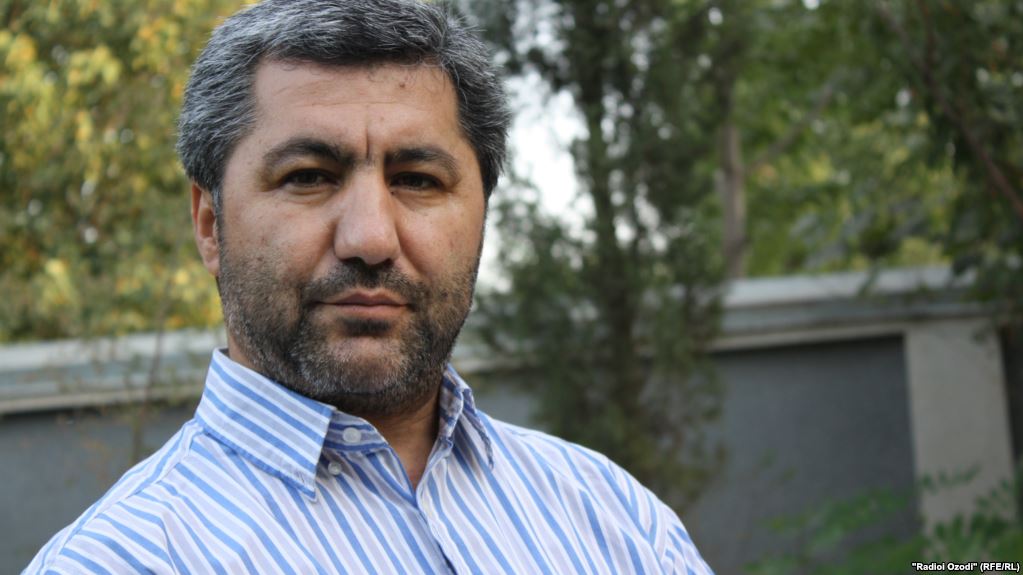
The Supreme Court has sentenced Muhiddin Kabiri, the leader of the banned Islamic Renaissance Party of Tajikistan (IRPT) to a lengthy prison term.  Information about how long the prison sentence is, and of what charges Kabiri was found guilty, has not been made public.   The Supreme Court Chairman Shermuhammad Shohiyon told reporters in Dushanbe yesterday […]

Asia-Plus

The Supreme Court has sentenced Muhiddin Kabiri, the leader of the banned Islamic Renaissance Party of Tajikistan (IRPT) to a lengthy prison term.  Information about how long the prison sentence is, and of what charges Kabiri was found guilty, has not been made public.  

The Supreme Court Chairman Shermuhammad Shohiyon told reporters in Dushanbe yesterday that details of Kabiri’s case cannot be disclosed since the trial had been held behind closed doors and the case was classified as ‘top secret.’ 

Muhiddin Kabiri became the IRPT's leader in August 2006 after the death of Said Abdullo Nuri, a signatory to the 1997 peace accord on behalf of the opposition.  Before it was banned by the government, the IRPT was the second-largest political party in Tajikistan, with around 40,000 officially registered members.  However, it had steadily been losing prominence: In Tajikistan's March 2015 parliamentary elections, the IRPT lost its last two seats in parliament and its last government posts.

In June 2015, the party had its registration taken away and when the Deputy Defense Minister Abdulhalim Nazarzoda rebelled in early September 2015, Tajik authorities connected Nazarzoda to the IRPT.

The party was banned in September 2015 and not long after declared an extremist group.

The IRPT was the only registered Islamic party in Central Asia.  The IRPT spoke against radical Islamic groups in Afghanistan and Pakistan, in Iraq and Syria.

In 2017, Tajikistan amended legislation to allow courts to try and sentence suspects in absentia.  Kabiri's trial in absentia started in February 2018 (Kabiri left the country in March 2015).  In the closed-door proceedings, he reportedly faced 16 charges, including inciting racial, national, regional, or religious hatred and plotting the violent overthrow of the government.

In early October 2018, Tajikistan's Supreme Court found Kabiri guilty and sentenced him to a lengthy prison term.  Information about just how long the prison sentence was, and of what charges Kabiri was found guilty, was not made public.

Join us on social media!

Article translations:

Related Article

Оби зулол
Оби зулол

Most Read

Recent Articles

The only GPW veteran in Dushanbe allocated more than 80,000 somoni

The mayor's office of Dushanbe allocated him 25,000 somoni.

GITEX AI Kazakhstan 2026: how Almaty became the main AI hub of Central Asia

More than 300 companies and startups, over 200 speakers and 100 investors from 50 countries — the region is entering the global stage.

A trade and economic park to be built at the border junction of Tajikistan, Kyrgyzstan, and Uzbekistan

President of the Kyrgyz Republic Sadyr Japarov familiarized himself with the project.

A project to protect soil from degradation to be developed in Central Asia

The initiative is of great significance for the mountainous countries of the region, including Tajikistan.

Mudslide, death, and destroyed homes: hundreds of families in Tajikistan left homeless

A correspondent from "Asia-Plus" visited Kulob and spoke with the families of those who died and were affected by the disaster.

Spring 2026 bright event: new issue of VIPzone now on sale

This issue is about people and ideas that change everything: from business and investments to fashion, food, and urban environment.

Godfrey Sullivan: “Tajikistan is a promising market for Visa to develop digital payments”

The Vice President of Visa explained why Tajikistan is becoming a promising market for digital payments and how artificial intelligence is influencing the future of finance.

Seven students in Dushanbe were threatened with expulsion for arriving at universities in personal cars

The materials for each case have been sent to the Ministry of Education and Science for appropriate actions.

India’s blockchain push and lessons for the global south

The Indian Government has started pushing aggressively its agenda...

India’s blockchain push and lessons for the global south

The Indian Government has started pushing aggressively its agenda...