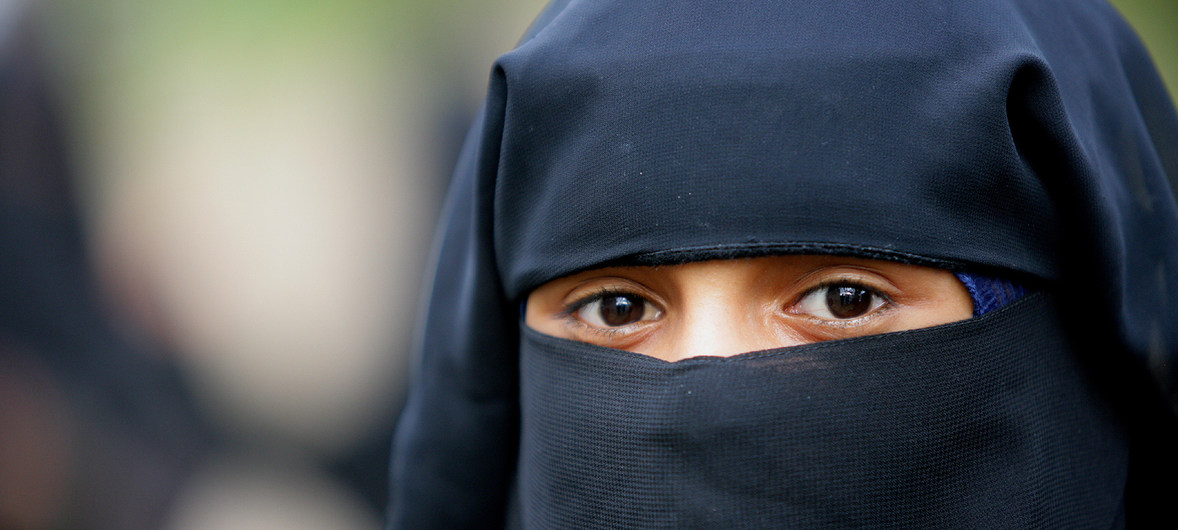
The Associated Press (AP) says the U.N. human rights office expressed dismay on March 9 that Switzerland is set to join a few other countries where “actively discriminating against Muslim women” is legal, after Swiss voters approved a ban on face coverings like burqas and niqabs that some Muslim women wear.
Ravina Shamdasani, a rights office spokeswoman, reportedly acknowledged it was a “divisive issue” and said women shouldn't be forced to cover their faces, but “the use of the law to dictate what women should wear is problematic from a human rights perspective.”
“The legal ban on face coverings will unduly restrict women’s freedom to manifest their religion or beliefs and has a broader impact on their human rights,” she told reporters at a regular U.N. briefing in Geneva.
She said the International Covenant on Civil and Political Rights, a landmark human rights agreement, allows some limits on such freedom to protect public safety, health, order and morals, among other things, but that “vague justifications” about how face coverings are a threat were not legitimate.
Recall, Switzerland on March 7 narrowly voted in favor of banning face coverings in public, including the burka or niqab worn by Muslim women. Official results showed the measure had passed by 51.2% to 48.8% in Sunday's referendum.
According to the BBC, the proposal was put forward by the right-wing Swiss People's Party (SVP) which campaigned with slogans such as "Stop extremism".
A leading Swiss Islamic group said it was "a dark day" for Muslims.
The Swiss government had argued against the ban saying it was not up to the state to dictate what women wear.