UN Secretary-General António Guterres on Friday May 21 urged the world’s richest economies to take a central role in ending the COVID-19 pandemic by stepping up support for vaccines for all people, everywhere, according to the UN News Center.
Stressing that no one is safe until everyone is safe, the UN chief told the G20 Global Health Summit in Rome that it is time for decisive action.
“Let’s be clear, we are at war with the virus,” the Secretary-General said. “And if you are at war with the virus, we need to deal with our weapons with rules of a war economy, and we are not yet there. And this is true for vaccines, and it is true for other components in the fight against the virus.”
Pledging the UN’s full support for the effort, the Secretary-General said the G20 Task Force “should be co-convened at the highest levels by the major powers who hold most of the global supply and production capacity.”
Membership would comprise countries that can produce vaccines, the World Health Organization (WHO), financial institutions, and the multi-sector partners behind the ACT Accelerator, the global collaboration to develop and equitably distribute COVID-19 tests, treatments, and vaccines.
COVAX, its vaccine arm, should have delivered 180 million doses worldwide by now, but Mr. Guterres said just 65 million have been distributed due to “vaccine nationalism”, limited production capacity and lack of financing.
He called on G20 countries to “lead by example” by contributing their full share of funding.
The UN chief said vaccinating quickly and thoroughly, combined with continued public health measures, are the only way to end the global pandemic and prevent more dangerous COVID-19 variants from emerging.
However, more than 80 per cent of vaccines have reportedly gone to rich nations, with poorer countries receiving a paltry 0.3 per cent.
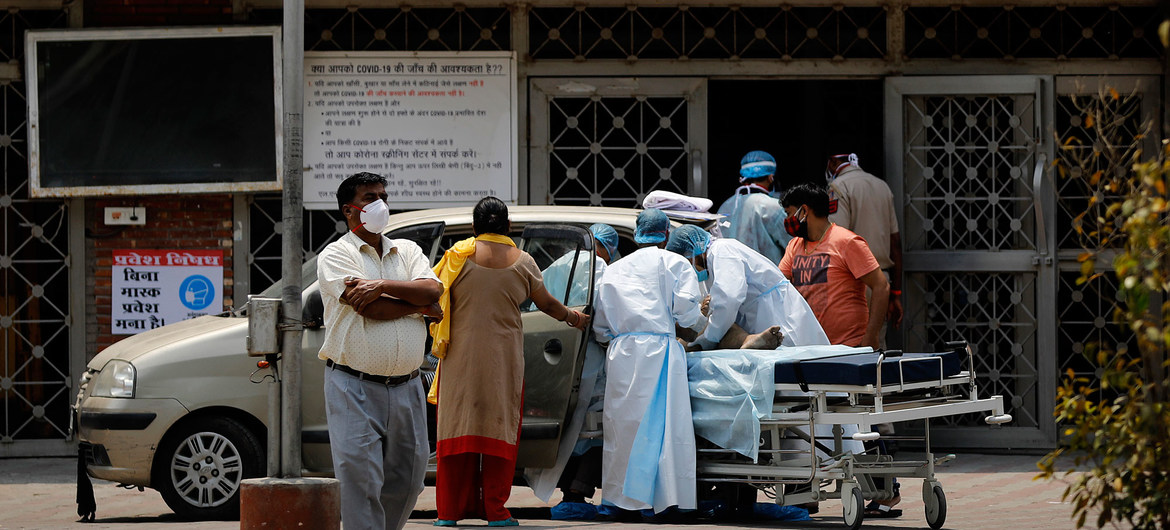
“Grossly unequal access to vaccines, tests, medicines and supplies, including oxygen, have left poorer countries at the mercy of the virus,” Mr. Guterres he said.
Addressing the summit, WHO warned that people will continue to die if global disparity in vaccines persists.
There have been more than 165 million recorded cases of COVID-19 worldwide, but WHO said on Friday that the true number of deaths could be two to three times higher than the officially reported figures.
Although 3.4 million deaths were reported in the first year of the pandemic, its latest report found these “are likely a significant undercount” when based on deaths that were either directly or indirectly attributable to the disease.
Last year, more than 1.8 million deaths were reported to the UN agency but WHO’s State of the World’s Health report indicates there were “at least three million”.
The 1.2 million more deaths include people who died from coronavirus infection, and others who were unable to access health care because resources were diverted to deal with the pandemic. It is likely that the finding will be repeated this year due to data gaps in reporting.