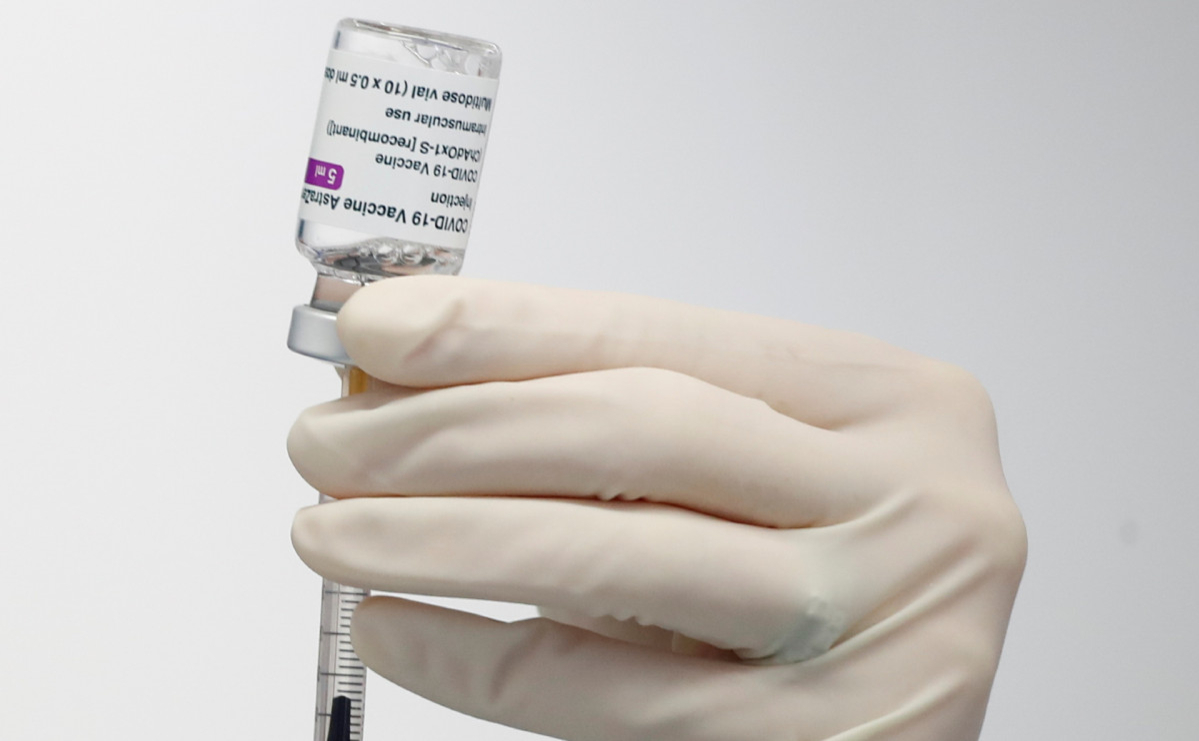
The Financial Times noted on May 26 that scientists in Germany claim to have cracked the cause of the rare blood clots linked to the Oxford/AstraZeneca and Johnson & Johnson coronavirus vaccines and believe the jabs could be tweaked to stop the reaction happening altogether.
Rolf Marschalek, a professor at Goethe University in Frankfurt who has been leading studies into the rare condition since March, said his research showed the problem sat with the adenovirus vectors that both vaccines use to deliver the genetic instructions for the spike protein of the Sars-Cov-2 virus into the body.
The delivery mechanism means the vaccines send the DNA gene sequences of the spike protein into the cell nucleus rather than the cytosol fluid found inside the cell where the virus normally produces proteins, Marschalek and other scientists reportedly said in a preprint paper released on Wednesday.
Once inside the cell nucleus, certain parts of the spike protein splice, or split apart, creating mutant versions, which are unable to bind to the cell membrane where important immunization takes place. The floating mutant proteins are instead secreted by cells into the body, triggering blood clots in roughly one in 100,000 people, according to Marschalek’s theory.
In contrast, mRNA-based vaccines, such as the jabs developed by BioNTech/Pfizer and Moderna, deliver the spike’s genetic material to the cell fluid and it never enters the nucleus.
“When these . . . virus genes are in the nucleus they can create some problems,” Marschalek told the Financial Times.
The rare blood-clotting reaction that has disrupted the rollout of the AstraZeneca and J&J shots has reportedly been recorded in 309 of the 33 million people who have received the AstraZeneca vaccine in the UK, causing 56 deaths. In Europe, at least 142 people have experienced the blood clots out of 16 million recipients of the vaccine.
In response, use of the AstraZeneca jab has been restricted or suspended in more than a dozen countries. J&J began the rollout of its vaccine in Europe with a warning on its label in April after a brief delay because of the concerns.
But Marschalek believes there is a straight forward “way out” if the vaccine developers can modify the gene sequence that codes for the spike protein to prevent it splitting apart.
J&J had already contacted Marschalek’s lab to ask for guidance and was looking at ways to adapt its vaccine to prevent splicing, he said.