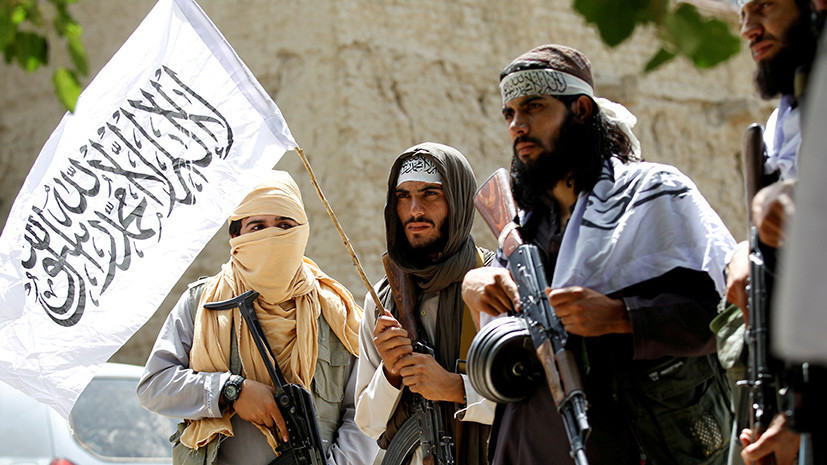
Afghanistan’s border with Tajikistan is practically now in Taliban hands.
On June 22, they captured the Sher Khan Bandar crossing into Tajikistan, a location around 60 kilometers north of the Afghan city of Kunduz.
An article by Kamila Ibragimova posted on Eurasianet notes that now, the Taliban are using the bridge to levy informal customs fees and fund their own operations. The capture of the Sher Khan Bandar crossing reportedly saw the first mass flight of defeated Afghan troops into Tajikistan.
The article entitled What Does the Taliban’s Ascendancy Mean for Tajikistan? says the 1,357-kilometer Afghan-Tajik border is bridged by six crossings in total – five of them are able to support automobile traffic.
The number of fleeing Afghan troops that have been forced to seek haven in Tajikistan to date has reached more than 1,500. Many hundreds of civilians have also sought refuge in Tajikistan.
The Afghan ambassador in Dushanbe on July 9 posted images of his visit to a tent camp of Afghan refugees. He said in a Facebook post that more than 1,000 people were in the camp.
Tajik authorities reportedly say the troops were all sent back to Kabul on charter flights.
Between COVID-19 and the unrest, ordinary travel across the border has long since been suspended. Officially, the borders are shut, and the Afghan Embassy is on paper no longer issuing visas. Anonymous sources, however, told Eurasianet that they have still been able to get visas through illicit channels and to cross at Sher Khan Bandar.
It is truckers who are mainly still crossing the border. One long-distance trucker, Farrukh, told Eurasianet that he had personally returned from Sher Khan Bandar on July 8.
“On the whole, it is like it was before. Just some of the border and customs staff have changed. And that’s it,” he said.
Tajik truckers are mostly only going as far as Sher Khan Bandar, to drop off or pick up goods, although nobody is explicitly forbidding them from going further.
Adjmal Kokar, a journalist from the Afghan city of Kunduz, told Eurasianet that there are Tajik drivers going deep into the country without trouble. So long as Tajik border officers give the green light, and they seem to be amenable, there is no issue.
Meanwhile, the Tajik authorities are not making any comment on the situation. Tajik security services are reportedly assumed to be in deep, covert dialogue with all kinds of elements inside Afghanistan.
But some hints about the government’s overall posture are offered by their public pronouncements. The Taliban are no longer spoken about in Tajik state-run media with complete disdain.
Although the Taliban is legally recognized as an extremist organization, the State Committee for National Security (SCNS) has quietly dispensed with this descriptor in recent times, opting for the more neutral term “armed group.”
The compliments are mutual. The Taliban last week reassured Dushanbe that it would respect Tajik sovereignty and that it intended no harm.