Citing Mohammad-Reza Manafi, IRNA says irresponsible withdrawal of the US and NATO military forces from Afghanistan has created an undeniable necessity for the regional and neighboring countries to play a key role in strengthening security and stability in the war-torn country.
Following four decades of war, violence, terror and poverty, Afghanistan is experiencing a historical juncture and a turning point, when the Americans are pulling out their troops from the country without doing any tangible effort to make it safe and secure for the Afghan people, Mohammad-Reza Manafi says.
Concurrent with the military retreat, the government in Kabul, which has been kept weak in dealing insecurity, reportedly does not dominate the country and Taliban could take control of about 90 percent of Afghanistan's soil.
In such a difficult situation, the only factor that can save the country and its people is a kind of convergence by regional players and neighboring states in taking joint decisions and pursuing constructive initiatives, Manafi notes.
It is obvious that neighboring countries will take the most profit from security and stability of their neighbors; so, the regional players naturally think of their neighbor's security.
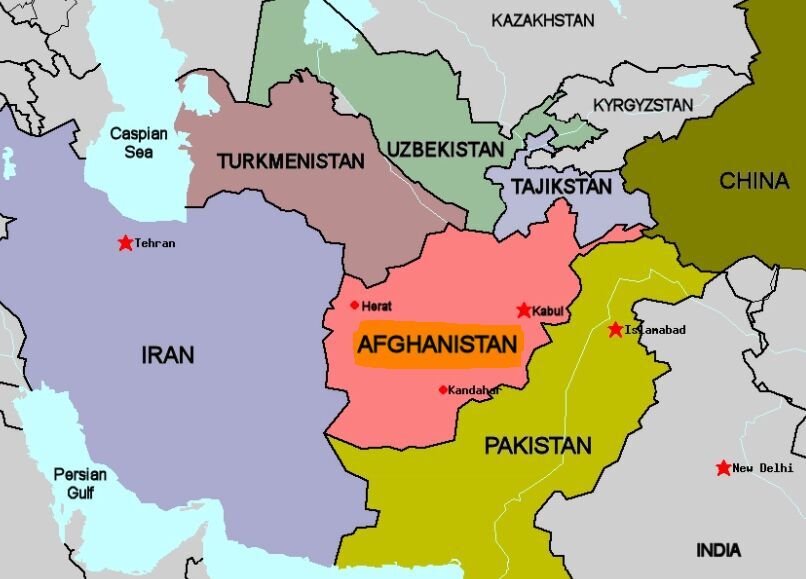
Afghanistan's neighboring states, including China, Pakistan, Russia, Turkmenistan, Uzbekistan, Tajikistan and Iran, reportedly have common interests in seeing the country safe and secure; and now that the US and NATO are pulling out of the territory, they can increase collaborations and try to restore peace and security in Afghanistan.
The role of India as a great regional power, which has a remarkable trade with Afghanistan, cannot be ignored. The Indians have invested around three billion dollars for reconstruction projects in Afghanistan and escalation of tensions in the war-stricken neighbor can endanger the Indian investment.
China and Russia inspect recent developments in Afghanistan, because they are well aware that insecurity in one neighboring country can affect stability in the whole region. Moscow has asked Taliban to prevent from any threat against neighboring states.
Pakistan and Iran, which have more than 2500 kilometers and 900 kilometers of borderlines respectively with Afghanistan, can undoubtedly be affected by tensions in the war-stricken country; thus, the two countries along with other regional nations will be directly and indirectly impacted by security or insecurity in the neighboring country.
The current situation in Afghanistan should be considered as a warning call for China, Russia, India, Pakistan and Iran to create a multilateral initiative for a better future and a more secure region, Iranian expert said.