Any damage or loss of cultural heritage will only have adverse consequences on the prospects for lasting peace and humanitarian relief for the people of Afghanistan, says a statement released by UNESCO yesterday.
UNESCO further underlines the need for a safe environment for the ongoing work of the country’s cultural heritage professionals and artists, who play a central role for Afghanistan’s national cohesion and social fabric.
Afghanistan is home to a wide range of rich and diverse heritage, which is an integral part of Afghan history and identity, as well as of importance for humanity as a whole, that must be safeguarded. This includes sites such as the Old City of Herat, the UNESCO World Heritage sites of the Minaret and Archaeological Remains of Jam and the Cultural Landscape and Archaeological Remains of the Bamiyan Valley, where UNESCO has been working for several decades, as well as museums including the National Museum in Kabul. It is crucial for the future of Afghanistan to safeguard and preserve these landmarks.
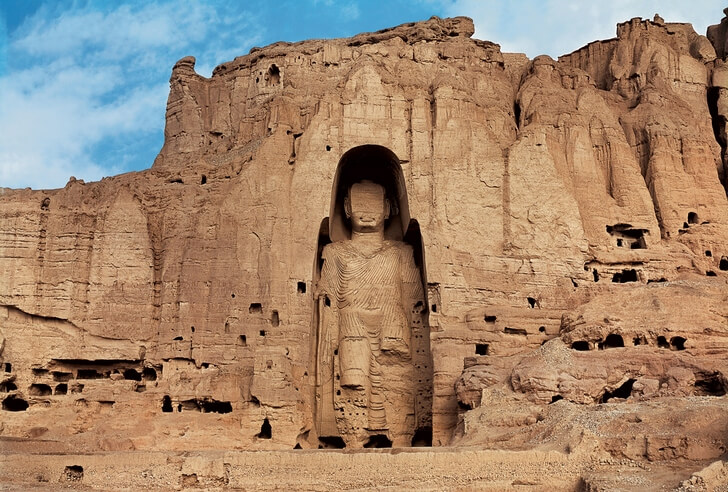
Recall, the Taliban blew up and destroyed the Buddhas of Bamiyan in March 2001 on orders from leader Mullah Mohammed Omar, after the Taliban government declared that they were idols. International and local opinion strongly condemned the destruction of the Buddhas. Some Taliban sources credited Omar's decision to blow up the Buddha statues to the growing influence of Osama bin Laden.
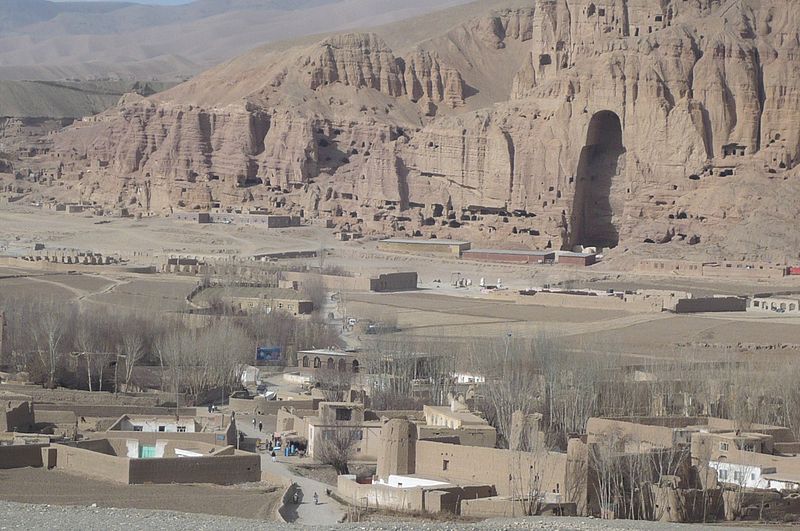
The Buddhas of Bamiyan were two 6th-century monumental statues of Vairocana Buddha and Gautama Buddha carved into the side of a cliff in the Bamyan valley of central Afghanistan, 130 kilometers northwest of Kabul at an elevation of 2,500 meters. Carbon dating of the structural components of the Buddhas has determined that the smaller 38-meter "Eastern Buddha" was built around 570 AD, and the larger 55-meter "Western Buddha" was built around 618 AD.
The statues represented a later evolution of the classic blended style of Gandhara art. The statues consisted of the male Salsal ("light shines through the universe") and the (smaller) female Shamama ("Queen Mother"), as they were called by the locals.