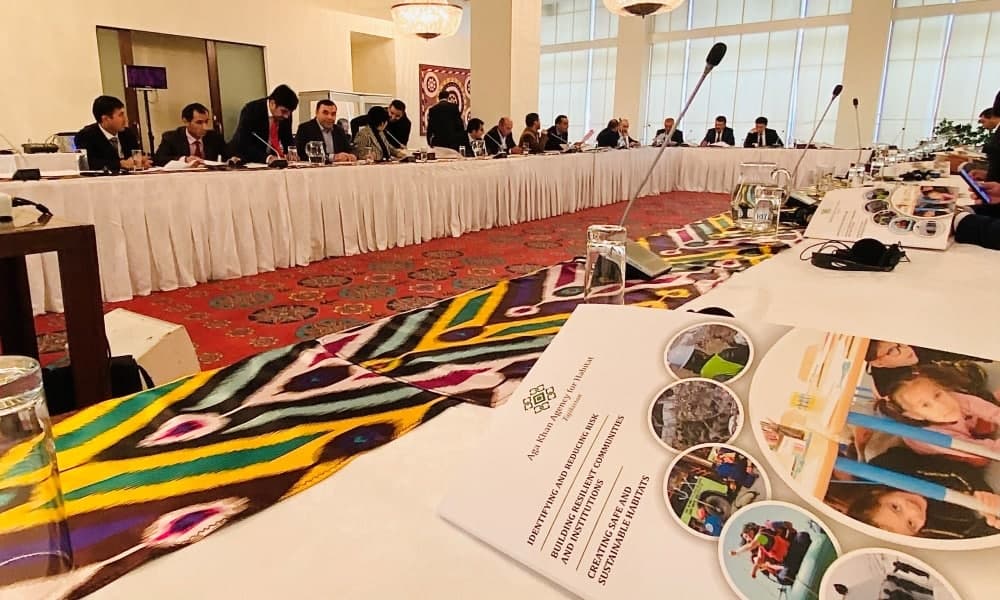
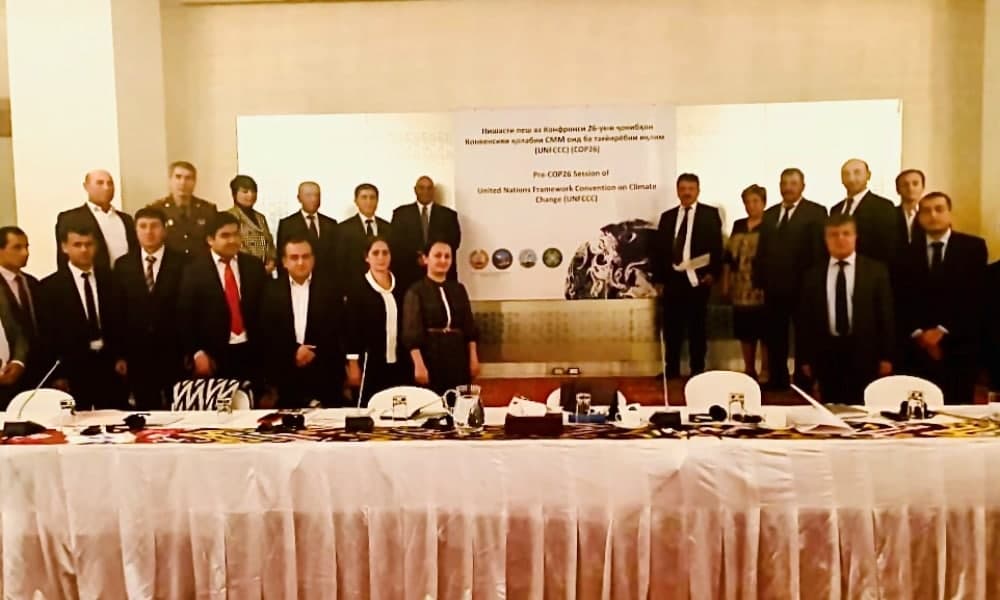
The Aga Khan Agency for Habitat (AKAH), jointly with the Agency of Hydrometeorology of the Committee for Environmental Protection under the Government of Tajikistan conducted a pre-Cop26 Session of the United Nations Framework Convention on Climate Change (UNFCCC) in Dushanbe, where all the relevant government agencies were invited.
Presided over by the Committee for Environmental Protection Deputy Head Mavlodod Abdulqodir, the Head of Hydrometeorology Agency Abdullo Qurbonzoda and the AKAH CEO Hadi Husani, the session was aimed at discussing and sharing the national position and preparation for the upcoming COP26, focusing on planned activities and side events, and agreed on possible future collaboration and joint efforts to address the Climate change related issues in the country.
The COP-26 is one of the most important climate summits since the landmark Paris Agreement was agreed in 2015 at COP 21 and will be held at the Scottish Event Campus (SEC) in Glasgow (UK) and is expected to bring together more than 30,000 people, from more than 200 countries, organizations, NGOs and other interested parties. The pre-condition for all the countries to be eligible to participate at this important event was a submission of Nationally Determined Contributions (NDC), which Tajikistan successfully submitted and will be presenting the work and achievements under the set priorities.
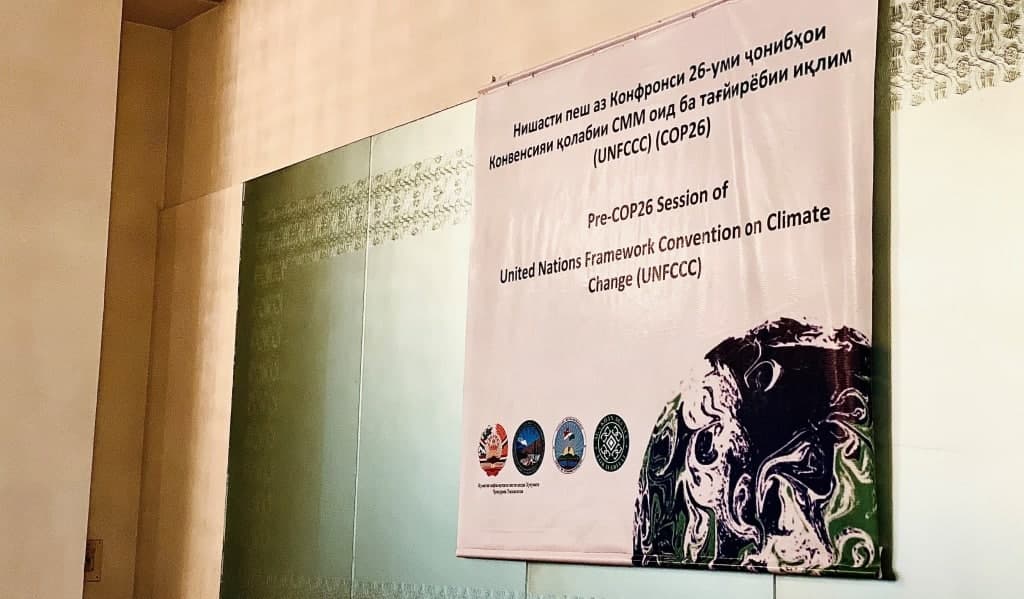
The COP 26 will address the following five key priorities:
1. Adaptation and resilience: "Helping people, the economy and the environment to adapt and prepare for the impacts of climate change".
2. Nature: "Protecting ecosystems, protecting natural habitats and preventing carbon emissions".
3. Energy transition: "Harnessing the huge potential of cheaper renewable energy sources and storage".
4. Accelerating the transition to low-carbon auto transport: "By 2040, more than half of the world's new car sales are projected will be accounted for by electric vehicles".
5. Finance: "We need to free up finances that will make all this is possible and will lead to the transition to a zero-carbon economy".
Given the urgency of the current climate change situation, AKAH presented an approach to environmental resilience from Climate change in the high mountains of Tajikistan. Each representative from relevant ministries and committees presented their work and plans towards the achievement of NDC and commitment to reducing the Climate Change Impact on different sectors across the country and shared the plan for showcasing the work at the COP26. Moreover, the participants agreed to put forward concrete actions capable of addressing the following points and impacts of climate change: the NDC strategy for Tajikistan and recommendation on its further enhancement; and Tajikistan will be presenting in Central Asian Pavilion commitment toward climate change adaptation and planned activities.
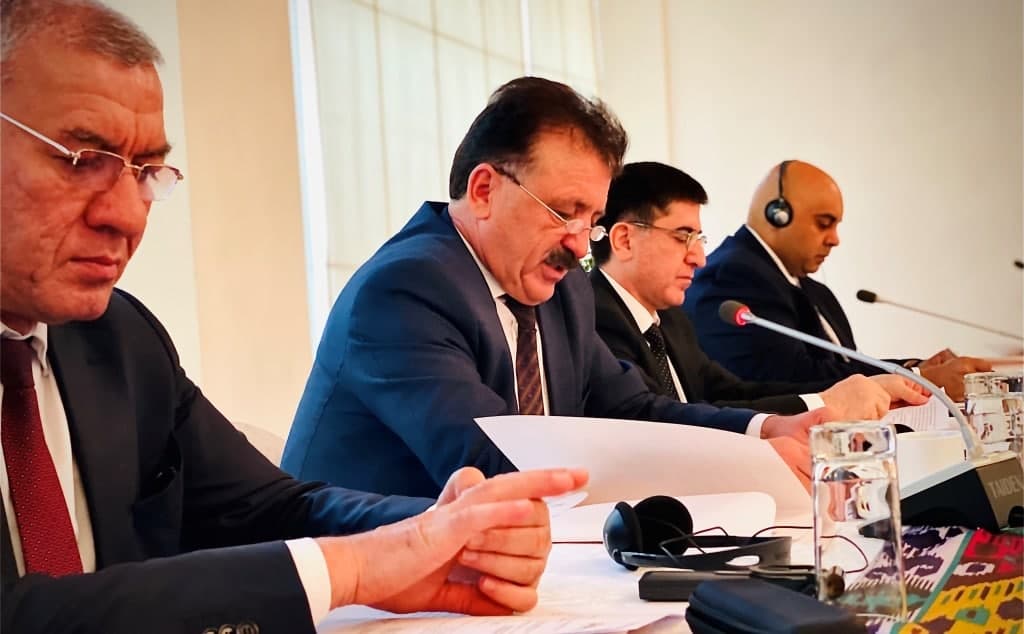
As mentioned, the delegation from Tajikistan attending the COP26 will present the work, achievements and plans pertinent to these priorities in the pavilion allocated for Central Asia. The pavilion will also enable the countries to: promote updated NDCs that provide a succinct vision of the country's steps and goals concerning strategies for low emissions and adaptation to climate change; inform about adopted and planned strategies for reducing emissions and adapting to climate change, internal efforts and needs for external financing of climate and disseminate the information on country new incentives, regulations and legislation that are attractive to the business climate, if any; provide a platform for high-level statements, press coverage, discussion, and exchange of experiences, and for making new contacts with other regions and stakeholder groups; increase the visibility and voice of Central Asia on adaptation to climate change and mitigation of its consequences, including the transition to a green economy, renewable energy sources, climate-sustainable development; expand the coverage and dissemination of information on climate change in the media by publishing articles, organizing expert podcasts on the challenges and opportunities in Central Asia and around the world; provide a space where Central Asian delegations can come together and the international community to strengthen existing and develop new partnerships.
Building on the conversations and presentation, Tajikistan Pre-COP Session was the final formal, multilateral opportunity for the Government and the relevant development partners to shape the negotiations and overall Tajikistan position in detail ahead of the upcoming meeting in Glasgow in November.
The 26th Conference of Parties is designed to take the next crucial steps in the UN climate change process. Following agreement on the implementation guidelines of the Paris Agreement at COP 25, a key objective is to complete several matters to the full operationalization of the Paris Climate Change Agreement.
The COP 26 UN Climate Change Conference, hosted by the UK in partnership with Italy, will take place from October 31 to November 12, 2021 in the Scottish Event Campus (SEC) in Glasgow, UK.
AKAH merges the capabilities of Focus Humanitarian Assistance, the Aga Khan Planning and Building Services, the Aga Khan Development Network (AKDN)’s Disaster Risk Management Initiative, and the Prince Sadruddin Aga Khan Fund for the Environment.
It works to ensure that poor people live in physical settings that are as safe as possible from the effects of natural disasters; that, residents who do live in high-risk areas are able to cope with disasters in terms of preparedness and response; and that these settings provide access to social and financial services that lead to greater opportunity and a better quality of life.
AKAH helps communities prepare for the worst; provides immediate relief after disaster strikes; helps build back better and greener while planning for a better future. AKAH currently operates in Afghanistan, Tajikistan, Syria, Pakistan and India, with plans to expand further in Central Asia as well as East Africa