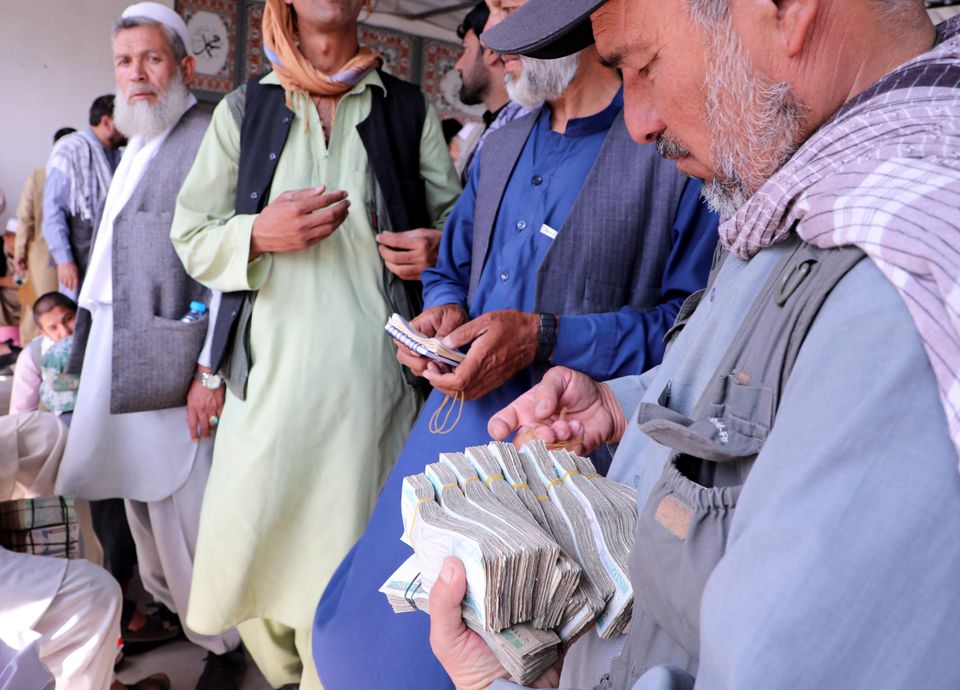
Reuters says the United Nations on November 22 pushed for urgent action to prop up Afghanistan's banks, warning that a spike in people who are unable to repay loans as well as lower deposits and a cash liquidity crunch could cause the financial system to collapse within months.
In a three-page report on Afghanistan's banking and financial system seen by Reuters, the U.N. Development Programme (UNDP) reportedly said the economic cost of a banking system collapse – and consequent negative social impact – "would be colossal."
An abrupt withdrawal of most foreign development support after the Taliban seized power on August 15 from Afghanistan's Western-backed government has sent the economy into freefall, putting a severe strain on the banking system which set weekly withdrawal limits to stop a run on deposits.
"Afghanistan's financial and bank payment systems are in disarray. The bank-run problem must be resolved quickly to improve Afghanistan's limited production capacity and prevent the banking system from collapsing," the UNDP report said.
Finding a way to avert a collapse is reportedly complicated by international and unilateral sanctions on Taliban leaders.
"We need to find a way to make sure that if we support the banking sector, we are not supporting Taliban," Abdallah al Dardari, head of UNDP in Afghanistan, told Reuters.
Afghanistan's banking system was already vulnerable before the Taliban came to power. But since then development aid has dried up, billions of dollars in Afghan assets have been frozen abroad, and the United Nations and aid groups are now struggling to get enough cash into the country.
The UNDP's proposals to save the banking system include a deposit insurance scheme, measures to ensure adequate liquidity for short- and medium-term needs, as well as credit guarantees and loan repayment delay options.
The UNDP report said that with current trends and withdrawal restrictions, about 40% of Afghanistan's deposit base will be lost by the end of the year. It said banks have stopped extending new credit, and that non-performing loans had almost doubled to 57% in September from the end of 2020.
According to the United Nations, millions in Afghanistan may face famine, with almost all the population living in poverty as the economy collapses following the Taliban takeover.