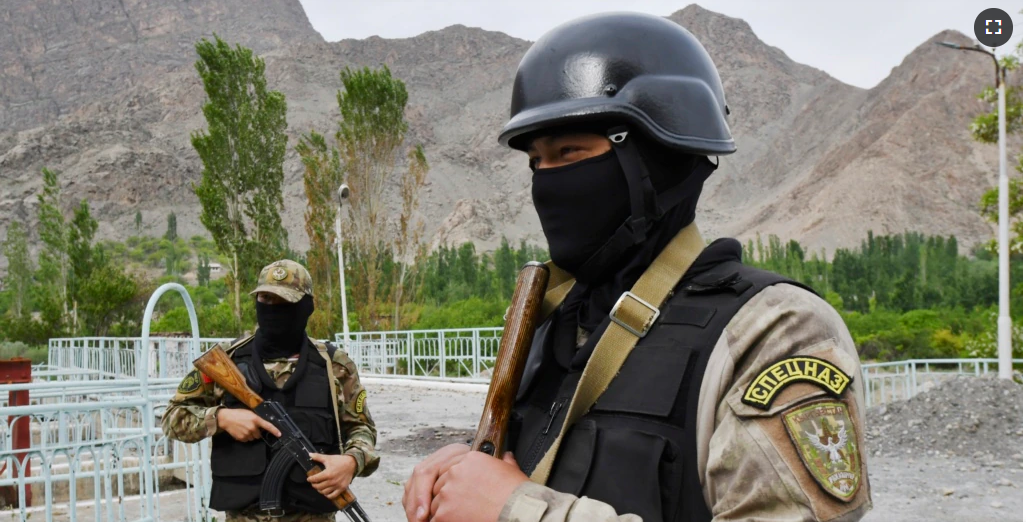
Tajikistan and Kyrgyzstan have reportedly agreed to jointly patrol a border area where several shots were fired the day before, Sputnik reported today, citing the press center of Kyrgyzstan’s State Committee for National Security (SCNS).
Such a decision has reportedly been made in order to ensure public order in the border area.
A meeting of heads of border districts, senior representatives of law enforcement agencies and competent bodies of the two countries took place in Tort-Kocho area in Kyrgyzstan’s Batken region yesterday at 11:30 pm, reads a statement released by Kyrgyzstan’s SCNS press center.
The meeting participants reportedly made a decision to jointly patrol the border area where several shots were fired on December 1 beginning on December 2.
Kyrgyzstan’s SCNS says seven-eight shots were allegedly fired by unknown persons from Tajik side towards Dakhma area in Kyrgyzstan’s Batken district.
According to the Kyrgyz border service, the shots were fired from a hunting gun
As of 9:00 am of December 2, the situation along this stretch of the Kyrgyz-Tajik border was stable, Kyrgyzstan’s SCNS press center noted.
Tajikistan and Kyrgyzstan have not yet resolved the border delineation problem. Many border areas in Central Asia have been disputed since the collapse of the Soviet Union in 1991. The situation is particularly complicated near the numerous exclaves in the Fergana Valley, where the borders of Tajikistan, Uzbekistan, and Kyrgyzstan meet.
The border of Kyrgyzstan and Tajikistan has been the scene of unrest repeatedly since the collapse of the former Soviet Union.
It has been difficult to demarcate the Kyrgyz-Tajik border because over the course of some 100 years Soviet mapmakers drew and redrew the Kyrgyz-Tajik border, incorporating land that had traditionally belonged to one people in the territory of the other Soviet republic.
Exclaves appeared and temporary land use agreements were signed.
All of this survived the collapse of the Soviet Union and people in Kyrgyzstan and Tajikistan have various Soviet-era maps they use to justify their claim to specific areas along the border.
Border talks between Tajikistan and Kyrgyzstan began in 2002. Only slightly more than half of the 970 kilometers of border shared by the two countries has been demarcated despite decades of attempts to bring the matter to a close. The border delineation problem has led to conflicts between rival ethnic communities.