By president’s decree vulnerable families in Uzbekistan will receive a lump-sum aid of 800,000 soums (equivalent to about US$75.00) each until the end of December on the occasion of New Year’s Day holiday.
Kun.uz says the lump-sum aid will be given to the families, which have been included in the "iron notebook”: to the children who did not reach age of 18 years from the families receiving pension or benefit on the occasion of loss of the supporter; to the children with disability who did not reach age of 18 years.
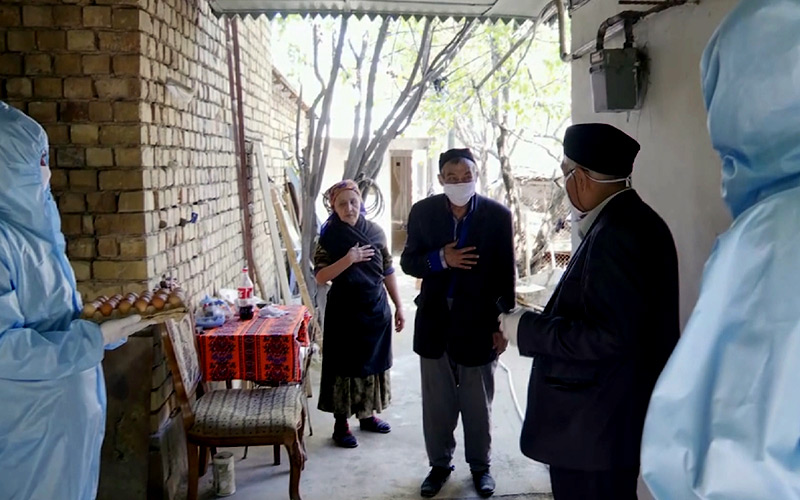
Meanwhile, Uzbek expert Idimurad Yusupov says that in Uzbekistan, vulnerable groups of the population affected by the COVID-19 pandemic and strict quarantine measures are being included in the so-called ‘iron notebook’ (in Uzbek ‘temir daftar’) to receive financial assistance from the government through the mahallas (local community and neighborhoods).
Large-scale one-time social assistance to low-income and vulnerable people is reportedly provided from the Anti-Crisis Fund, which was established in March 2020.
To provide assistance to socially vulnerable families in Uzbekistan, a list “temir daftar” (“iron notebook”) was introduced, where information about those in need is entered. The list is formed by chairpersons of the mahalla committees together with the heads of the sectors. Officials enter information into the “iron notebook” in electronic form on the site sakhovat.argos.uz using an electronic signature key.
Five categories of needy families have been identified when maintaining the “iron notebook”:
– families with disabled and chronically ill family members;
– families consisting of lonely elderly people, widows and low-income people, people in need of care;
– families with five or more children;
– citizens who have lost their jobs and sources of income as a result of quarantine measures, including returned migrants;
– families below the poverty line in need of help and financial support.
In modern Uzbekistan, the phrase “iron notebook” is firmly entrenched in popular use in the context of accounting for debt obligations. The need for “iron” accounting of debtors arose more in rural areas when people temporarily did not have funds, and they borrowed food in the local store. The seller wrote down in an “iron notebook” exactly what goods and for what total amount were borrowed, and after harvesting or in more favorable periods, the villagers returned it back to the seller. After the debt was returned, the seller wrote off the debt from the “iron notebook”.