Kazakhstan government resigns following fuel price protests

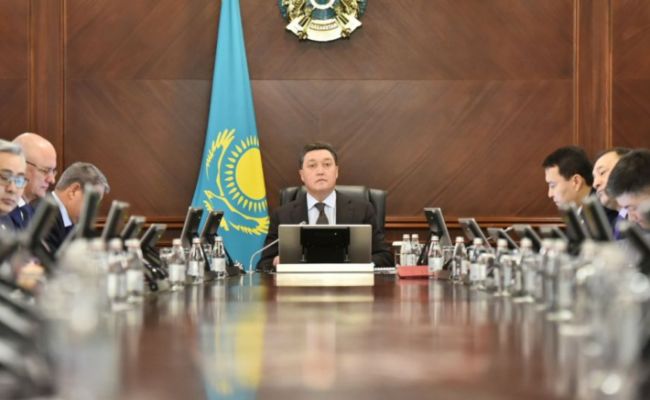
Kazakhstan government has resigned following fuel price protests.  The announcement came hours after the government declared a two-week state of emergency following protests over surging fuel prices. Protesters had earlier demanded the government resign. Citing Kazakh president’s office, Interfax says Kazakh President Kassym-Jomart Tokayev accepted the government's resignation on Wednesday, after a fuel price increase […]

Kazakhstan government has resigned following fuel price protests.  The announcement came hours after the government declared a two-week state of emergency following protests over surging fuel prices. Protesters had earlier demanded the government resign.

Citing Kazakh president’s office, Interfax says Kazakh President Kassym-Jomart Tokayev accepted the government's resignation on Wednesday, after a fuel price increase in Kazakhstan triggered protests in which nearly 100 police were injured.

Earlier Wednesday, President Tokayev declared a state of emergency in Almaty and Mangystau region for the period until January 19.  

According to official documents, the state of emergency reportedly includes an 11 p.m. to 7 a.m. curfew, movement restrictions, and a ban on mass gatherings, according to official documents.

By president’s decree the duties of the Prime Minister of the Republic of Tajikistan are temporarily assigned to Alikhan Smailov (first deputy prime minister in the resigned government). 

Meanwhile, Reuters says that speaking to acting cabinet members, Tokayev ordered them and provincial governors to reinstate the liquefied natural gas (LPG) price controls and broaden them to gasoline, diesel and other "socially important" consumer goods.

He reportedly also ordered the government to develop a personal bankruptcy law and consider freezing utilities' prices and subsidizing rent payments for poor families.
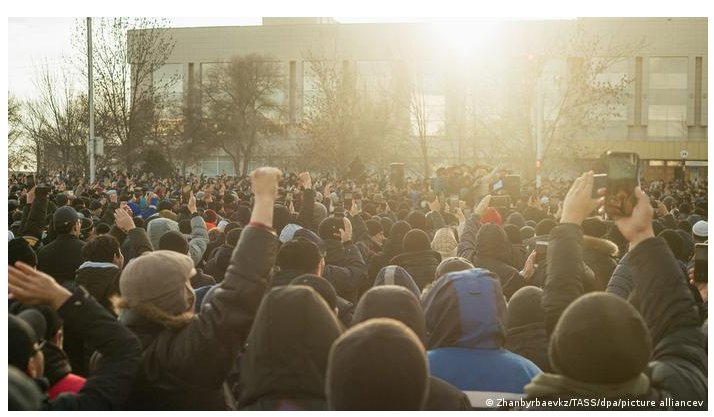
Recall, hundreds of people in the western Kazakh region of Mangystau protested for two days on January 2-3 against a sudden, dramatic hike in prices for LNG used in vehicles.

Smaller demonstrations were reportedly also held in several cities and towns elsewhere in Kazakhstan in support of the protesters, including in the capital, Nur-Sultan. 

The price per liter of LNG reportedly jumped to 120 tenge (28 U.S. cents) at gas stations in Mangystau at the start of this year, compared with a price of 50-60 tenge (12-14 cents) in 2021.
Join us on social media!

Article translations:

Related Article

Оби зулол
Оби зулол
Tenisi

Most Read

Коммерсбонк Точикистон

Recent Articles

RZD announces the restoration of passenger services between Moscow and Dushanbe

Direct rail services between the capitals of Russia and Tajikistan were suspended in March 2020 due to the COVID-19 pandemic.

#AP30/Stories. “Selam! Heller nichek?” How Tatars live today in Sughd province

On the 30th anniversary of "Asia-Plus," we continue to publish reports that remain relevant even after years. This story was told in 2021, and since then, little has changed in the life of the Tatar community in Tajikistan.

15,000 cameras, drones, and robots: how technology monitors pilgrims in Mecca and Medina

During Hajj 2026, Mecca and Medina were under unprecedented digital control.

Another child in Dushanbe removed from family and sent to boarding school

The Ministry of Internal Affairs reports that the parents did not pay adequate attention to the child.

Emomali Rahmon instructs to address issues in seed production following criticism of the industry

Issues have been noted with certification, seed quality, and the material and technical base of the industry.

Water, climate, and a $130 billion deficit: seven key outcomes of the Water Conference in Dushanbe

At the forum, countries and international organizations discussed new mechanisms for cooperation, investments, and technologies that are essential for addressing the global water crisis.

Eskhata Bank introduces a new generation children’s wallet

"Eshkata Bank" has created a full-fledged digital platform that helps children aged 7 to 16 learn how to manage money.