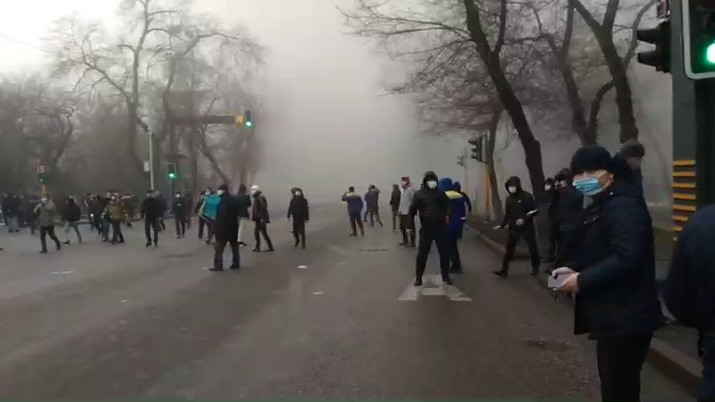
Kazakhstan media outlets, citing the country’s health ministry, report that at least 164 people have died in Kazakhstan during the recent unrest.
Fergana news says most victims – 103 people — were recorded in Kazakhstan’s largest city, Almaty, which reportedly saw some of the fiercest clashes between protesters and police. 21 people were reportedly killed in Kizilorda region, 10 people were killed in Zhambyl region, and eight people were killed in Almaty region. Twenty-two other people were reportedly killed in other regions.
Kazakhstan’s Interior Ministry was quoted as saying that seven policemen had been killed during the riots.
Citing Kazakhstan’s National Guard, Sputnik.KZ reports that 394 National Guard servicemen were wounded in the unrest. Besides, more than 90 pieces of National Guard’s military hardware were reportedly damaged.
The day of January 10 was declared a day of national mourning in Kazakhstan for those killed in the unrest.
Some media reports, citing Kazakhstan's presidential office, said yesterday that 5,800 people, including “a sustainable number of foreign nationals, were detained over the unrest for questioning.
The interior ministry, quoted Sunday by local media, put property damage at around 175 million euros (equivalent to US$199 million).
More than 100 businesses and banks were reportedly attacked and looted and more than 400 vehicles destroyed, the ministry reportedly said.
The demonstrations, triggered by a rise in fuel prices, turned into huge riots as they spread across the country. They started on 2 January and grew to reflect discontent at the government and former President Nursultan Nazarbayev, who led Kazakhstan for three decades and is still thought to retain significant influence.
Last week troops from member nations of the Collective Security Treaty Organization (CSTO) were sent to Kazakhstan to guard strategic facilities.
Kazakhstan authorities said on Sunday they had stabilized the situation across the country after the deadliest outbreak of violence in 30 years of independence. A state of emergency and a nationwide curfew remain in place.
Meanwhile, Nazarbayev's spokesman Aidos Ukibay on Sunday again denied rumors that Nursultan Nazarbayev had left the country and said he supported the president. Ukibay added that Nazarbayev voluntarily ceded control of the Security Council.
Critics accuse ex-president and his family of staying in control behind the scenes and accumulating vast wealth at the expense of ordinary citizens.