On April 3. The Aga Khan Agency for Habitat (AKAH), Tajikistan with its partnering agencies in the country celebrated Geoscientists Day. Geology Day celebrations began in the former USSR in 1960s and since then, the first Sunday in April is celebrated as Geoscientists Day to recognize geoscientists around the world and their contributions to society.
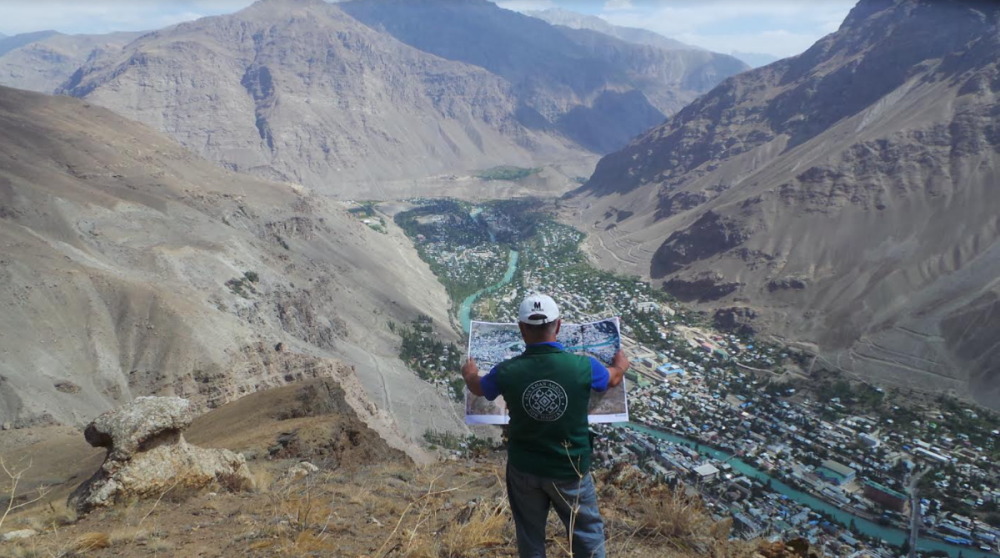
According to the Aga Khan Development Network (AKDN) Resident Office in Tajikistan The geology unit of AKAH Tajikistan conducts Hazard and Vulnerability Risk Assessment (HVRA) and maps natural hazards such as avalanches, rockfalls, mudflows, glacial lakes, or landslide and flood zones, to help communities and local authorities to mitigate disaster risk and plan safer villages, towns and habitats.
Using GPS and satellite data, field observation and the latest GIS software, AKAH’s geologists have reportedly assessed over 500 villages and 13 cities across Tajikistan and held community awareness sessions to help people understand and apply the results in their everyday life. Based on the results of geological assessments, AKAH has implemented over 300 mitigation projects including terracing to secure avalanche- or rockfall-prone slopes, clearing mudflow channels, reinforcing riverbanks, building flood protection walls, seismically retrofitting schools, and constructing evacuation bridges.
The HVRA enables to understand the complex interplay between vulnerability to natural processes, the impact of degradation of the land and areas for priority interventions and ensures that all of the hazards posing a threat and risk for the communities are considered in the sense of an integrated hazard analysis; damage indicators, as well as ecological, economic and social sustainability criteria, are applied to produce an integrated evaluation and assessment of the hazards and their related risks, as well as of the impact of planned measures to reduce those risks, in monitoring and reviewing the hazards and their related risks, the full spectrum of available preparedness, response and recovery measures are considered, in the sense of integrated action planning and in the interest of integrated participation, all relevant decision-makers, specialists and communities are involved throughout the whole process.
Relevant data, findings and recommendations from the assessments will be incorporated into village and settlement planning, thereby contributing to risk-informed planning and subsequent project interventions identified through the plans.
AKAH works closely with Government partners (National Academy of Science, State Agency for Hydrometeorology, Main Geology Department and Emergencies Committee) to factor in probability and forecasting elements while assessing natural hazards.
The findings and reports of the HVRA will be further defended by AKAH Technical team at the named institutions and vetted by relevant specialists of the named institutions, which will then be stored in their Spatial Data Infrastructure (SDI) platforms and considered as a government asset. These reports will be made available for all the stakeholders in the country including the relevant ministries and departments, who will use the data for their own planning across different sectors, such as emergency management and response, economic, agriculture and habitat development planning, and infrastructure.
At the local level, HVRA results will be presented to the community and local government stakeholders to foster ownership and to serve as an awareness-raising tool on the issues of rational use of natural resources, disaster risk management, measures to protect against hazards that should satisfy a wide range of often conflicting technical safety, social, economic and environmental demands and find an optimum balance between these opposing aspects as well as generate efforts to reduce risks impact on the livelihoods.
AKAH, which merges the capabilities of Focus Humanitarian Assistance, the Aga Khan Planning and Building Services, AKDN’s Disaster Risk Management Initiative, and the Prince Sadruddin Aga Khan Fund for the Environment, works to ensure that poor people live in physical settings that are as safe as possible from the effects of natural disasters; that, residents who do live in high-risk areas are able to cope with disasters in terms of preparedness and response; and that these settings provide access to social and financial services that lead to greater opportunity and a better quality of life.
AKAH helps communities prepare for the worst; provides immediate relief after disaster strikes; and helps build back better and greener while planning for a better future. AKAH currently operates in Afghanistan, Tajikistan, Syria, Pakistan, and India, with plans to expand further in Central Asia as well as East Africa.