Iranian media reports say the Chief of Staff of the Iranian Armed Forces Major General Mohammad Hossein Baqheri and Tajik Defense Minister Sherali Mirzo have inaugurated a factor manufacturing Iranian unmanned military aerial vehicle Ababil-2 in Tajikistan.
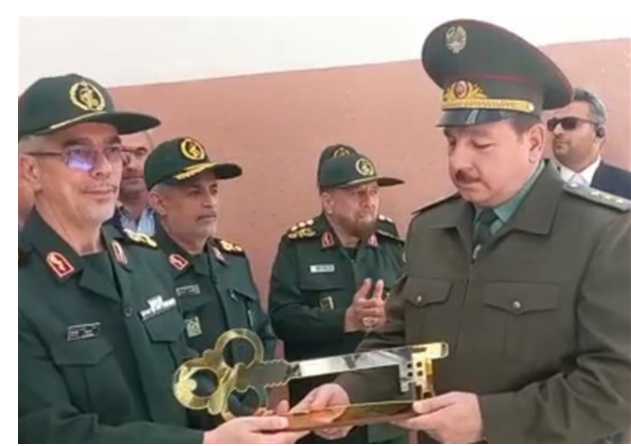
Tasnim News Agency says the drone factory was inaugurated in capital of Tajikistan, Dushanbe, on May 16 in a ceremony attended by Tajik Minister of Defense, Colonel-General Sherali Mirzo, and Iran’s Chief of Staff of the Armed Forces, Major-General Mohammad Hossein Baqheri.
IRNA says the production of Iranian Ababil-2 UAVs in Tajikistan is considered as part of plans for the expansion of military and defense cooperation between the two Persian-speaking nations.
Highlighting Iran’s progress in drone technologies in recent years, Major-General Baqheri said in the event, “Today, we have reached a position that apart from fulfilling the domestic needs, we can export military equipment to the allies and friendly countries in order to strengthen security and sustainable peace.”
Describing the opening of the drone factory in Dushanbe as a milestone in military cooperation between Iran and Tajikistan, the Iranian top military commander said the two countries are going to broaden military and defense cooperation in future.
A non-partisan policy organization United Against Nuclear Iran (UANI) says the unnamed aerial vehicle (UAV) Ababil (Swallow) was reportedly designed and manufactured during the later stages of the Iran-Iraq war. The Ababil-1 was considered disposable and was capable of carrying 40 kilograms of explosives. The second generation, the Ababil-2, was publicly unveiled for the first time in 1999. It has several variants for different purposes. The Ababil-2 reportedly has rudimentary surveillance capabilities and can be used as a loitering munition, but is mainly used as a target drone.
The Iranian Defense Ministry has reportedly developed several versions of Ababil pilotless aircraft so far.
In April, the Iranian Army unveiled Ababil-5 drone with a new design of nosecone that has improved its aerodynamic efficiency and reduced radar cross-section, according to Tasnim News agency.