Tajikistan and the Owlrd bank have signed an agreement on implementation of the Second Phase of the Nurek Hydropower Rehabilitation Project, according to the Ministry of Finance (MoF) Secretariat.
The document was reportedly inked here on May 18 by Mr. Faiziddin Qahhorzoda, Finance Minister of Tajikistan Mr. Mahmadumar Asozoda, Chairman of Barqi Tojik (Tajikistan’s national power utility company) and Mr. Ozan Sevimli, World Bank Country Manager for Tajikistan.
The World Bank’s Board of Executive Directors approved additional grant financing of US$65 million in support of the Second Phase of the Nurek Hydropower Rehabilitation Project, which will contribute towards more reliable electricity supply and expansion of renewable energy exports in Tajikistan, in late December 2020.
The project’s second phase, financed by the World Bank ($50 million approved in June 2020), supports the rehabilitation of the remaining six generating units, the Nurek bridge, the powerhouse, and other key buildings, while also strengthening the capacity of the hydropower plant (HPP) to effectively operate and maintain the plant’s operations.
The additional financing of US$65 million approved on December 21, 2020 is intended to reduce the current financing gap of $164 million for the second phase of the project. The remaining gap is expected be covered by other potential co-financiers, including reallocation of savings from the EDB and AIIB resources allocated for the first phase of the project. The total World Bank’s investments for this strategically important project amount to US$341 million.
The first phase of the Nurek Hydropower Rehabilitation Project, financed by the World Bank with US$225.7 million; the Asian Infrastructure Investment Bank (AIIB) with US$60 million; and the Eurasian Development Bank (EDB) with US$40 million, was launched in March 2019. It has focused on rehabilitating three of the nine generating units, replacing and refurbishing hydromechanical equipment and the key infrastructural components of the power plant, replacing six auto-transformers that are used to evacuate the generated electricity, and enhancing dam safety with a special focus on protection against seismic hazards and floods, and technical assistance to strengthen operational, technical, and financial management capacity of the utility company Barqi Tojik.
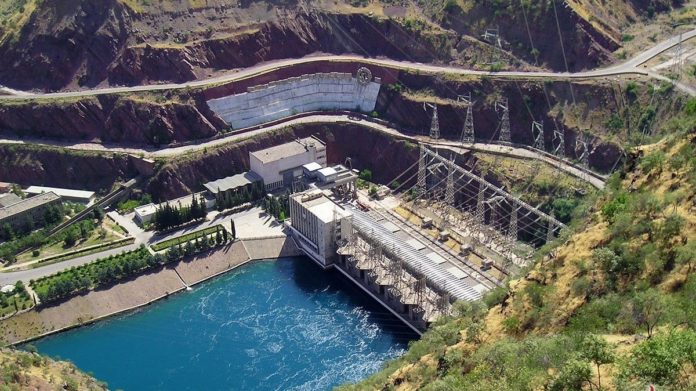
The Nurek hydroelectric power plant (HPP) is the most important asset of Tajikistan’s energy system.
The Nurek HPP, with an installed capacity of over 3,000 megawatts, generates about 50 percent of total annual energy demanded in Tajikistan. Operational at currently about three-quarter of its installed generation capacity, the HPP is undergoing its first major rehabilitation since its commissioning in 1972. Once completed, the rehabilitation will allow the Nurek HPP to increase electricity generation by about 300 million kWh, supporting the Government’s efforts to ensure that energy demand can be met even during the cold winter months.