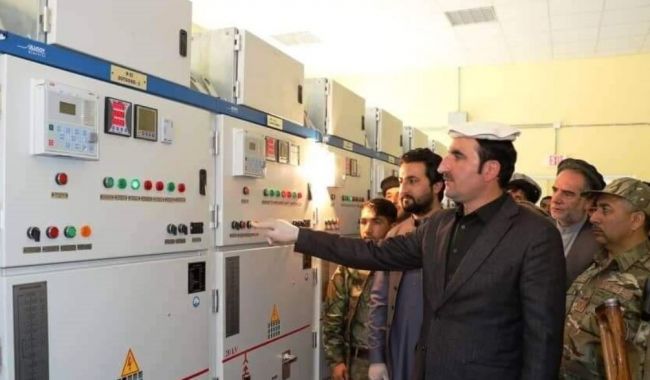
Kabul residents say Da Afghanistan Breshna Sherkat (DABS) should invest more in domestic electricity, TOLOnews reported Wednesday afternoon.
The Ministry of Energy and Water (MoEW) reportedly said that Afghanistan now owes more than 100 million U.S. dollars for electricity to Uzbekistan and Tajikistan.
Akhtar Mohammad Nusrat, a spokesman for the ministry, was cited as saying that banks in Central Asian countries, especially Uzbekistan and Tajikistan, were now having difficulty transferring money, which has prevented DABS’s debts from being paid.
According to Nusrat, the Ministry of Energy and Water is attempting to pay for electricity.
“Uzbekistan has its own problems, we want to pay, but the problem is in the banks,” Akhtar Mohammad Nusrat was quoted as saying.
Meanwhile, Amanullah Ghalib, the former head of Da Afghanistan Breshna Sherkat, said that Afghanistan pays about US$300 million a year to Central Asian countries, especially Uzbekistan, to buy electricity.
“Afghanistan buys most of its electricity from Uzbekistan. It is about 108 million dollars a year. The problem now is the payment of the bills," he said, adding that the Ukraine crisis has complicated the banking process for neighboring countries.
Kabul residents say Da Afghanistan Breshna Sherkat should invest more in domestic electricity.
“Electricity is one of the basic necessities of the people, governments are obliged to provide electricity. Despite abundant water resources, it is itself a major problem for the government to import electricity from Uzbekistan,” Noor Agha, a resident of Kabul, said in an interview with TOLOnews.
Previously, the US Special Inspector General for Afghanistan Reconstruction (SIGAR) said that Afghanistan imported more than 80 percent of its electricity from neighboring countries and that if those countries cut off their electricity, the homes of more than ten million Afghans would go dark.
Da Afghanistan Breshna Sherkat (DABS) is an independent and autonomous company established under The Corporations and Limited Liabilities Law of the Islamic Republic of Afghanistan (IROA). DABS is a limited liability company with all its equity shares owned by the Government of Afghanistan (GoA). The company was incorporated on May 4, 2008 and replaces Da Afghanistan Breshna Moassassa (DABM) as the national power utility. DABS operates and manages electric power generation, import, transmission, and distribution throughout Afghanistan on a commercial basis.