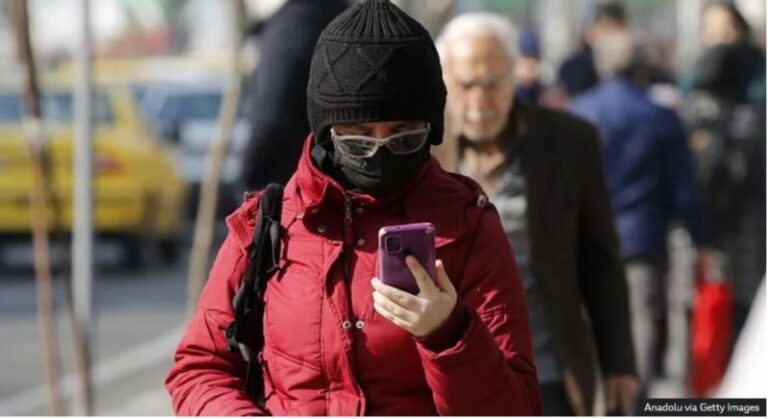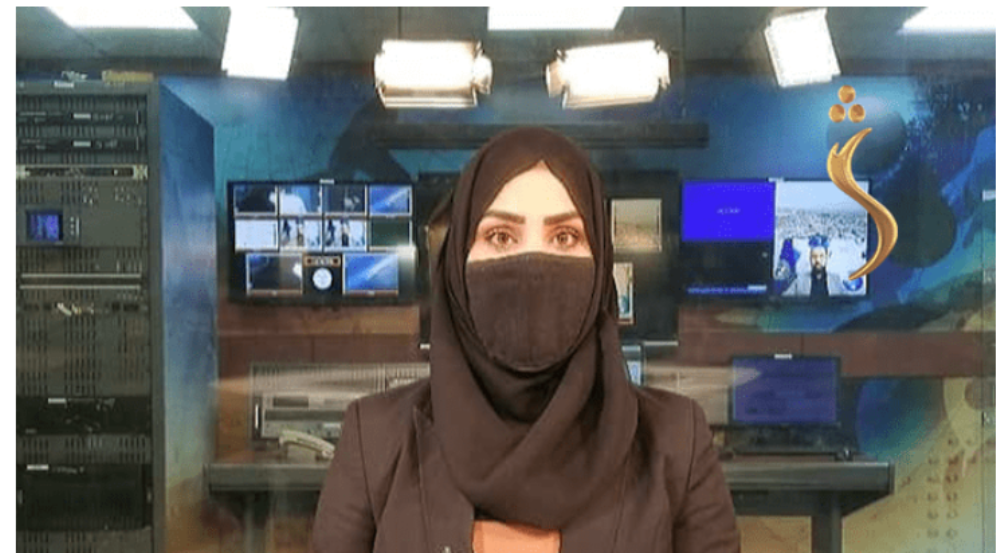
The Taliban authorities in Afghanistan have issued an official order that female journalists must cover their faces on television. The move comes days after authorities ordered women to cover their faces in public.
The order came in a statement from the Taliban’s Virtue and Vice Ministry, tasked with enforcing the group’s rulings, as well as from the Information and Culture Ministry.
The Virtue and Vice Ministry has asked all TV channels to ensure their female presenters cover their faces except the eyes when on air, Pajhwok Afghan News reported on May 19.
The TOLOnews channel said on Twitter on May 19 that the Islamic Emirate in a new order demanded all female presenters working in all TV channels to cover their faces while presenting programs. The statement called the order “final and non-negotiable,” the channel said.
One female Afghan journalist working for a local TV station in Kabul, who did not want to be named, said in an interview with the BBC that she had been shocked to hear the latest news. "They are putting indirect pressure on us to stop us presenting on TV," she said.
"How can I read the news with my mouth covered? I don't know what to do now – I must work, I am the breadwinner of my family," she told the BBC.
Citing a spokesman for the Taliban's Ministry for the Prevention of Vice and Promotion of Virtue, Reuters says the new decree will take effect from 21 May.
The Taliban’s latest edict comes after the group’s previous edict to “make hijab mandatory,” raising concerns about the implications of both orders to women’s rights, the Khaama Press said, noting that a number of women reacted to the adoption of the decree on mandatory hijab, protesting in Kabul streets, raising their voice.
The new directive is not surprising given that the Taliban have already implemented a gender segregation policy in restaurants and parks as well as the fact that the issue of reopening the girls’ schools yet remains unsolved.
There have been objections, with some social activists claiming that the Taliban’s measures are intended to keep women out of society.