Russia’s natural gas supplies cuts force Europe to use natural gas it was saving for winter

Cuts in natural gas supplies from Russia are forcing European utilities to tap reserves normally used during the peak winter season, Bloomberg reported on June 17. In one of the latest signs of how the region’s energy crisis is escalating, storage levels reportedly fell last week for the first time since mid-April, when traders typically […]

Cuts in natural gas supplies from Russia are forcing European utilities to tap reserves normally used during the peak winter season, Bloomberg reported on June 17.

In one of the latest signs of how the region’s energy crisis is escalating, storage levels reportedly fell last week for the first time since mid-April, when traders typically start to top up facilities.  That’s helping drive gas futures toward their biggest weekly gain since the Kremlin launched the so-called “special military operation” in Ukraine on February 2, according to Bloomberg.  

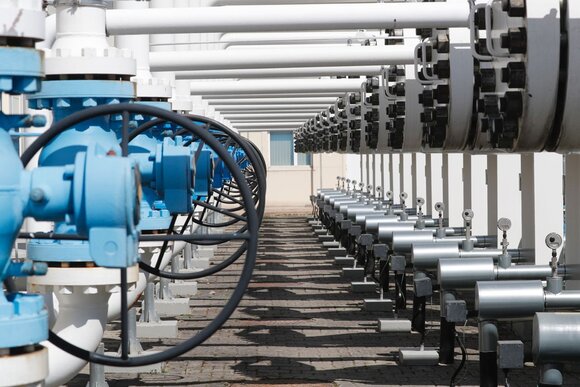
Russia has slashed supplies to customers in Italy, Germany, France and Austria, adding to smaller reductions to other nations in the past few weeks.  Moscow said it had to curb capacity on its Nord Stream link under the Baltic Sea because of technical issues, but Germany called the reductions “politically motivated” aimed at pushing up prices.

The cuts by Russia are reportedly coinciding with an outage at a major liquefied natural gas plant in the United States, another crucial source of European supplies.  It means that less fuel will arrive from across the Atlantic for months.

Europe’s storage sites were about 52% full as of June 14, with the latest data from the gas infrastructure operators of Europe (GIE) showing a one percentage point decline, Bloomberg said, noting that they still remain near the five-year average level.

Russian exporter Gazprom PJSC said on June 16 that it doesn’t see a solution “as of now” to the Nord Stream issues.

According to Bloomberg, Gazprom could use spare capacity on pipelines crossing Ukraine to supply European customers, but hasn’t opted for that yet.  The link is reportedly also scheduled for an annual maintenance shutdown next month.

Bloomberg, citing Wood Mackenzie Ltd, noted that in the worst-case scenario, where the Nord Stream pipeline is shut totally, the region will fail to reach the stockpile levels the European Union has ordered by the start of the heating season in November.  That means the region could run out of stocks completely by January.
Join us on social media!

Article translations:

Related Article

Tenisi
Оби зулол
Оби зулол

Most Read

Коммерсбонк Точикистон

Recent Articles

RZD announces the restoration of passenger services between Moscow and Dushanbe

Direct rail services between the capitals of Russia and Tajikistan were suspended in March 2020 due to the COVID-19 pandemic.

#AP30/Stories. “Selam! Heller nichek?” How Tatars live today in Sughd province

On the 30th anniversary of "Asia-Plus," we continue to publish reports that remain relevant even after years. This story was told in 2021, and since then, little has changed in the life of the Tatar community in Tajikistan.

15,000 cameras, drones, and robots: how technology monitors pilgrims in Mecca and Medina

During Hajj 2026, Mecca and Medina were under unprecedented digital control.

Another child in Dushanbe removed from family and sent to boarding school

The Ministry of Internal Affairs reports that the parents did not pay adequate attention to the child.

Emomali Rahmon instructs to address issues in seed production following criticism of the industry

Issues have been noted with certification, seed quality, and the material and technical base of the industry.

Water, climate, and a $130 billion deficit: seven key outcomes of the Water Conference in Dushanbe

At the forum, countries and international organizations discussed new mechanisms for cooperation, investments, and technologies that are essential for addressing the global water crisis.

Eskhata Bank introduces a new generation children’s wallet

"Eshkata Bank" has created a full-fledged digital platform that helps children aged 7 to 16 learn how to manage money.