On Thursday June 23, the World Bank’s Board of Executive Directors approved a $30 million International Development Association (IDA)’s grant for the Tajikistan Strengthening Water and Irrigation Management Project.
According to the World Bank Country Office for Tajikistan, the goal is to support water resources and irrigation planning and management for enhanced climate resilience and improved rural livelihoods and food security in Tajikistan. The project is reportedly co-financed by a €16.19 million grant from the European Union.
“Water is critical for Tajikistan’s economy and contributes to the development of key sectors, including agriculture, which employs almost half of the country’s workforce,” said Ozan Sevimli, World Bank Country Manager for Tajikistan. “With this new project, the World Bank builds on many years of support to the country’s water sector to ensure that abundant water resources are managed effectively to enhance Tajikistan’s economic growth, and contribute to poverty reduction and food security today and in the future.”
Tajikistan’s aging and underfinanced irrigation infrastructure reportedly results in low-quality irrigation services, which contribute to low productivity, low incomes, food insecurity, and environmental stress. Irrigated agriculture is also both water- and energy-intensive, due to dilapidated infrastructure and high dependence on pumping.
Tajikistan has embarked on important reforms, including by adopting a National Water Sector Reform Program (2016–25), new laws on Water User Associations and on Drinking Water Supply and Wastewater, and the adoption of a revised National Water Code. The World Bank has been supporting this reform agenda, while also investing in institutional strengthening and rehabilitation of critical water and irrigation management infrastructure.
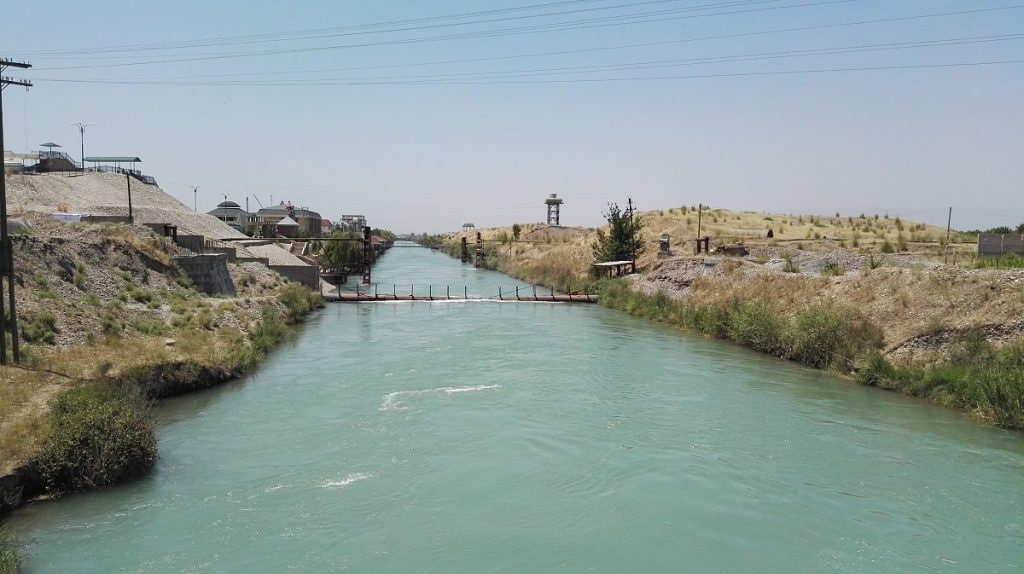
The new project will continue these efforts and invest in restructuring and capacity building of national and local water institutions for more effective water monitoring, planning and management. It will invest in improvement of two major irrigation schemes of the lower Vakhsh basin in southern Khatlon province of Tajikistan, which cover 128,000 ha of land, serving around 16,000 farmers.
The project is also expected to benefit small-scale irrigation schemes in Upper Vakhsh Basin, prone to floods and mudflows. The project will provide training and knowledge exchange opportunities for the Ministry of Energy and Water Resources, aiming to strengthen coordination in the sector through establishment of a National Water Council, enhancing data collection and sharing mechanisms and introduction of remote monitoring tools. The capacity of more than 45 Water User Associations will be strengthened under the project.
The project is expected to generate critical development outcomes, including greater climate resilience of irrigation infrastructure; improved efficiency of water use and delivery; improved water accounting; reduction of the average energy intensity of water delivered to fields; as well as increased value of irrigation production. The project will be implemented by the Ministry of Energy and Water Resources and the Agency for Land Reclamation and Irrigation.
Currently, the World Bank is financing 25 projects in Tajikistan with a total of US$1.39 billion. Since 1996, the World Bank has provided over US$2.44 billion in IDA grants, highly concessional credits, and trust funds for Tajikistan.