



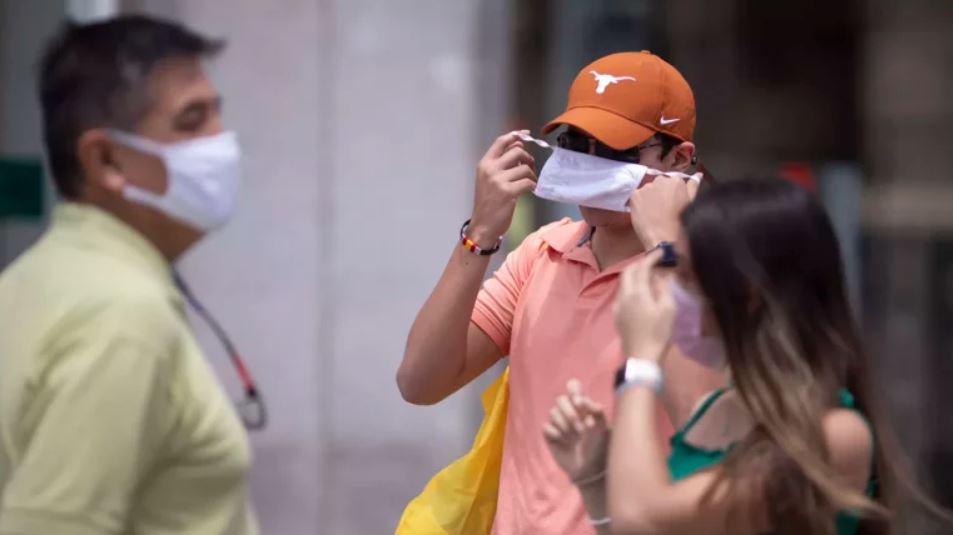
WHO chief urges governments across the world to bring back masking

The World Health Organization (WHO) chief, Dr. Tedros Adhanom Ghebreyesus, yesterday said sub-variants of Omicron continue to drive new waves of cases, hospitalizations and deaths around the world. According to the BBC, UN health agency chief has urged governments across the world to deploy measures like masking and improved ventilation amid unacceptably high numbers of […]

The World Health Organization (WHO) chief, Dr. Tedros Adhanom Ghebreyesus, yesterday said sub-variants of Omicron continue to drive new waves of cases, hospitalizations and deaths around the world.

According to the BBC, UN health agency chief has urged governments across the world to deploy measures like masking and improved ventilation amid unacceptably high numbers of deaths.

While many governments of wealthier countries have all but abandoned coronavirus restrictions following successful vaccine rollouts, the WHO head emphasized that the pandemic is "nowhere near over".

Dir. Tedros Adhanom Ghebreyesus said sub-variants of Omicron continue to drive new waves of cases, hospitalizations and deaths around the world.

Amid increasing COVID transmission and rising hospitalizations, Dir. Tedros urged governments to "deploy tried and tested measures like masking, improved ventilation and test and treat protocols".

"I am concerned that cases of COVID-19 continue to rise – putting further pressure on stretched health systems and health workers," he said.

"I am also concerned about the increasing trend of deaths."

Among the variants and subvariants being tracked by the WHO is BA.2.75 – nicknamed the centaurus – which was first discovered in India in May.


 

Join us on social media!

Article translations:

Related Article

Оби зулол
Tenisi
Оби зулол

Most Read

Коммерсбонк Точикистон

Recent Articles

RZD announces the restoration of passenger services between Moscow and Dushanbe

Direct rail services between the capitals of Russia and Tajikistan were suspended in March 2020 due to the COVID-19 pandemic.

#AP30/Stories. “Selam! Heller nichek?” How Tatars live today in Sughd province

On the 30th anniversary of "Asia-Plus," we continue to publish reports that remain relevant even after years. This story was told in 2021, and since then, little has changed in the life of the Tatar community in Tajikistan.

15,000 cameras, drones, and robots: how technology monitors pilgrims in Mecca and Medina

During Hajj 2026, Mecca and Medina were under unprecedented digital control.

Another child in Dushanbe removed from family and sent to boarding school

The Ministry of Internal Affairs reports that the parents did not pay adequate attention to the child.

Emomali Rahmon instructs to address issues in seed production following criticism of the industry

Issues have been noted with certification, seed quality, and the material and technical base of the industry.

Water, climate, and a $130 billion deficit: seven key outcomes of the Water Conference in Dushanbe

At the forum, countries and international organizations discussed new mechanisms for cooperation, investments, and technologies that are essential for addressing the global water crisis.

Eskhata Bank introduces a new generation children’s wallet

"Eshkata Bank" has created a full-fledged digital platform that helps children aged 7 to 16 learn how to manage money.





