Russian sanctioned airlines disassemble aircraft for spare parts

A group of Russian airlines is stripping planes of spare parts as sanctions implemented due to Moscow’s invasion of Ukraine impact the country. Sources told Reuters on Monday that major Russian airlines such as Aeroflot have grounded their planes so they can be disassembled for spare parts, adding that airlines are taking parts from their […]

A group of Russian airlines is stripping planes of spare parts as sanctions implemented due to Moscow’s invasion of Ukraine impact the country.

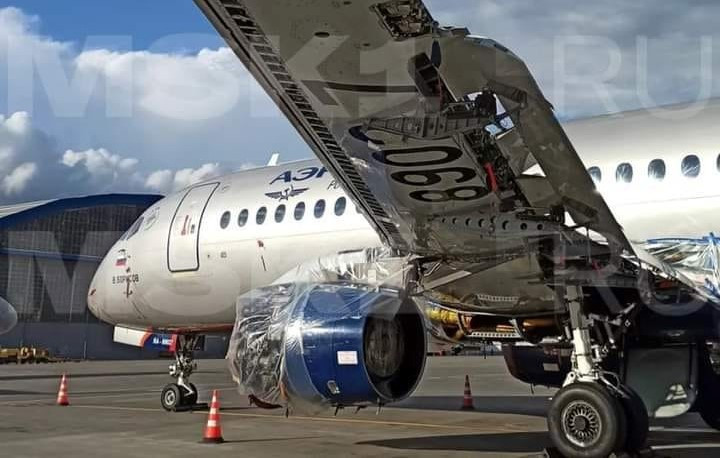
Sources told Reuters on Monday that major Russian airlines such as Aeroflot have grounded their planes so they can be disassembled for spare parts, adding that airlines are taking parts from their planes to keep them airworthy.

Russian-made Sukhoi Superjets, which are dependent on assembled foreign parts, have already started the disassembly process, removing an engine from a grounded jet to allow another Superjet to continue flying.

The disused airplanes from which parts are removed to keep others flying are often referred to as “Christmas trees.”  The process is linked to financial difficulties due to widespread reshuffling from the sanctions imposed by Western powers, according to Reuters.

Sanctions on Moscow stem from its invasion of Ukraine, which began in February, and have prevented Russia from obtaining spare engine parts or undergoing maintenance checks in Western countries.

Oleg Panteleyev, the head of the Aviaport aviation think tank, told Reuters that most Western-based manufacturers know that Sukhoi Superjets fully operate in Russia.

“Western manufacturers understand that almost all Superjets are being operated in Russia,” said Panteleyev.  “You can simply stop producing and shipping spare parts – and it will hurt.”

Russian officials hope that some of the used aircraft parts will ensure that foreign-built aircrafts can continue to fly through 2025, Reuters reported.

A source also said that due to the Western-imposed sanctions, unused jets are being stripped for spare parts, as Russian jets are currently flying fewer routes than normal.

This comes as Aeroloft has experienced a 22 percent traffic fall due to the Western-imposed sanctions against Russia, according to data provided by the company.

Sources also say Middle East and Asian companies may be at risk of secondary sanctions from Western powers if they provide aircraft supplies to Russia.
Join us on social media!

Article translations:

Related Article

Оби зулол
Оби зулол
Tenisi

Most Read

Коммерсбонк Точикистон

Recent Articles

RZD announces the restoration of passenger services between Moscow and Dushanbe

Direct rail services between the capitals of Russia and Tajikistan were suspended in March 2020 due to the COVID-19 pandemic.

#AP30/Stories. “Selam! Heller nichek?” How Tatars live today in Sughd province

On the 30th anniversary of "Asia-Plus," we continue to publish reports that remain relevant even after years. This story was told in 2021, and since then, little has changed in the life of the Tatar community in Tajikistan.

15,000 cameras, drones, and robots: how technology monitors pilgrims in Mecca and Medina

During Hajj 2026, Mecca and Medina were under unprecedented digital control.

Another child in Dushanbe removed from family and sent to boarding school

The Ministry of Internal Affairs reports that the parents did not pay adequate attention to the child.

Emomali Rahmon instructs to address issues in seed production following criticism of the industry

Issues have been noted with certification, seed quality, and the material and technical base of the industry.

Water, climate, and a $130 billion deficit: seven key outcomes of the Water Conference in Dushanbe

At the forum, countries and international organizations discussed new mechanisms for cooperation, investments, and technologies that are essential for addressing the global water crisis.

Eskhata Bank introduces a new generation children’s wallet

"Eshkata Bank" has created a full-fledged digital platform that helps children aged 7 to 16 learn how to manage money.