International organizations have released reports about violation by Russian and Ukrainian military of the law of war.
Russian war crimes are the violations of the law of war that reportedly include aiding and abetting crimes of quasi-states or puppet states armed and financed by Russia, including Luhansk People's Republic and Donetsk People's Republic.
Amnesty International, Human Rights Watch and some other international organizations have recorded Russian war crimes in Ukraine. On April 13, 2022, OSCE published a report finding Russia guilty of war crimes in the Mariupol hospital airstrike, while its targeted killings and enforced disappearance or abductions of civilians, including journalists and local officials, could tentatively also be crimes against humanity.
Human Rights Watch stated that pro-Russian insurgents "failed to take all feasible precautions to avoid deploying in civilian areas" and in one case "actually moved closer to populated areas as a response to government shelling". HRW called on all sides to stop using the "notoriously imprecise" Grad rockets.
Another report by Human Rights Watch said that the insurgents had been "running amok…taking, beating and torturing hostages, as well as wantonly threatening and beating people who are pro-Kiev". It also said that the insurgents had destroyed medical equipment, threatened medical staff, and occupied hospitals. A member of Human Rights Watch reportedly witnessed the exhumation of a "mass grave" in Sloviansk that was uncovered after insurgents retreated from the city.
On February 24, 2022, Russian forces invaded and attacked Ukraine from the north, south and east, which was interpreted as a form of extreme Russian irredentism. HRW and Amnesty International accused Russia of using imprecise cluster munitions in civilian areas, including near hospitals and schools, which constitute unlawful attacks with weapons that indiscriminately kill and maim. UN High Commissioner for Human Rights condemned Russia's military action as a violation of international law. Amnesty International labeled it an act of aggression that is a crime under international law. Numerous war crimes were recorded, including murder, torture, abductions, deportation, looting, rape against Ukrainian women, attacks on civilians, unlawful airstrikes or attacks against civilian objects, threats of violence, and inhumane treatment of POWs.
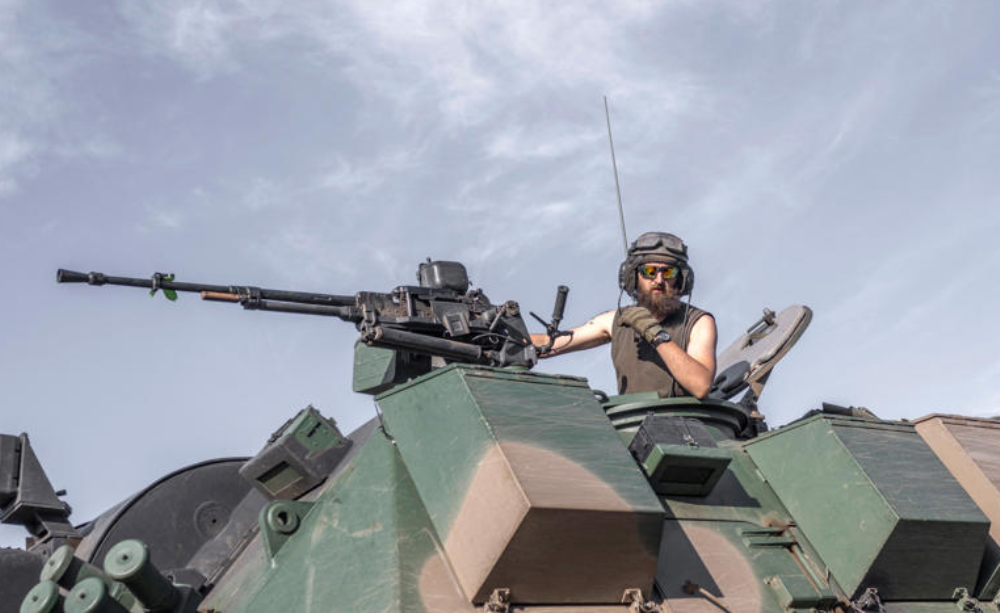
As far as Ukraine is concerned, international organizations have accused Ukrainian military of taking cover in in civilian structures.
Reports say Ukraine’s army set up military bases and launched weapons from densely populated urban areas, effectively placing targets for the Russian army on the backs of civilians.
Besides, Russia said in early July that it was investigating the torture of Russian soldiers held prisoner in Ukraine and recently released as part of a prisoner swap with Kyiv in late June.
The Russian Investigative Committee, which probes major crimes, said in a statement that it was “verifying facts of inhuman treatment of Russia soldier prisoners in Ukraine”.
In late June, Moscow and Kyiv exchanged 144 prisoners of war each — the biggest exchange since the start of Moscow’s Ukraine campaign launched on February 24.
The Russian committee said Moscow’s soldiers told investigators about “the violence they had suffered.”